


SEEFOR 17(2): 26017
Article ID: 26017
DOI: https://doi.org/10.15177/seefor.26-017
ORIGINAL SCIENTIFIC PAPER
Landscape Preferences and Perceived Aesthetic Value of Roadside Urban Greenery in Belgrade, Serbia
Nadežda Hristivoje Stojanović1*, Mirjana Mihailo Tešić1, Biljana Stanislav Jović1, Aleksandar Zoran Lisica1
Addresses:
(1) University of Belgrade, Faculty of Forestry, Department of Landscape Architecture and Horticulture, Kneza Višeslava 1, RS-11000 Belgrade, Serbia
Citation: Stojanović NH, Tešić MM, Jović BS, Lisica AZ, 2026. Landscape Preferences and Perceived Aesthetic Value of Roadside Urban Greenery in Belgrade. South-east Eur for 17(2): 26017. https://doi.org/10.15177/seefor.26-017.
Received: 30 Jan 2026; Revised: 29 May 2026; Accepted: 11 Jun 2026; Published online: 23 Aug 2026
Cited by: Google Scholar
Abstract
The aesthetic quality of the roadside environment represents an important component of the overall experience of the urban landscape, with greenery along major urban roads playing a significant role in shaping the visual scene and the perception of this space. Although numerous studies have confirmed the importance of greenery for the visual perception of urban spaces, relatively few studies have quantitatively examined the combined effects of the percentage cover of different plant categories and dendrological structure on the perceived aesthetic quality of roadside greenery. This study aimed to determine, based on respondents' visual perception, the relationship between the aesthetic quality of roadside greenery in Belgrade and the presence of different categories of plant material, as well as its dendrological structure. A combined quantitative holistic technique was applied in this study. The research included 38 green spaces located along 15 major urban roads, which were evaluated by 75 respondents divided into 3 groups according to their professional background (landscape architects, students and respondents from other professions). Descriptive statistics, one-way analysis of variance (ANOVA), Tukey's HSD test, and Pearson correlation analysis were used for data analysis. The results show that the percentage cover of different plant categories significantly influences visual perception, with green spaces containing 30–90% tree and shrub cover achieving the highest mean aesthetic quality score (5.80). It was also found that the aesthetic quality of roadside greenery increases statistically significantly with the number of different tree and shrub taxa (r=0.37; p=0.02), whereas uniform vegetation appears monotonous and less visually appealing. A total of 104 woody taxa were recorded in the studied green spaces (67 tree taxa and 37 shrub taxa), including 12 taxa belonging to the subdivision Pinophyta and 92 taxa belonging to the subdivision Magnoliophyta. The results indicate that the identified dendrological diversity and structure of roadside greenery are important not only from the perspective of aesthetic quality, but also in terms of providing numerous ecosystem services. The original contribution of this study lies in the quantitative linking of the dendrological characteristics of roadside greenery with users' visual perception. The obtained results provide a useful basis for urban forestry practice, as they may support species selection, enhancement of dendrological diversity, reconstruction of existing roadside greenery, and planning of new roadside plantings, to improve the visual quality of urban space, conserve biodiversity, and enhancing the quality of the urban environment.
Keywords: visual (aestetic) value; roadside greenery; landscape engineering
INTRODUCTION
Many evaluations of the aesthetic quality of landscapes, or of the scenic beauty formed by a particular landscape, are derived from psychological theory and focus on the psychological processes of the individual evaluator. In the process of landscape evaluation, the observer or user effectively acts as a measuring instrument that perceives, interprets, evaluates, and articulates the value of its visual (aesthetic) quality (Hull et al. 1992). The evaluation therefore reflects the experience of the observer, which is also influenced by their prior knowledge and personal experience (Appleton 1996). For these reasons, aesthetic experience and visual landscape perception are highly complex phenomena.
Despite this complexity, numerous studies have addressed the evaluation of visual (aesthetic) and scenic quality of landscapes or their components, including forests, parks, and greenery along traffic corridors, among others (Brunsen and Shelby 1992, Karjalainen 1996, Clay and Daniel 2000, Akbar et al. 2003, Chen et al. 2009, Gunnarsson et al. 2017, Southon et al. 2017, Peng et al. 2025, Zhang and Wu 2025).
Many of these studies place particular emphasis on the aesthetic quality of plant species themselves as important visual elements of the landscape. It has been observed that merely viewing landscapes dominated by plants can significantly reduce feelings of fear and have a positive effect by evoking a sense of attraction and delight in the observer (Ulrich 1979). Amir and Gidalison (1990) also state that the presence of plant material has a significant influence on the overall aesthetic experience of the landscape, which is directly related to human perception of the colour, structure, form, and mass of plant material.
Nelson (1976) likewise emphasises that the fundamental elements of aesthetics—line, form, colour, and texture—are strongly associated with greenery, which is particularly evident in urban landscapes. In addition, greenery possesses further aesthetic characteristics, such as silhouette, sculptural quality, reflection, dispersion, and geometry. Appleyard (1980) notes that urban greenery, particularly where trees and shrubs are strongly represented, can be used as an ornament or decorative element. The special importance of the aesthetic values of plants is also reflected in the formation of the city image (Anastasijević and Vratuša 1999). Plants also serve as a visual symbol of naturalness within the urban environment.
Roads represent some of the most significant spatial elements in landscape perception, particularly in urban landscapes, and they often provide the first impression of a landscape (Junta de Andalucía 2009, Girot 2010). Studies on the visual (aesthetic) quality and scenic beauty of the road environment have also identified a relationship with the presence of roadside greenery, highlighting the importance of plant material for the overall aesthetic experience (Drottenborg 1999). It has been established that greenery along urban traffic corridors, in particular, creates a sense of safety, satisfaction, and mental relaxation among observers, due to its inherent capacity for the aesthetic absorption of urban development (Jacobs and Way 1969).
In order to integrate the aesthetic (visual) quality of roadside greenery into management programmes, it is essential to record the opinions and preferences of users themselves (Stojanovic 2016). The information obtained in this way can be useful for analysing the current condition of roadside greenery, as well as for defining broad foundations for its effective management (Akbar et al. 2003).
In contemporary landscape conceptualisation, as promoted by the European Landscape Convention (Council of Europe 2000), a perceptual approach to determining aesthetic (visual) landscape quality is of exceptional importance.
Although numerous studies have analysed the effects of vegetation presence, biodiversity, plant structure, and colour on aesthetic preferences and the restorative potential of urban green spaces (Gunnarsson et al. 2017, Peng et al. 2025, Zhang and Wu 2025), considerably fewer studies have focused specifically on greenery along urban roads, particularly on its dendrological structure as a factor influencing aesthetic quality. Existing research has most often addressed the general presence of vegetation or individual visual attributes, while studies that quantitatively link the percentage cover of different categories of plant material and species composition with users' perceptions in the context of roadside greenery are rare. This study contributes to the contemporary literature by integrating visual assessment methods with analyses of the dendrological structure of roadside greenery, thereby providing a scientifically grounded basis for the planning and management of urban roadside greenery in accordance with the principles of urban forestry and users' preferences.
The aim of this study is to determine, based on respondents’ visual perception, the relationship between the aesthetic (visual) quality of roadside greenery in the Belgrade area and the presence or absence of different categories of plant material, as well as their composition. The study is based on the assumption that the aesthetic quality of roadside greenery depends on the percentage of coverage by different plant categories, as well as on the composition of plant material (dendrological structure). The results of this research provide a basis for integrating users’ attitudes into the planning and management processes of road and road network greening.
The methodological approach applied in this study has direct practical relevance for urban forestry, as it enables the linking of users' visual perception with the structural and dendrological characteristics of roadside greenery. By quantifying the proportion of different categories of plant material and analysing their relationship with respondents' aesthetic preferences, parameters are obtained that can serve as a basis for species selection, reconstruction of existing roadside vegetation, and planning of new plantings along urban roads. In this way, the results of this research contribute to the development of management strategies that, in addition to ecological and functional requirements, also take into account the visual and psychological needs of urban space users.
MATERIALS AND METHODS
For the purposes of investigating the aesthetic (visual) quality of roadside greenery in the Belgrade area, and based on the studies by Daniel and Vining (1983) and Akbar et al. (2003), a combined quantitative holistic evaluation technique was developed and applied, in which the final assessment of the aesthetic (visual) quality of the landscape as a scene represents the result of the observers’ (respondents’) perception. According to Daniel and Boster (1976) and Daniel (2001), the conceptualisation of visual (aesthetic) quality (scenic beauty) is based on the premise that beauty is an interactive concept. It is neither solely an aesthetic experience of the observer nor merely an inherent property of the landscape, but rather a conclusion derived from the observer’s judgement in response to their aesthetic experience.
The combined quantitative holistic evaluation technique used to assess the aesthetic (visual) quality of roadside greenery involves the systematisation of research procedures through a sequence of steps and the application of a quantitative research technique.
1) Identification of homogeneous landscapes or landscape units. Daniel and Boster (1976) note that, for the purposes of studying the visual quality of a landscape as a whole or its component parts, it is important that the selected landscapes or landscape units being compared are homogeneous in nature. Researchers have employed various techniques to select homogeneous landscapes. Arriaza et al. (2004), in their studies, used landscape elements or specific patterns of land use and landscape structure. Meitner and Daniel (1997) applied the dominant plant species to divide a given area into homogeneous units. In the context of investigating the aesthetic quality of roadside greenery in the Belgrade area, the identification of homogeneous units took into account green spaces that form part of the natural plant cover along major traffic routes in Belgrade, located directly adjacent to the roads, which perform certain landscape functions.
2) Interpretation of the landscape under evaluation. Landscape interpretation can be conducted through on-site evaluation or by presenting slides, photographs, or short films to respondents (Akbar et al. 2003). When selecting and choosing photographs for presentation, there is a potential risk of unintentionally introducing the researcher’s biases or professional competencies. Daniel and Boster (1976) note that an appropriate photograph can be selected either based on professional photographic criteria (composition, colour, etc.) or by random sampling. Following the identification of green spaces, photographs were taken according to a previously defined procedure (Meitner and Daniel 1997, Clay and Marsh 2001, Hall 2001, Chen et al. 2009): (1) at a distance of 2–100 m, depending on the size of the green area; (2) during the hours of 10:00–15:00 under sunny conditions in summer; (3) from a height of 160 cm; (4) using a digital camera with a 35 mm camera body and a 50 mm lens set at an angle of approximately 30°. For each selected green space, one representative photograph was chosen that visually most adequately represents it.
3) Selection of respondents through the formation of homogeneous groups. Challenges may arise when selecting respondents, as their social and professional backgrounds can influence their judgement. Therefore, Daniel and Boster (1976) emphasise that, for research purposes, the formation of relatively homogeneous respondent groups of 20 to 30 individuals constitutes an appropriate sample. A total of 75 respondents participated in the questionnaire survey, divided into 3 relatively homogeneous groups of 25 participants each: graduate landscape architects, students from various academic disciplines, and respondents from other professions whose occupations are not related to the planning and design of urban spaces (Stojanović 2016). This sample structure was defined in accordance with the approach commonly applied in studies based on quantitative holistic evaluation techniques, according to which respondents' professional background is considered an important characteristic that may influence the assessment of the aesthetic (visual) quality of greenery. The respondents were surveyed electronically, and the questionnaire was distributed to a larger number of potential participants within each of the defined groups. For the purposes of statistical analysis, the first 25 fully completed questionnaires from each group were used, thereby ensuring a balanced sample. No specific inclusion or exclusion criteria were applied other than membership in one of the predefined respondent groups. All analysed questionnaires were completed in full, and therefore there were no missing data.
4) Evaluation and aggregation of individual assessments. Quantitative review – questionnaire. Respondents eva-luated photographs of roadside greenery, specifically its aesthetic (visual) quality, using a ten-point scale in which the levels of aesthetic value were defined as follows: 1 – aesthetically unacceptable; 2 – bad; 3 – not nice;
4 – moderate; 5 – moderately nice; 6 – nice; 7 – very nice; 8 – expressive; 9 – exceptional; 10 – wonderful.
For the processing of data obtained through the questionnaire, descriptive statistics were applied. The assessment of the aesthetic (visual) quality of the examined roadside greenery was determined through the mean of individual respondents’ ratings collected using the questionnaire.
To examine differences in mean ratings of the aesthetic quality of roadside greenery in relation to the percentage coverage of different plant categories (100% tree and shrub cover; 30–90% tree and shrub cover; and over 95% grass cover), a one-way analysis of variance (ANOVA) was used. The significance of differences in aesthetic quality ratings along traffic corridors was determined using the Tukey HSD test. The correlation between the number of plant taxa in the investigated green spaces and their aesthetic (visual) quality ratings was examined using Pearson’s correlation coefficient.
The determination of the dendrological structure of the investigated green spaces was carried out by identifying woody taxa in the field. Identification of woody taxa was based on the literature: Krüssmann (1986), Vukićević (1996), Jovanović (2000), and Cvetičanin et al. (2016). Nomenclature follows Flora Europaea (Flora Europaea Database) and GRIN Taxonomy for Plants.
Within the territory of Belgrade (according to the boundaries defined by the Belgrade Master Plan 2021), a total of 15 major urban roads were identified, along which 38 green spaces were selected for the assessment of the aesthetic quality of roadside greenery (Figure 1). The appearance of the green spaces included in the study is presented in Figure 2.
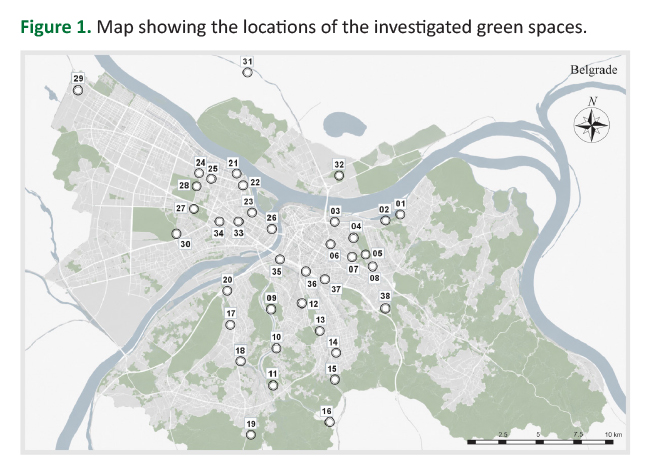 Figure 1. Map showing the locations of the investigated green spaces.
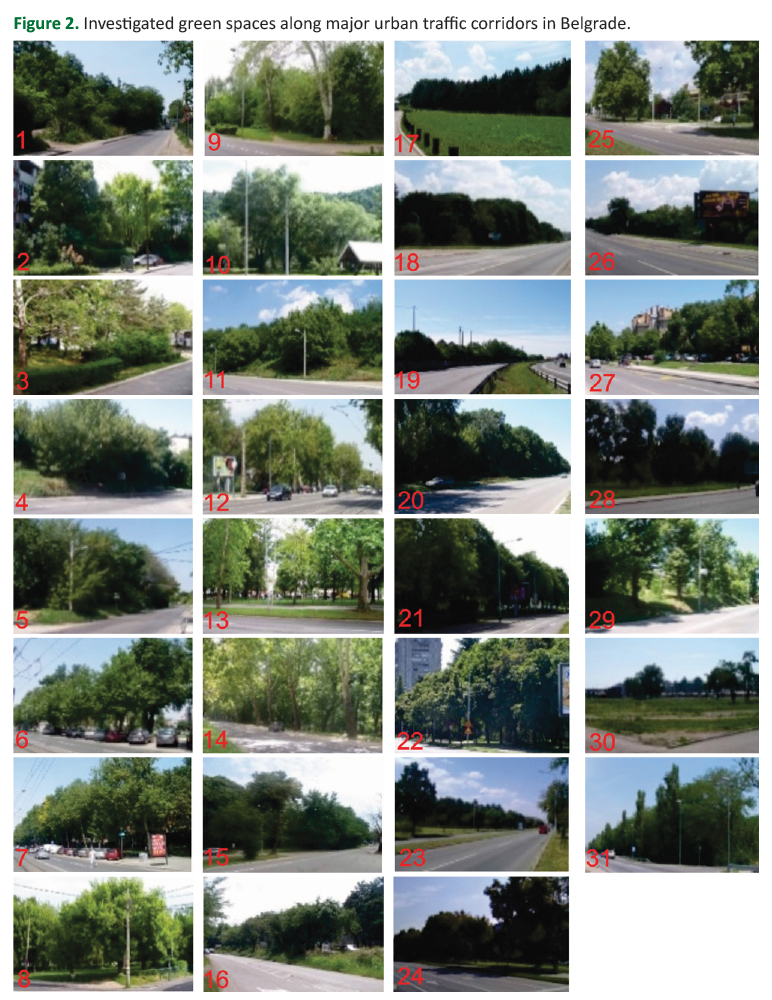 Figure 2. Investigated green spaces along major urban traffic corridors in Belgrade.
RESULTS AND DISCUSSION
An overview of the mean aesthetic quality scores, the dendrological structure of the 38 selected green spaces, and the percentage cover of different plant categories is presented in Table 1.
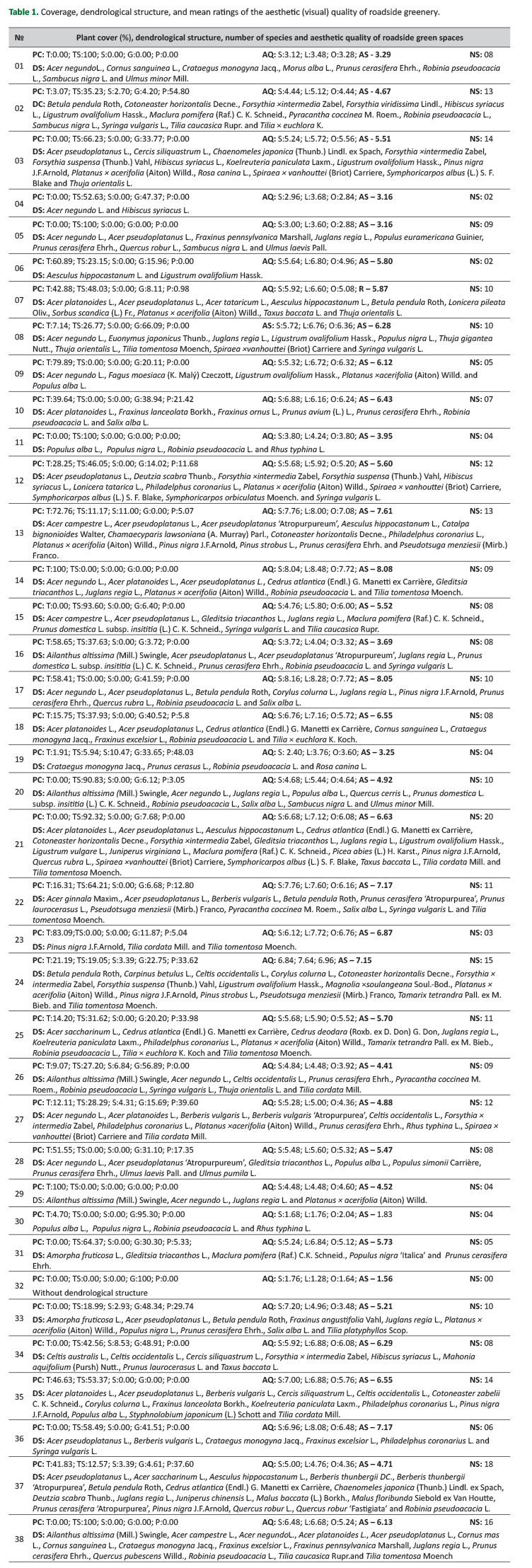
Influence of Green Space Coverage on the Visual Quality of the Investigated Roadside Greenery
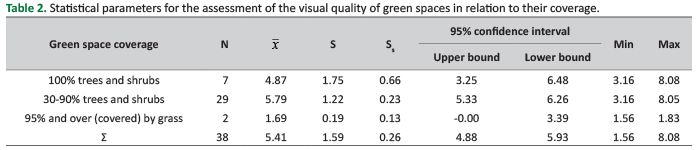
This study examined the influence of green space coverage—fully covered by trees and shrubs (100%), partially covered by trees and shrubs (30–90%), and more than 95% covered by grass—along traffic corridors on the assessment of their aesthetic quality.
As shown in Table 2, green spaces with 30–90% tree and shrub cover received the highest mean aesthetic quality rating (5.80±1.22). Slightly lower mean ratings were observed for green spaces fully covered by trees and shrubs (100%) (4.86±1.75), while the lowest mean rating was assigned to green spaces covered predominantly by grass (1.69±0.19) (Figure 3).
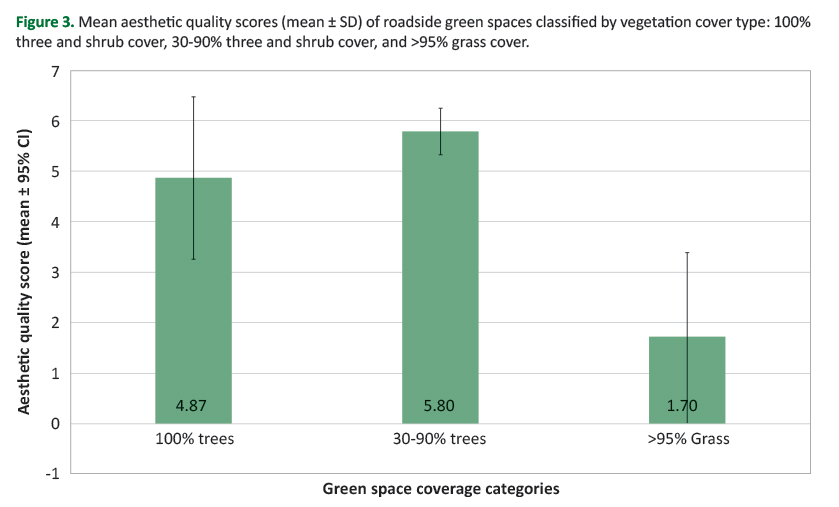
After applying Levene’s test to examine the homogeneity of variance (Table 3) and confirming that the assumption of variance homogeneity was met (Sig., i.e., p=0.20, greater than 0.05), a one-way analysis of variance (ANOVA) revealed that the F statistic was significant at the 0.01 level (F=9.92, p<0.001), indicating that there are statistically significant differences in the mean aesthetic quality ratings of green spaces depending on their coverage by different categories of plant material.
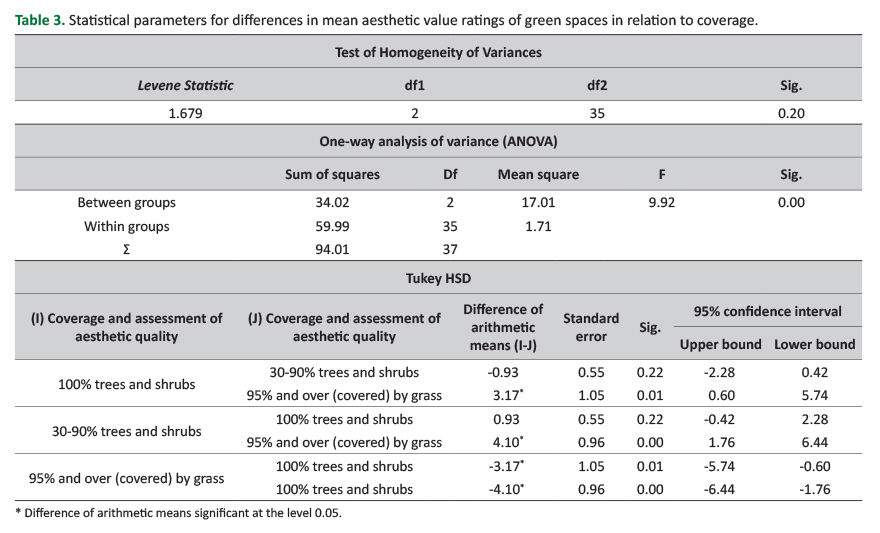
The Tukey HSD test confirmed that significant differences exist between green spaces covered predominantly by grass and those fully covered by trees and shrubs (significance level 0.05, p=0.013), as well as between green spaces with 30–90% coverage by trees, shrubs, and grass (significance level 0.01, p<0.001).
The lowest mean aesthetic quality rating was observed for grass-covered green spaces compared to those characterised by the presence of woody plants, which is consistent with the findings of Ulrich (1973), who reported that the absence of plant material reduces the overall aesthetic quality of green spaces, whereas the presence of plant material, particularly trees, positively influences the visual characteristics of the urban scene.
Thayer and Atwood (1978), in their study comparing pleasantness ratings for groups of slides depicting urban images with or without greenery, found that the presence of greenery significantly increases the overall assessment of aesthetic quality.
In relation to green space coverage, the greatest aesthetic (visual) impact on observers is produced by green spaces with 30–90% coverage by trees and shrubs. Green spaces fully covered by trees and shrubs (100%) were perceived as monotonous and less appealing, as were those covered by grass over 95%. Since only two green spaces covered exclusively by grass were included in this study, this result should be considered preliminary. Nevertheless, many researchers (Ulrich 1979, Smardon 1988) have emphasised that the presence or absence of vegetation, particularly taller plant forms such as trees and shrubs, has a substantial influence on the overall aesthetic experience of the landscape.
This concept was further supported by Kent (1993), who, in studies based on human perception of the visual (aesthetic) value of existing green spaces along traffic corridors in the United States, concluded that the selective addition or removal of plant material can significantly influence aesthetic (visual) quality, and that people respond very positively to green spaces. It was found that users prefer green space compositions that provide a certain visual effect within the landscape. Moreover, trees in particular were found to have a strong positive influence on user preference (McAndrews et al. 2006, Wolf 2006).
Relationship Between the Number of Taxa in Green Spaces and Visual Quality Ratings
The study examined the relationship between the number of plant taxa in green spaces and their aesthetic quality ratings.
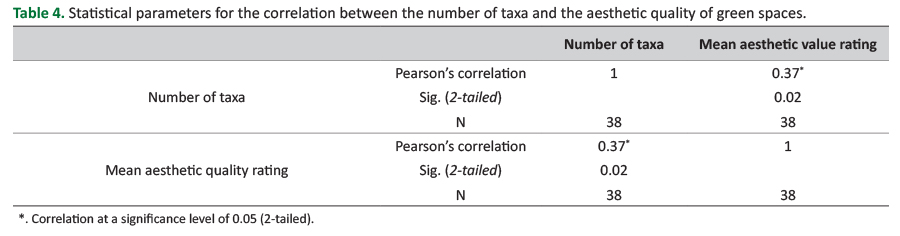
Pearson’s correlation (Table 4) revealed a correlation coefficient of 0.37 between the number of taxa in green spaces and their aesthetic value, indicating a medium effect size (Cohen 1988) and statistical significance at the 0.05 level (p=0.02). The results of the analyses confirmed that an increase in the number of taxa in green spaces is associated with higher ratings of aesthetic (visual) quality. Figure 4 illustrates the relationship between the number of taxa and the mean aesthetic quality scores of the investigated green spaces.
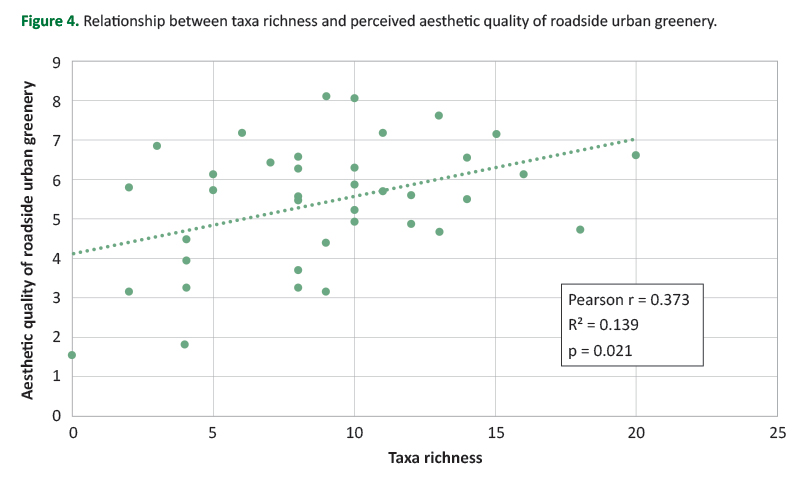
Plants, due not only to their fundamental ornamental characteristics—morphological diversity, colour, crown size and texture, specific features of flowers and fruits, and temporal visual variability—also exhibit distinct manifestations of life dynamics.
The results of these studies are supported by Amir and Gidalizon (1990b), who emphasise that the primary components of aesthetic quality in the landscape include, in addition to its physical aspects, its biophysical characteristics. It is evident that the presence of different plant taxa plays a significant role in the overall aesthetic (visual) experience of the landscape. Gunnarsson et al. (2017) also reported that people assign significantly higher value to green spaces with high rather than low levels of biodiversity, emphasising that urban planning should provide city residents with green spaces that are species-rich, lush, and diverse.
In the context of urban forestry, the obtained results indicate that the aesthetic (visual) quality of roadside greenery depends significantly on its dendrological structure and diversity. Green spaces characterised by the combined presence of trees, shrubs, and grass vegetation, as well as by a higher number of plant taxa, achieve higher aesthetic quality scores and may contribute to the greater attractiveness and functional value of urban roadside green corridors. These findings have direct practical relevance for urban forestry, as they suggest that species selection, enhancement of dendrological diversity, and the establishment of structurally more complex plantings should be considered key principles in the reconstruction of existing and the planning of new roadside greenery. Such recommendations are particularly important for cities in Southeastern Europe, where urban areas are exposed to intensive and often unplanned urbanisation, heavy traffic loads, and the adverse effects of climate change, while green corridors along roads play an important role in improving the visual quality of urban spaces, conserving urban biodiversity, and enhancing the overall quality of the urban environment.
Dendrological Structure of the Investigated Green Spaces along Major Urban Roads in Belgrade
A total of 104 woody taxa were recorded in the 38 investigated green spaces. Of these, 67 taxa belonged to the tree layer and 37 to the shrub layer. Twelve taxa belonged to the subdivision Pinophyta. Within the subdivision Magnoliophyta, 57 tree taxa and 35 shrub taxa were identified (Table 5).
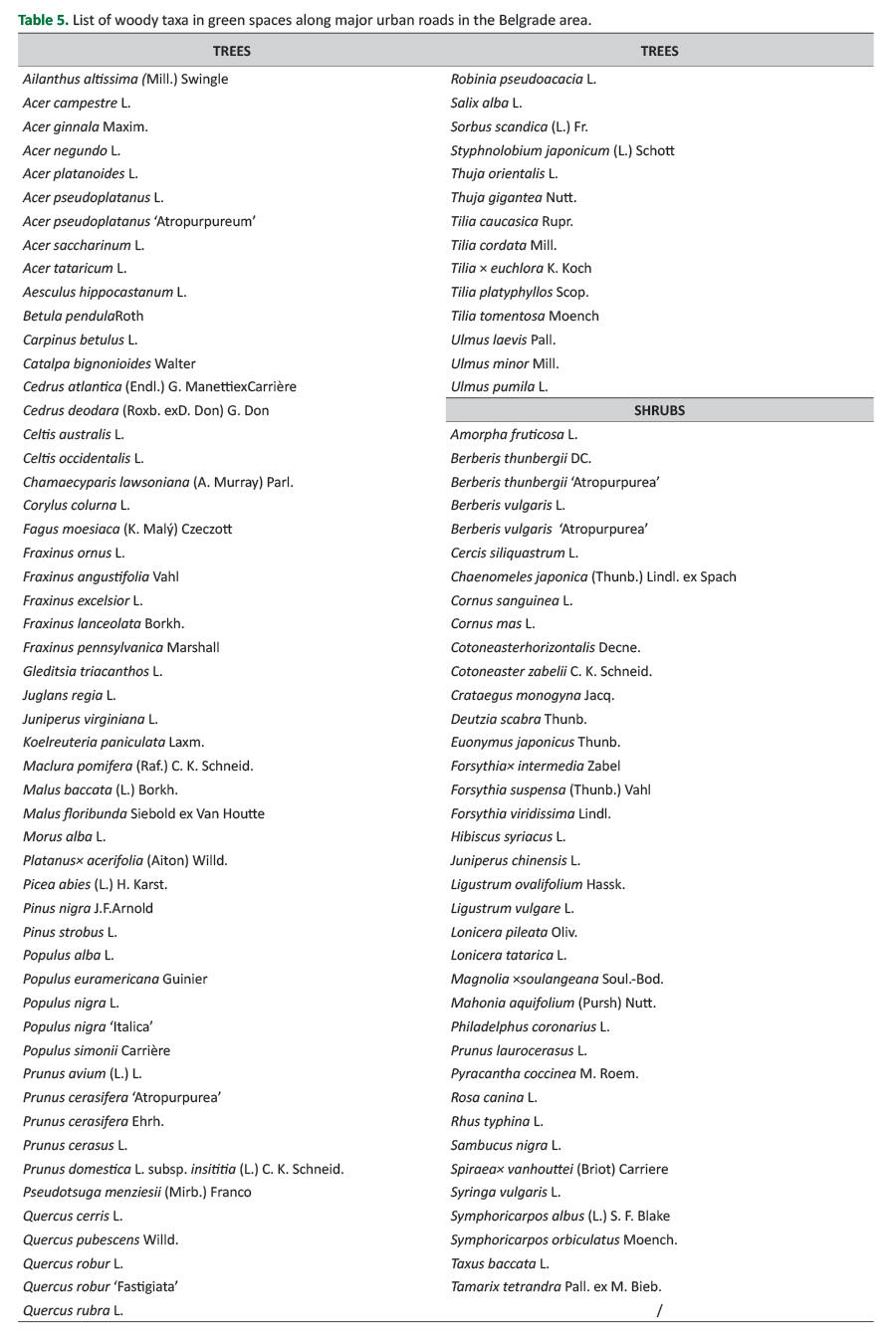 Table 5. List of woody taxa in green spaces along major urban roads in the Belgrade area.
The number of recorded woody taxa indicates a significant dendrological potential of green spaces along Belgrade’s road green corridors. It was determined that, of the total number of taxa, 11.54% of woody plants belong to gymnosperms, while 88.46% belong to angiosperms.
The reduced presence of gymnosperms in the studied green spaces is associated with the greening of roadside areas predominantly with broadleaf taxa and the presence of shrublands, small woodlands, and forests composed mainly of native deciduous vegetation. The lower proportion of gymnosperms may also be related to the intensification of climate change (particularly increasing air temperatures) in recent years in urban areas, which has generally led to a reduction in coniferous species.
An analysis of the proportional representation of native, alien, hybrid, and lower taxa in the studied green spaces revealed the following ratio: 34.84:53.84:5.77:5.77. The ratio of deciduous, evergreen, and semi-evergreen plants was found to be 79.81%:18.27%:1.92%.
Green spaces in Belgrade have often developed from parts of former natural vegetation zones—deciduous natural forests or their remnants—and therefore the dendrological composition of Belgrade’s green spaces, particularly those along road corridors, is predominantly characterised by deciduous species that naturally occur in the immediate urban surroundings.
The results indicate that the identified dendrological diversity and structure of roadside green spaces are important not only in terms of aesthetic (visual) quality, but also in providing numerous ecosystem services that are a subject of urban forestry. A higher number of taxa, as well as the presence of trees, shrubs, and grass vegetation, contribute to the conservation of urban biodiversity, mitigation of the urban heat island effect, reduction of air pollution and noise, and improvement of microclimatic conditions along roads. At the same time, dendrological composition directly influences the intensity and type of required maintenance measures, as well as the long-term stability and resilience of green spaces to climate change. Therefore, the results of this study may serve as a useful basis for integrated planning, species selection, and management of urban greenery in Belgrade, as well as in other cities of Southeastern Europe, where it is necessary to simultaneously balance the aesthetic, ecological, and functional requirements of urban space design.
CONCLUSIONS
The aesthetic (visual) value of greenery along major traffic corridors in Belgrade was assessed based on the visual perception of 75 respondents, divided into three categories according to professional background (landscape architects, students, and respondents from other professions).
The results show that the percentage coverage of green spaces by different plant categories (trees, shrubs, and grass) influences respondents’ visual perception. It was found that green spaces with 30–90% coverage by trees and shrubs produce the greatest visual impact on observers, whereas green spaces fully covered by trees and shrubs (100%) and those covered by more than 95% grass were perceived as monotonous and less appealing.
On the ten-point scale of visual (aesthetic) value, green spaces with 30–90% tree and shrub cover received the highest mean visual quality rating of 5.80. Slightly lower mean ratings were observed for green spaces fully covered by trees and shrubs (100%) at 4.86, while the lowest mean rating was recorded for green spaces covered predominantly by grass (1.69).
It was also established that the aesthetic quality of green spaces along traffic corridors increases with the number of different tree and shrub taxa present (r=0.37; p=0.02).
The aesthetic quality of roadside greenery depends on its dendrological structure and diversity, which has direct relevance for urban forestry practice. The results of this study may serve as a professional basis for species selection, increasing dendrological diversity, reconstructing existing greenery, and planning new roadside plantings, with the aim of improving the visual quality of urban space, conserving biodiversity, and enhancing the quality of the urban environment.
A total of 104 woody taxa were recorded in the 38 investigated green spaces. Of these, 67 taxa belonged to trees and 37 to shrubs. Twelve taxa belonged to the subdivision Pinophyta. Within the subdivision Magnoliophyta, 57 tree taxa and 35 shrub taxa were identified. The identified significant diversity of dendrological material indicates important implications for urban forestry and urban green space management. Roadside greenery in urban areas provides not only aesthetic benefits but also synergistic ecosystem services, including biodiversity enhancement and improved urban microclimatic conditions.
The results of the study confirm the need for an integrated approach to urban roadside greening that simultaneously considers aesthetic quality, ecological functionality, and maintenance efficiency in its design and management.
Author Contributions
NS conceived and designed the study, NS and MT conducted the field research, BJ verified the statistical analysis, BJ and AL assisted with manuscript preparation, BJ and AS prepared the tables and figures for manuscript and NS and AL wrote the manuscript.
Funding
This research was funded by The Ministry of Education, Science and Technological Development which is financing the scientific research work of the University of Belgrade - Faculty of Forestry on the basis of the Agreement on the realization numbers: 451-03-137/2025-03/ 200169 od 04.02.2025.
Conflicts of Interest
The authors declare no conflict of interest.
REFERENCES
Akbar F, Hale G, Headley D, 2003. Assessment of scenic beauty of the roadside vegetation in Northern England. Landscape Urban Plan 63(3): 139–144. https://doi.org/10.1016/S0169-2046(02)00185-8.
Amir S, Gidalizon E, 1990. Expert-based method for the evaluation of visual absorption capacity of the landscape. J Environ Manage 30(3): 251–263. https://doi.org/10.1016/0301-4797(90)90005-H.
Anastasijević N, Vratuša V, 1999. Analysis of the Aesthetic Value of Plants in Shaping the Image of a Large City. In: Monograph: Environmental Protection and Suburban Settlements, Vol. 1, Eco Conference 99, 22–25 September 1999, Novi Sad, Serbia, pp 445–450.
Appleton J, 1996. The experience of landscape, 2nd ed. John Wiley, Chicester, United Kingdom, 282 p.
Appleyard D, 1980. Urban trees, urban forests: what do they mean? In: Hopkins G (ed) Proceedings of the National Urban Forestry Conference I, 13–16 November 1978, Washington, DC, USA. USDA Forest Service, Washington, DC, USA.
Arriaza M, Canas-Ortega F, Canas-Madueno A, Ruiz-Aviles P, 2004. Assessing the visual quality of rural landscapes. Landscape Urban Plan 69(1): 115–125. https://doi.org/10.1016/j.landurbplan.2003.10.029.
Blumentrath C, Tveit MS, 2014. Visual characteristics of roads: A literature review of people’s perception and Norwegian design practice. Transport Res A-Pol 59: 58-71. https://doi.org/10.1016/j.tra.2013.10.024.
Brunsen W, Shelby B, 1992. Assessing recreational and scenic quality. How does New Forestry rate? J Forest 90(7): 37–41. https://doi.org/10.1093/jof/90.7.37.
Chen B, Ochieng A, Baoc Z, 2009. Assessment of aesthetic quality and multiple functions of urban green space from the users’ perspective: The case of Hangzhou Flower Garden, China. Landscape Urban Plan 93(1): 76–82. https://doi.org/10.1016/j.landurbplan.2009.06.001.
Clay R, Daniel C, 2000. Scenic landscape assessment: the effects of land management jurisdiction on public perception of scenic beauty. Landscape Urban Plan 49(1-2): 1–13. https://doi.org/10.1016/S0169-2046(00)00055-4.
Clay GR, Marsh SE, 2001. Monitoring forest transitions using scanned ground photographs as a primary data source. Photogramm Eng Rem S 67(3): 319–330.
Cohen JW, 1988. Statistical Power Analysis for the Behavioral Sciences. 2nd edn. Lawrence Erlbaum Associates, Hillsdale, USA, 567 p.
Council of Europe, 2000. The European Landscape Convention, Report and Convention, Florence, Italy.
Cvjetičanin R, Brujić J, Petrović M, Stupar V, 2016. Dendrology. University of Belgrade, Faculty of Forestry, Belgrade, Serbia.
Daniel C, Boster S, 1976. Measuring landscape esthetics: the scenic beauty estimation method, USDA Forest Service Research Paper. RM-167, 66 p. U.S. Department of Agriculture, Forest Service, Washington, DC, USA.
Daniel, TC, Vining, J, 1983. Methodological issues in the assessment of visual landscape quality. In: Altman I, Wohlwill JF (eds.), Human Behavior and the Environment, Vol. 6: Behavior and the Natural Environment. Plenum Press, New York, USA, pp 39–84.
Daniel T, 2001. Wither scenic beaty? Visual landscape quality assesment in the 21st century. Landscape Urban Plan 54(1-4): 267-281. https://doi.org/10.1016/S0169-2046(01)00141-4.
Drottenborg H, 1999. Aesthetics and safety in traffic environments. Licentiate thesis. Institutionen för teknik och samhälle, Tekniska högskolan i Lund (Lund University of Technology), Lund, Sweden.
Girot C, 2010. Die Ränder der Wahrnehmung. In: Wolf C, Sabine G (eds) Blicklandschaften – Landschaft in Bewegung / Landscape in Movement. gta Verlag, Zürich, Switzerland, pp 12–31.
Gunnarsson B, Knez I, Hedblom M, Sang AO, 2017. Effects of biodiversity and environment-related attitude on perception of urban green space. Urban Ecosyst 20: 37-49. https://doi.org/10.1007/s11252-016-0581-x.
Hall FC, 2001. Ground-based photograph monitoring. General Technical Report PNW-GTR-503. Pacific Northwest Research Station, USDA Forest Service, Portland, OR, USA. https://doi.org/10.2737/PNW-GTR-503.
Hao J, Li Y, Hu T, Ma Y, Wang X, Liu J, Gai T, Qiu L, 2024. Vegetation diversity in structure, species or colour: Coupling effects of the different characteristics of urban green spaces on preference and perceived restoration. Ecol Indic 169: 112897. https://doi.org/10.1016/j.ecolind.2024.112897.
Hull RB, Stewart WP, 1992. Validity of Photo-Based Scenic Beauty Judgments. J Environ Psychol 12(2): 101-114. https://doi.org/10.1016/S0272-4944(05)80063-5.
Jacobs P, Way D, 1969. Visual analysis of landscape development. Department. of Landscape Architecture, Harvard University, Cambridge, MA, USA.
Jovanović B, 2000. Dendrology, 6th edn. University of Belgrade, Faculty of Forestry, Belgrade, Serbia.
Junta de Andalucía 2009. Roads in the landscape: Criteria for their planning, layout and project design. Consejería de Obras Públicas y Transportes, Sevilla, Spain.
Karjalainen E, 1996. Scenic preferences concerning clear‐fell areas in Finland. Landscape Res 12(2): 159-173. https://doi.org/10.1080/01426399608706483.
Кent R, 1993. Determining scenic quality along highways: a cognitive approach. Landscape Urban Plan 27(1): 29-45. https://doi.org/10.1016/0169-2046(93)90026-a .
Krüssmann G, 1986. Manual of cultivated broad-leaved trees & shrubs. Vols. I–III. Ipp, London, United Kingdom.
McAndrews C, Flórez J, Deakin E, 2006. Views of the street. Using community surveys and focus groups to inform context-sensitive design. Transportation Research Record: Journal of the Transportation Research Board 1981(1): 92–99. https://doi.org/10.1177/0361198106198100.
Meitner MJ, Daniel TC, 1997. Vista scenic beauty estimation modeling: a GIS approach. In: Proceedings of the ESRI User Conference. ESRI Press, San Diego, CA, USA.
Nelson WR, 1976. Aesthetic consideration in the selection and use of trees in the urban environment. In: Better Trees for Metropolitan Landscapes. USDA Forest Service General Technical Report NE-22. U.S. Department of Agriculture, Forest Service, Washington, DC, USA, pp 13–29.
Peng Y, Li Z, Shah AM, Lv B, Liu S, Liu Y, Li X, Song H,Chen Q, 2025. Decoding the role of urban green space morphology in shaping visual perception: a park-based study. Land 14(3): 495. https://doi.org/10.3390/land14030495.
Smardon C, 1988. Perception and aesthetics of the urban environment: review of the role of vegetation. Landscape Urban Plan 15(1-2): 85–106. https://doi.org/10.1016/0169-2046(88)90018-7.
Southon G E, Jorgense, A, Dunnett N, Hoyle H, Evans K L, 2017. Biodiverse perennial meadows have aesthetic value and increase residents’ perceptions of site quality in urban green-space. Landscape Urban Plan 158: 105-118. https://doi.org/10.1016/j.landurbplan.2016.08.003.
Stojanović N, 2016. Ecological and Aestetic Function of Green Spaces along the Main Routes in Belgrade. PhD Thesis, University of Belgrade, Faculty of Forestry, Belgrade, Serbia, 245 p.
Thayer RL, Atwood BC, 1978. Plants, complexity and pleasure in urban and suburban environment. Environ Psych Nonver 3: 67–76. https://doi.org/10.1007/BF01135604.
Ulrich S, 1973. Scenery and the shopping trip: The roadside environment as a factor in route choice. Department of Geography, University of Michigan, Ann Arbor, MI, USA.Michigan Geographical Publication No. 12, 176 p.
Ulrich S, 1979. Visual landscapes and psychological wellbeing. Landscape Res 4(1): 17-23. https://doi.org/10.1080/01426397908705892.
Vukićević E, 1996. Ornamental Dendrology. 4th edn, University of Belgrade, Faculty of Forestry, Belgrade, Serbia.
Wolf KL, 2006. Assessing public response to freeway roadsides: urban forestry and context-Sensitive solutions. Transport Res Rec 1984(1): 102-111. https://doi.org/10.1177/03611981061984001.
Zhang G, Wu G, 2025. Interactive influence of the perceived visual richness, greenness and scenography on landscape preference of urban woodland. J Environ Psychol 103: 102586. https://doi.org/10.1016/j.jenvp.2025.102586.
© 2026 by the author(s). License: Croatian Forest Research Institute. This article is an open access article distributed under the terms and conditions of the Creative Commons Attribution 4.0 International License (CC BY 4.0).