

SEEFOR 17(2): 26022
Article ID: 26022
DOI: https://doi.org/10.15177/seefor.26-022
REVIEW PAPER
Synthesis of Knowledge to Develop Comprehensive Guidelines for the in situ and ex situ Conservation of European Yew (Taxus baccata L.)
Dalibor Ballian1, Mirzeta Memišević Hodžić1, Carolina Sánchez-Romero2, Fani Lyrou3, Eleftheria Dalmaris3, Anabela Dias Ferreira Belo4, Zuzana Münzbergová5,6, Marcin Klisz7, Filippos (Phil) Aravanopoulos3,*
Addresses:
(1) University of Sarajevo, Faculty of Forestry, Zagrebačka 20, BA-71000 Sarajevo, Bosnia and Herzegovina;
(2) University of Malaga, Department of Botany and Plant Physiology, Campus de Teatinos, ES-29071 Malaga, Spain;
(3) Aristotle University of Thessaloniki, Faculty of Agriculture, Forestry and Natural Environment, Laboratory of Forest Genetics and Tree Breeding, GR-54124 Thessaloniki, Greece;
(4) Universidade de Évora, Departamento de Biologia, Escola de Ciências e Tecnologia, Mediterranean Institute for Agriculture, Environment and Development, Pólo da Mitra, Apartado 94, P-7006-554 Évora, Portugal;
(5) Charles University, Faculty of Science, Department of Botany, Benátská 2, CZ-128 01 Prague 2, Czech Republic;
(6) Czech Academy of Sciences, Institute of Botany, Department of Population Ecology, Zámek 1, CZ-252 43 Průhonice, Czech Republic;
(7) Forest Research Institute, Department of Silviculture and Forest Tree Genetics, Dendrolab IBL, Braci Leśnej 3, Sękocin Stary, PL-05-090 Raszyn, Poland
* Correspondence: e-mail: aravanop@for.auth.gr
Citation: Ballian D, Memišević Hodžić M, Sánchez-Romero C, Lyrou F, Dalmaris E, Belo ADF, Münzbergová Z, Klisz M, Aravanopoulos FA, 2026. Synthesis of Knowledge to Develop Comprehensive Guidelines for the in situ and ex situ Conservation of European Yew (Taxus baccata L.). South-east Eur for 17(2): 26022. https://doi.org/10.15177/seefor.26-022.
Received: 3 May 2026; Revised: 14 Jul 2026; Accepted: 16 Jul 2026; Published online: 30 Oct 2026
Cited by: Google Scholar
Abstract
Taxus baccata L. (common yew) is a tertiary relict conifer and one of the longest-lived tree species in Europe, yet it has experienced one of the most severe population declines among European forest trees. This review synthesises current knowledge on the biology, ecology, distribution, genetic diversity, and conservation of T. baccata, with particular emphasis on the preservation of its genetic resources under ongoing environmental change. We summarise the species’ taxonomy, morphology, reproductive biology, and ecological requirements, highlighting its pronounced shade tolerance, broad edaphic amplitude, and dependence on humid, mild climatic conditions. The present distribution of common yew is highly fragmented throughout its range, occurring predominantly in patchy, discontinuous populations that are often small and spatially isolated. Although the species is distributed across much of Europe, the Mediterranean region, North Africa, and western Asia, population size and continuity vary locally depending on habitat conditions, land-use history, and conservation status. Despite extensive historical decline driven by past timber exploitation, deliberate eradication due to livestock toxicity, and chronic browsing pressure, T. baccata retains relatively high levels of genetic diversity compared to other conifers. This resilience reflects its extreme longevity, outcrossing mating system, wind pollination, and effective seed dispersal. However, genetic structure varies strongly across the species’ range, with low differentiation in core areas and pronounced structuring, reduced diversity, and increased inbreeding in peripheral and southern populations. Limited regeneration, skewed sex ratios, habitat fragmentation, and restricted gene flow pose significant risks to long-term population viability, particularly under climate change. Projected increases in temperature, drought frequency, and fire occurrence are expected to exacerbate pressures on southern and peripheral populations, while potential northward range shifts are constrained by slow growth, high juvenile mortality, and limited dispersal capacity. The review emphasises that effective conservation of T. baccata requires integrated strategies combining in situ genetic conservation, forest and herbivory management, promotion of natural regeneration, and maintenance of landscape connectivity. Where necessary, carefully designed population reinforcement, assisted gene flow, and ex situ measures can complement in situ efforts. Safeguarding the genetic integrity and adaptive potential of common yew is essential to ensure its persistence as a functional component of European forest ecosystems under future climatic and land-use change.
Keywords: Taxus baccata; forest genetic resources; population fragmentation; regeneration limitation; conservation genetics; climate change; European forests
ECOLOGY AND DISTRIBUTION OF TAXUS BACCATA
Common yew (Taxus baccata L.) is a Tertiary relict species (González-Martínez et al. 2010) and is included in protection programmes in several European countries (Linares 2013). T. baccata belongs to one of the oldest extant conifer lineages, with the genus Taxus appearing in the fossil record during the Late Jurassic, approximately 145–160 million years ago (Farjon 2010). T.baccata has a broad but discontinuous distribution in Europe, North Africa, and western Asia. Today, the species is highly fragmented throughout its range, typically occurring in patchy and often spatially isolated populations. Across its range, yew typically occurs in sheltered, mesic habitats, often in topographically complex microrefugia, reflecting its long-term sensitivity to climatic and anthropogenic pressures.
Common yew is one of the longest-lived tree species in Europe. However, accurate age determination is difficult. Recent dendrochronological analyses provide minimum ages of several centuries for large hollow yews (Hindson and Moir 2026). Historical exploitation of yew for its durable and elastic wood, particularly for longbow production, led to extensive harvesting across Europe. Between the 13th and 16th centuries, large quantities of yew timber from Central Europe were exported to England, which had a lasting negative impact on the regeneration of yew populations in the region (Kaiser et al. 2024). However, toxicity to livestock and associated grazing conflicts resulted in deliberate removal from many landscapes, contributing to one of the most pronounced population declines among European tree species (Habitats Directive 92/43/EEC, European Commission 2007, Benham et al. 2016). Genetic studies further support this widespread decline, with formal bottleneck tests revealing reduced effective population sizes and historical contractions in multiple populations (Mayol et al. 2020, Stefanowska et al. 2021, Chybicki et al. 2024).
In parts of central and northern Europe, common yew can locally form dense stands. However, at the landscape level, populations are generally scattered and spatially fragmented, a pattern also observed more widely across its range (Svenning and Magård 1999, Thomas and Polwart 2003, Ruprecht et al. 2010). In the Mediterranean region, common yew typically occurs as small, isolated stands or scattered individuals, reflecting the fragmented distribution characteristic of rear-edge populations persisting in montane refugia near the southern limit of the species’ range (Kassioumis et al. 2004, Casals et al. 2015). Dense patches in both regions are usually restricted to specific microhabitats or influenced by historical management. Isolated trees are usually confined to shaded ravines or north-facing slopes (Król 1978, García et al. 2000, Navarro-Cerrillo and Pulido-Pastor 2003, Ballian 2014a, 2014b, Benham et al. 2016, Mayol et al. 2020). Within its core and northern range, common yew occurs in mixed forests with Fagus sylvatica, Carpinus betulus, Fraxinus excelsior, Acer spp., and Ulmus spp., often with Abies alba and Picea abies, and Buxus sempervirens in the shrub layer, reflecting oceanic and temperate forest communities (Svenning and Magård 1999, Thomas and Polwart 2003, Ruprecht et al. 2010). On Mediterranean islands such as Sardinia and Corsica, yew-dominated forests occur with Ilex aquifolium, Buxus sempervirens, Sorbus aria, and Mercurialis perennis (Schlegel and Heinze 2015).
Taxus baccata is currently assessed as Least Concern on the IUCN Red List of Threatened Species (Farjon 2013). While the species itself is not directly listed in the annexes of the EU Habitats Directive, many of the habitat types where it occurs are protected within Natura 2000 network, contributing to the conservation of key yew populations and stands.
Taxonomy
An overview of the taxonomic position of common yew follows recent systematic treatments by Farjon (2010). T. baccata is a coniferous seed plant (Spermatophyta), placed within the division Pinophyta, class Pinopsida, order: Pinales, family: Taxaceae, genus Taxus, species Taxus baccata L. According to several authors, more than 70 cultivars of common yew are recognised in Europe, including the well-known columnar Irish yew (T. baccata cv. Fastigiata Loudon) (Elwes and Henry 1906, Vidaković 1982, 1993, Vidaković and Franjić 2004).
Morphology
Common yew is an evergreen conifer that typically occurs as a small tree or shrub, although under favourable conditions it may reach heights of 20 m and more. The species is notable for its exceptional longevity, with individuals commonly exceeding several centuries and, in some cases, over 1,000 years, although precise age determination is often complicated by heartwood decay and trunk hollowing in older trees. Owing to its slow growth and ecological strategy, reproductive maturity is typically attained after several decades and may be substantially delayed under shaded conditions. These characteristics are well documented in range-wide syntheses and reviews of the species’ ecology and biology (Thomas and Polwart 2003, Saulnier et al. 2026).
The species usually develops a single main stem, but early branching often results in multiple stems. The wood is hard, elastic, and dense (600–800 kg·m⁻³), characterised by distinct heartwood coloration and the absence of resin canals (Schweingruber 1978, 1993, Richter 2015). The bark is thin and smooth in young individuals, later becoming fissured and exfoliating in thin, reddish-brown plates.
Unlike many conifers, common yew does not form whorled branches. Instead, branches are arranged irregularly or in loose spirals and frequently arise from epicormic shoots following damage or increased light availability, producing a dense crown. Although the species is shade-tolerant, optimal crown development generally occurs under higher light conditions. Needles persist for up to 8–10 years and are flat, dark green on the upper surface, with two pale green stomata-free bands on the lower surface. They are typically 20–30 mm long and approximately 2 mm wide, tapering towards a petiole-like base. Young twigs are green and polygonal, bearing numerous lateral shoots originating from dormant buds (Jovanović 1956, 1971, 2000, Negulescu and Săvulescu 1957, Rushforth 1987, Vidaković 1993, Thomas and Polwart 2003, Brus 2004, Vidaković and Franjić 2004, Benham et al. 2016).
The root system of common yew can penetrate compressed soils, allowing the species to survive in extreme conditions, such as rocky terrain and vertical cliff faces. This rooting strategy together with tolerance to temporary flooding and moderate drought, underlines the ecological adaptability of yew in a wide range of soil types and forest understorey environments (Benham et al. 2016).
Common yew is predominantly dioecious, with male and female reproductive structures borne on separate individuals, although monoecious individuals have occasionally been reported in natural populations and appear to be extremely rare (Iszkuło and Jasińska 2004). Male microstrobili appear in March and April in clusters of up to 20–30 and consist of small, globular, yellowish structures approximately 2–3 mm in diameter. These wind-pollinated strobili contain shield-shaped microsporophylls bearing 4–9 pollen sacs (Mundry and Mundry 2001). Female reproductive structures develop concurrently, are less frequent, and occur singly or in pairs in the axils of needles on young shoots. Each female structure bears a single ovule (approximately 1.5–2.0 mm long), which develops into a single seed (Jovanović 1956, 1971, 2000, Negulescu and Săvulescu 1957, Vidaković 1982, 1993, Rushforth 1987, Thomas and Polwart 2003, Brus 2004, Vidaković and Franjić 2004). Mature seeds are ovoid to slightly flattened, smooth, and brownish yellow, measuring approximately 6–7 × 5 mm, and are partially enclosed by a fleshy red aril about 9 × 7 mm in size. Seeds ripen within the flowering year, from August to late autumn, and are typically dispersed by birds attracted to the aril, enabling long-distance seed dispersal (Jovanović 1956, 1971, 2000, Negulescu and Săvulescu 1957, Vidaković 1982, 1993, Rushforth 1987, Thomas and Polwart 2003, Brus 2004, Vidaković and Franjić 2004).
Species Distribution
T.baccata has a broad but discontinuous natural distribution extending across the whole of Europe (northern limit in southern Scandinavia, ~63°N), North Africa, Caucasus and northern Iran (Figure 1). The species is unevenly distributed, typically occurring in small, fragmented populations of mesic and sheltered habitats, being largely absent from regions with strongly continental climates (Thomas and Polwart 2003, Farjon 2010, EUFORGEN 2016, Caudullo et al. 2017).
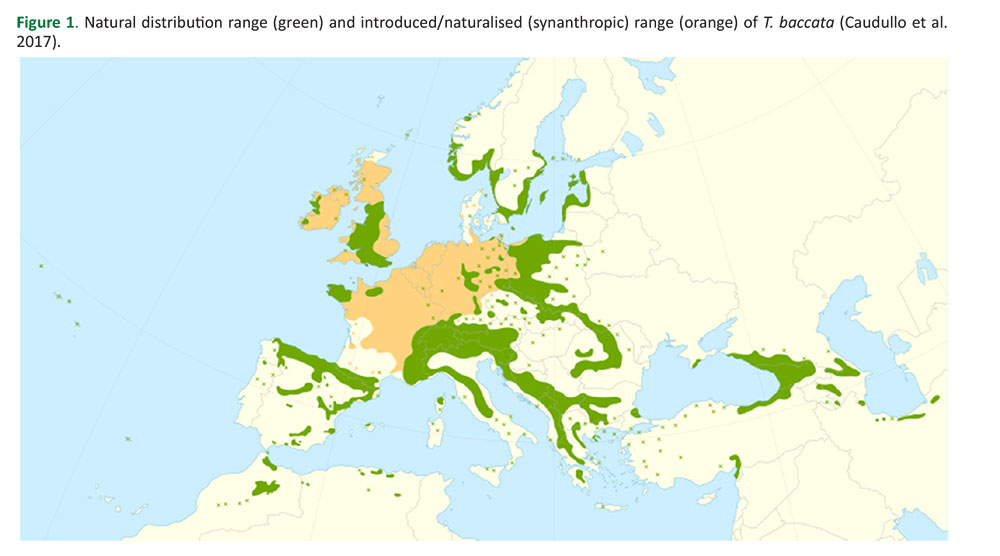
Common yew occurs predominantly at low to moderate elevations in the central and northern parts of its range, whereas in southern Europe, North Africa, and western Asia it is more frequently found in montane environments, reaching elevations ~2000–2500 m, although upper altitudinal limits vary geographically (Thomas and Polwart 2003, Farjon 2010, EUFORGEN 2016, Caudullo et al. 2017).
Ecology
Common yew generally occurs in humid, mild oceanic climates and shows its highest vitality in regions with relatively mild winters, high annual precipitation, high air humidity, and frequent fog (Meusel 1943, Tittensor 1980, Melzack and Watts 1982, Farjon 2010, Benham et al. 2016, Hayne et al. 2016). However, under very wet oceanic conditions, rising groundwater tables may negatively affect growth and can lead to the decline or local extinction of populations (Bebchuk et al. 2024).
At the northern limits of its distribution, annual sum of precipitation may be only slightly above 500 mm. In these areas, physiological drought can be an important factor limiting seedling survival, primarily because winter freezing and prolonged sub‑zero temperatures reduce soil water availability during critical periods of seedling establishment. High mortality of yew seedlings after the first winter has been observed under natural conditions, especially where low temperatures interact with limited light availability, indicating that cold stress and frozen soils restrict water uptake and contribute to range‑limit dynamics (Iszkuło 2010). At the southern margins of its range, common yew occurs primarily in Mediterranean mountain climates, where annual precipitation typically exceeds 900–1000 mm and mean annual temperatures are around 10–11°C. Successful regeneration in these areas requires summer rainfall of at least 100 mm (Sanz et al. 2009). Winter cold and cold spring winds further constrain the species at its southern limits (Voliotis 1986).
Besides long-term human impact, ecological constraints have also played a key role in shaping the fragmented distribution of T. baccata across its range. Low temperatures limit its expansion in northern regions, while continental climates in eastern parts of its distribution, prolonged summer droughts in south-eastern areas, and high temperatures combined with water scarcity in North Africa restrict its occurrence (Kamppa 1926, Król 1978, Środoń 1978). Near these climatic extremes, common yew is largely confined to moist microhabitats such as rock crevices, canyon systems, and shaded forest understories, where local conditions buffer against drought, frost, and excessive evapotranspiration (Sokolowski 1921, Hoffmann 1958, Faegri 1960, Król 1978, Tittensor 1980, Peñalba 1994, Saniga 2000, Pintarić 2002, Farjon 2010, Hayne et al. 2016). In the southern parts of its range, the species is particularly associated with shaded north- or north-west-facing slopes within deciduous or mixed forests that provide a comparatively mild microclimate (Schirone et al. 2003, 2010a, 2010b, 2010c, Thomas and Polwart 2003).
Common yew frequently occupies steep and inaccessible rocky habitats and canyon systems, where individuals may grow directly above watercourses or on vertical cliffs, thereby escaping grazing pressure and competition (Pigott 1969, Rodwell 1991). Although common yew is often associated with calcareous substrates, it can grow on a wide range of soil types, including silicate soils derived from igneous and sedimentary rocks (Elwes and Henry 1906, Watt 1926, Webb 1977, Król 1978, Kelly 1981, Vidaković 1991, Thomas and Garcia-Marti 2015). Regional differences in soil preference have been reported, with calcareous soils favoured in northern Europe and silicate substrates more common in southern populations (Voliotis 1986). Optimal growth generally occurs on deep, moist, well-drained sandy soils with some clay content, whereas extremely dry, shallow, or rocky soils support only small, isolated individuals (Webb 1977, Bugala 1978). Common yew shows low tolerance of prolonged waterlogging and performs poorly on wet acidic peats and heavy clay soils, although it may contribute to the woody structure of peat bogs in eastern England (Król 1978, Williamson 1978, Ellenberg 1988). Overall, the species is best characterised as a tree of the European temperate and mild climatic zone (Meusel 1943, Preston and Hill 1997).
Growth and Life-Cycle Constraints of T. baccata under Environmental Change
Requirements for Light
Common yew is a shade-tolerant species that develops successfully under partial shading, but it also tolerates full sunlight and generally exhibits faster growth in more open habitats (Watt 1926, Bugala 1978, Król 1978, Ellenberg 1988, Mitchell 1988, Vidaković 1991, Brzeziecki and Kienast 1994, Svenning and Magård 1999, Pintarić 2002, Thomas and Polwart 2003, Vidaković and Franjić 2004, Perrin and Mitchell 2013). Seedlings can survive under very low light conditions, particularly beneath parental canopies, with as little as 0.5% of full sunlight sufficient for development (Iszkuło and Boratyński 2006). However, such low light levels primarily support persistence rather than vigorous growth or full development, highlighting the species’ strong shade tolerance during the earliest life stages. Reproductive processes, including seed production and aril development, may also occur in shaded environments (Bugala 1978). Light requirements vary seasonally, ranging from approximately 3.2 lux in winter to 175 lux during summer (Pavletić and Lieth 1958).
Water Requirements
Dendrochronological studies indicate that precipitation, particularly during late winter and early summer, has a strong positive influence on radial and height growth of common yew, especially on sandy and gravelly substrates (Moir 1999). Mild, wet winters combined with cooler summers provide optimal growth conditions, whereas hot and dry summers negatively affect growth (Galvin et al. 2014, Cedro and Cedro 2015). In Bulgaria, up to 93% of annual ring-width variability has been attributed to precipitation during January–June of the current year and October–December of the preceding year (Lyubenova et al. 2001). Optimal annual precipitation is close to 1000 mm, although southern populations persist under considerably lower rainfall, for example approximately 570 mm annually in Greece (Katsavou and Ganatsas 2012). While common yew tolerates short-term flooding associated with extreme weather events, it generally exhibits greater tolerance to prolonged dry periods and is regarded as among the more drought-tolerant European tree species (Brzeziecki and Kienast 1994).
Sex-specific growth responses to water availability have been reported, with a higher proportion of female individuals occurring in wetter environments, reflecting their greater reproductive water demand (Cedro and Iszkuło 2011, Iszkuło et al. 2011). Radial growth patterns in T. baccata can differ between males and females, reflecting differential resource allocation associated with reproductive investment; females often have lower radial growth than males, likely due to higher reproductive costs (Garbarino et al. 2015, Nowak-Dyjeta et al. 2017). Recent work has further refined this perspective by demonstrating that growth sensitivity to drought and precipitation may also vary among different genetic groups, as shown in the first dendrogenetic study on common yew (Tonelli et al. 2025).
Regarding reproductive biology, a recent preprint by Bross et al. (2026) proposed a novel hypothesis on sex determinism in T. baccata, suggesting that sex expression may be more dynamic and environmentally influenced than previously assumed. As this hypothesis is currently based on a preprint and has not yet undergone peer review, it should be considered preliminary and requires further validation.
Temperature Requirements
T.baccata tissues exhibit relatively high heat tolerance compared with many other tree species, with foliage surviving brief exposure to temperatures near 51°C under experimental conditions (Lange 1961). However, specific data on seed viability following high‑temperature exposure are limited, and seeds are likely less heat-tolerant than vegetative tissues. The optimal temperature range for photosynthesis and growth lies between 14 and 25°C, one of the highest ranges recorded among gymnosperms (Pišek et al. 1969). Adult trees tolerate summer maxima of 38–41°C, suggesting that increasing temperatures alone are unlikely to inhibit germination (Thomas and Garcia-Martí 2015). Nevertheless, the species is sensitive to prolonged and severe frosts, particularly late spring frosts, although winter survival has been recorded at temperatures as low as −33 to −35°C in southern Sweden (Brzeziecki and Kienast 1994).
Tree-ring width and wood density are closely correlated with late-winter and early-spring temperatures, reflecting the importance of mild winters for cambial activity (Groff 2013, Cedro and Cedro 2015). Elevated summer temperatures and associated drought stress can reduce primary and secondary growth in T. baccata, with radial increment negatively influenced by high summer temperatures and low precipitation in Mediterranean populations. Dendroecological analyses indicate that T. baccata growth exhibits sensitivity to climatic stress, especially during summer months, where warmer and drier conditions are correlated with reduced annual ring width (Tonelli et al. 2025).
Mineral Nutrient Requirements
Compared with many other conifers, common yew needles exhibit relatively high concentrations of nitrogen, phosphorus, potassium, manganese, zinc, boron, and molybdenum, but low aluminium, silicon, and iron contents (Fiedler et al. 1986, Allen 1989). Nutrient concentrations decline with increasing needle age. Soil chemistry strongly influences micronutrient accumulation, particularly manganese and aluminium in acidic silicate substrates (Nemec 1951, Fiedler et al. 1986).
Stress Tolerance and Pollution Resistance
Common yew demonstrates high tolerance to air pollution and is particularly resistant to sulphur dioxide, with no needle damage observed at concentrations exceeding 50 mg·m⁻³ (Mez 1963, Białobok 1978). Under elevated atmospheric CO₂ concentrations, growth responses are positive but largely restricted to heavily shaded environments, suggesting limited competitive advantage under high-light conditions (Hättenschwiler and Körner 2000, Hättenschwiler 2001).
Influence of Forest Stand Structure
Forest stand structure exerts a strong influence on common yew survival, growth, and regeneration. Although shade-tolerant, reproductive success and seedling survival improve under partially open canopies, with seed production requiring slightly more than 5% of daily sunlight and seedling survival approximately 2% (Dhar et al. 2007, Iszkuło 2010, Linares 2013). Dense stands dominated by competitive species such as beech increase adult mortality and suppress regeneration, whereas selective canopy opening promotes recruitment (Piovesan et al. 2009, Ruprecht et al. 2010).
Absence of Regeneration in Mature Stands
Germination is abundant below yew canopies (García and Obeso 2003, Thomas and Polwart 2003), which is consistent with both barochoric and avian seed dispersion (Iszkuło and Boratyński 2006), despite heavy seed predation by rodents (Smal and Fairley 1980b, Hulme 1996, 1997). However, seedlings rarely survive to the next life stage (Dhar et al. 2006, Piovesan et al. 2009, Linares 2013, Devaney et al. 2014, Devaney et al. 2018). This has been attributed to reduced light availability under the canopy (e.g., Iszkuło and Boratyński 2006, Linares 2013), whilst autotoxic effects have also been considered (Thomas and Polwart 2003, Piovesan et al. 2009, Devaney et al. 2014). On the other hand, regeneration can be found outside the yew canopy if saplings are not overgrazed by deer, confirming the dispersion potential (Mysterud and Østbye 1995, 2004). In Mediterranean yew stands, livestock grazing and browsing are repeatedly identified as key constraints on regeneration. In Sardinian yew woods, establishment and recruitment are particularly difficult due to intense browsing pressure from domestic livestock and wild herbivores, which reduce seedling and sapling survival in areas with limited shrub cover (Farris and Filigheddu 2008, Farris et al. 2012, Calvia et al. 2023). Areas with high herbivore load show low or no recruitment, while sites with extensive shrub cover, which helps protect juveniles from herbivory, exhibit higher regeneration success. Devaney et al. (2018) suggest that the lack of regeneration may also result from the phytotoxic substances in leaf leachates. More recently, disrupted gene flow and reduced connectivity among highly fragmented populations have been proposed as an additional factor potentially contributing to regeneration failure, by limiting effective reproduction (Chybicki et al. 2024).
Reproduction
Pollination
Common yew is predominantly wind pollinated. Pollen release typically occurs between March and April, although timing varies with latitude, altitude, and annual climatic conditions (Thomas and Polwart 2003). In T. baccata, male individuals typically produce abundant pollen, as is common among anemophilous conifers (Thomas and Polwart 2003, Chybicki and Oleksa 2018). However, the spatial scale of effective pollen dispersal varies with population structure and landscape context: pollen movement is generally more extensive within continuous stands than among widely fragmented remnants. Genetic studies in yew have shown that long‑range pollen dispersal occurs rather rarely, and that effective gene flow among isolated populations can be limited (Chybicki and Oleksa 2018). Pollination success and mating patterns are influenced by stand density, forest structure, and inter‑tree distances, with reduced mating opportunities more likely in sparse, fragmented populations than in dense forests. Recent work further suggests that such limitations in gene flow and connectivity may have broader demographic consequences, potentially contributing to reduced reproductive success and regeneration failure in highly fragmented populations (Chybicki et al. 2024).
Generative Reproduction
Seed production in common yew begins relatively late, commonly after 30–70 years, depending on site conditions and light availability (Thomas and Polwart 2003). Reproductive output is typically irregular between years, a pattern reported for many long-lived tree species, although the specific climatic drivers of interannual variation in seed production in T. baccata remain insufficiently documented. In addition, reproductive success may be constrained in highly fragmented populations, where reduced connectivity and limited gene flow can affect effective pollination and seed set (Chybicki et al. 2024). Seeds ripen within the same year as flowering and are primarily dispersed by birds attracted to the fleshy red aril. Avian dispersal facilitates both local recruitment and long-distance gene flow, although post-dispersal seed survival is strongly affected by browsing, drought stress, light availability, and microsite conditions (García et al. 2000, Schirone et al. 2010b).
T.baccata seeds exhibit deep physiological dormancy and typically require a warm–cold stratification sequence to achieve reliable germination. This often involves a prolonged warm phase, sometimes with cyclic or diurnally fluctuating temperatures, followed by cold stratification, as demonstrated in practical propagation protocols (Suszka 1985). Germination usually occurs in spring after dormancy is broken, and successful seedling establishment is favoured in shaded, moist microsites with reduced competition.
Vegetative Reproduction
In addition to sexual reproduction, common yew is capable of vegetative regeneration through layering and basal sprouting, particularly following mechanical damage or canopy disturbance (Thomas and Polwart 2003). This regenerative capacity allows individuals to recover from browsing, cutting, or other forms of damage and contributes to the persistence of long-lived trees in established stands. Vegetative regeneration may locally compensate for limited seedling recruitment. However, it does not provide the genetic recombination associated with sexual reproduction (Thomas and Polwart 2003).
Genetic / Genomic Diversity and Population Structure
Common yew presents a complex pattern of genetic diversity across its natural distribution. Factors such as geographical location, climatic history, and postglacial recolonisation have influenced its genetic structure (Mayol et al. 2015). Phylogeographic evidence suggests that T. baccata colonized Europe from eastern refugia, leading to the formation of two major genetic lineages (eastern and western) with zones of secondary contact in Central Europe, Italy, and parts of the Mediterranean basin (Mayol et al. 2015).
Studies conducted across different European regions reveal variable levels of genetic differentiation among populations, depending on spatial scale, historical processes, and landscape features. For example, moderate differentiation has been reported in the Czech Republic (FST = 0.068, Komárková et al. 2022), while other studies in Great Britain and Switzerland indicate differing levels of structure (Hilfiker et al. 2004, Gargiulo et al. 2019). In general, genetic differentiation tends to increase with geographic distance and between regions, reflecting limited gene flow and historical isolation by distance, despite the species being outcrossing, wind-pollinated, and bird-dispersed (Hilfiker et al. 2004).
Distinct genetic clusters observed in parts of eastern and southern Europe are often associated with physical barriers and complex topography, such as mountain systems and fragmented habitats, which can restrict gene flow and promote spatial genetic structuring (Ohsawa et al. 2007, Ohsawa and Ide 2008, Hensen et al. 2012, Mayol et al. 2015, Vu et al. 2017, Koç et al. 2018, Litkowiec et al. 2018, Maroso et al. 2021).
Many studies have shown that gene flow and seed dispersal in T. baccata predominantly occur over short distances within populations (Mayol et al. 2015). The scattered distribution of common yew in the forest understory, where turbulence and wind velocity are low, further limits pollen and seed dispersal (Vranckx et al. 2014, Litkowiec et al. 2018, Gargiulo et al. 2019). Recent integrative analyses have further quantified these limitations, showing that both pollen and seed dispersal are often spatially restricted, resulting in reduced effective connectivity among fragmented populations (Chybicki et al. 2024). Restricted gene flow may increase the potential for inbreeding, as suggested by several studies (El-Kassaby and Yanchuk 1994, Senneville et al. 2001, Myking et al. 2009, Dubreuil et al. 2010, Miao et al. 2014, 2015). The understory habitat itself can exacerbate this effect by promoting mating between closely related individuals (Chybicki et al. 2012, Litkowiec et al. 2018).
It is important to note, however, that vegetative reproduction can locally buffer population persistence when sexual recruitment is limited (Thomas and Polwart 2003). While vegetative regeneration helps maintain individual numbers and stand structure, it does not restore genetic diversity or mitigate inbreeding, which still depends on sexual reproduction and effective gene flow.
Moreover, results have shown that the main distribution area of the species exhibits a notably higher genetic diversity, while peripheral areas show lower diversity, often due to inbreeding and genetic drift (Chybicki et al. 2011). Chybicki et al. (2011) characterised the local genetic structure of two natural remnant T. baccata populations from the main distribution area in Poland, based on eight Simple Sequence Repeat (SSR) markers, and found higher levels of polymorphism (A = 20.6, He = 0.836), as did Lewandowski et al. (1995). Moderate levels of chemodiversity (taxane content), genetic (SSR) and epigenetic Methylation-Sensitive Amplification Polymorphism (MSAP) diversity were recently found in a study of Greek populations (Dalmaris et al. 2026). Gargiulo et al. (2019) investigated the genetic diversity of 13 British natural populations using eight SSR markers, also detecting high genetic diversity (He = 0.724). Furthermore, González-Martínez et al. (2010) studied genetic diversity and structure of 91 western Mediterranean T. baccata populations using seven nuclear SSR markers. Overall, they found moderate levels of genetic diversity (AR = 5.72; He = 0.660). However, they detected a reduction of genetic diversity and an increase of genetic differentiation moving from north-west (central Europe, northern Iberian Peninsula) to south-east (Mediterranean Iberian Peninsula, north Africa). Similar results have been found in populations of western Mediterranean islands and the Azores (Schirone et al. 2010a). New dendrogenetic evidence from the Italian Peninsula has confirmed strong genetic structuring in marginal and fragmented populations (Tonelli et al. 2025). Similarly high genetic differentiation was also recently found in Greek population at the south-eastern margin of the species natural range (Dalmaris et al. 2026), reinforcing the role of isolation and local environmental pressures in shaping genetic differentiation. These findings corroborate the fact that T. baccata abundance is reduced from core to marginal populations (Sanz et al. 2009). In fact, southern European yew populations usually consist of a few old trees (e.g., N = 12) with a low percentage of young trees and inadequate regeneration, factors that contribute to lower diversity levels (Mendoza et al. 2009). The lower genetic diversity at the margins has also been found in northern marginal populations, probably due to small census and effective population size (Myking et al. 2009). Overall, genetic differentiation appears to be lower in core distribution areas and higher in marginal populations (Myking et al. 2009, González-Martínez et al. 2010, Mayol et al. 2015, Litkowiec et al. 2018, Aravanopoulos et al. 2019, Gargiulo et al. 2019, Maroso et al. 2021, Komárková et al. 2022). Additionally, strong genetic structuring is especially pronounced in southern European areas (Lewandowski et al. 1995, Cao et al. 2004, Myking et al. 2009, Dubreuil et al. 2010, González-Martínez et al. 2010, Tröber and Ballian 2011, Chybicki et al. 2012, Mayol et al. 2015, Litkowiec et al. 2018, Maroso et al. 2021). These findings are consistent with the notion of strong fragmentation and inbreeding, which tends to decrease when moving towards the periphery of the species' distribution area.
The combination of low population size, geographic isolation, and low gene flow may indicate that the evolutionary potential of T. baccata at the local level may not be high (Pautasso 2009). Francisco et al. (2025), using a genomic offset analysis concluded that high-elevation T. baccata populations face higher vulnerability to climate change than low-elevation Atlantic and continental populations. These results are consistent with earlier findings highlighting adaptive genetic variation across environmental gradients, suggesting that climate-related selective pressures have contributed to shaping population differentiation and local adaptation in the species (Mayol et al. 2020). Moreover, T. baccata has a lower competitive ability compared to species of other genera, such as Abies, Fagus, and Picea, which commonly co-occur with T. baccata, especially at the regeneration stage (Iszkuło et al. 2009, Iszkuło 2010). Such findings, combined with the accelerating effects of climate change, highlight the importance of genetic conservation, especially in the remaining marginal populations of T. baccata (Iszkuło et al. 2009, Piovesan et al. 2009, Klumpp and Dhar 2011). Despite these advances, genomic resources for T. baccata have remained relatively limited until recently. A new targeted sequencing approach Single Primer Enrichment Technology (SPET) based on approximately 10,000 probes and generating over 50,000 SNP markers, provides a promising tool for high-resolution population genomic and adaptive studies in this species (Pinosio et al. 2026).
Species Threats
Common Yew Pests
Common yew is affected by a relatively limited range of insect pests, largely due to the presence of toxic taxanes that provide strong chemical defence (Daniewski et al. 1998). These compounds deter many herbivorous insects, including storage pests such as Tribolium confusum, Trogoderma granarium, and Sitophilus granarius. Nevertheless, several specialised or opportunistic species are regularly associated with yew. Scale insects, particularly Parthenolecanium pomeranicum and Eulecanium pomeranicum, damage needles and young shoots and may promote honeydew accumulation and sooty mould formation (Dennis 1964, Strouts and Winter 1994, Fischer 2016). Larvae of tortricid moths common on fruit trees, including Ditula angustiorana and Hedya pruniana, have also been recorded on yew (Ferguson 1995).
The gall midge Taxomyia taxi is widespread and induces characteristic shoot galls that suppress sapling growth and weaken trees (Redfern 1975, Siwecki 1978, Strouts and Winter 1994, Ballian and Kraigher 2021). The vine weevil Otiorhynchus sulcatus damages buds, needles, and young shoots, although feeding is partly inhibited by yew volatiles (Kapuściński 1947, Van Tol et al. 2000, Pehl and Wulf 2002). Mites represent the most diverse arthropod group associated with yew, with nearly 200 species recorded in England (Skorupski and Luxton 1998). Frequent species such as Pentamerismus taxi, P. morishitai, and Epitrimerus gemmicola damage buds and meristematic tissues, leading to crown deformation and reduced vitality (Pritchard and Baker 1951, Siwecki 1978, Thomas and Polwart 2003).
Common Yew Pathogens
Common yew hosts a diverse assemblage of fungi, bacteria, and other microorganisms, with approximately 250 fungal species reported in association with the species (Thomas and Polwart 2003). Most are saprotrophic or weakly pathogenic, although several taxa cause significant disease, particularly in seedlings and stressed individuals (Pehl and Wulf 2002). Important pathogens include slime moulds (Myxomycota) and Licea perexigua, which is strongly associated with yew bark. Bacterial infections, notably Agrobacterium tumefaciens, may induce tumour-like swellings on roots (Smith 1942).
Pathogenic fungi affecting yew include Phytophthora cinnamomi, which causes wilting and mortality of seedlings (Hepting 1971), as well as representatives of Zygomycotina, Ascomycotina, Basidiomycotina, and Deuteromycotina (Peace 1962, Strouts and Winter 1994, Caruso et al. 2000). Phytophthora species represent the most serious threat in northern Europe and may directly cause tree mortality, whereas yew shows comparatively high resistance to Armillaria spp. (Strouts 1993, Strouts and Winter 1994).
Endophytic fungi are common in yew tissues and may contribute to host defence. Caruso et al. (2000) identified over 100 endophytic fungal strains, with Alternaria, Fusarium, and Mucor species occurring most frequently. Some endophytes, such as Acremonium spp., produce bioactive compounds (e.g. leucinostatin A) with antifungal properties that enhance resistance without causing visible symptoms (Strobel and Hess 1997). Root-lesion nematodes (Pratylenchus penetrans) may damage nursery stock, particularly on sandy soils, where infestations are difficult to detect and control (Bertrums 1998).
Herbivory
Despite containing toxic alkaloids and glycosides that deter many herbivores, common yew is subject to substantial browsing pressure from wild and domestic animals (Clarke et al. 1981, Thomas and Polwart 2003). Deer, particularly roe and fallow deer, browse shoots, buds, and bark, suppressing regeneration and altering population structure under high ungulate densities (Mysterud and Østbye 2004, Piovesan et al. 2009, Ballian and Kraigher 2021). Rabbits, hares, and grey squirrels also damage bark and shoots, while rodents may consume more than 60% of seeds during mast years (Hulme 1996, 1997, Hulme and Borelli 1999).
Domestic livestock, particularly goats and sheep, can exert strong impacts on T. baccata populations, even though ingestion of yew tissues may lead to lethal poisoning (Björkman 1958, Williamson 1978, Panter et al. 1993). Toxicity effects vary among animal species and are highest in fresh plant material (Panter et al. 1993), yet this does not necessarily prevent browsing. In fact, intense grazing has been observed to suppress yew regeneration in many regions. Although partial tolerance can develop following gradual exposure, the toxic nature of yew historically motivated deliberate tree removal to protect livestock, contributing to local and regional population declines (Navys 2000). Birds play a dual role as seed predators and dispersers, typically consuming the fleshy arils while avoiding the toxic seeds, facilitating gene flow despite high predation rates (Snow and Snow 1988, García et al. 2000).
Yew is also toxic to humans, with ingestion of needles, twigs, or seeds potentially causing fatal cardiac failure, and contact with wood occasionally inducing skin irritation (Clarke et al. 1981, Krenzelok et al. 1998).
Influence of Climate Change
Climate change is expected to intensify environmental stress on common yew, particularly in southern Europe, where rising temperatures, increasing drought frequency, and wildfire occurrence threaten population persistence. Severe fire events, such as those recorded in southern Bosnia and Herzegovina in 2014, have caused extensive local mortality. In contrast, northern and western European populations are projected to experience comparatively moderate impacts (Hanewinkel et al. 2013).
As a long-lived Atlantic forest species, yew exhibits limited capacity for rapid range shifts. Although northward and upslope migration is expected under future climates (Svenning and Skov 2004, Peñuelas et al. 2007), postglacial dispersal constraints and narrow ecological requirements restrict colonisation of newly suitable habitats. In western Europe, unfavourable carbonate soils further limit expansion, whereas eastern populations display broader edaphic tolerance (Elwes and Henry 1906, Voliotis 1986).
Generally, projected distributional changes are expected to be modest (Pautasso 2009). From an evolutionary perspective, recent studies suggest that adaptive genetic variation may influence resilience to climate change: high-elevation populations appear particularly vulnerable (Francisco et al. 2025), whereas population-specific adaptive patterns identified by Mayol et al. (2020) indicate potential for local adaptation, provided that genetic diversity is preserved. High genetic differentiation among southern populations may nevertheless facilitate local adaptation, provided that sufficient genetic diversity is maintained.
Decline of Taxus baccata in Europe: Patterns, Drivers, and Past Management Responses
Common yew has experienced one of the most dramatic contractions in range and population density among European tree species, reflecting the interplay of intrinsic biological traits and long-term human-induced landscape transformations (Habitats Directive 92/43/EEC, European Commission 2007, Benham et al. 2016). Among the most frequently cited factors contributing to its decline is its inherent toxicity, which has historically influenced patterns of herbivory and livestock management (Björkman 1958, Panter et al. 1993). Selective removal of yew to reduce livestock poisoning and protect grazing resources had long-term ecological implications. In many regions, remnant populations became increasingly restricted to inaccessible rocky outcrops, sacred sites, or burial grounds, where grazing pressure and anthropogenic clearance were lower. These refugia now represent important reservoirs of genetic diversity for the species (Navys 2000, Thomas and Polwart 2003). Another important driver has been the disruption of natural regeneration dynamics. Toxicity shapes browsing behaviour among wild ungulates: while some species, such as deer, can tolerate or selectively feed on yew, seedlings and juveniles remain vulnerable, and overall browsing often suppresses early regeneration (Chybicki et al. 2012, Litkowiec et al. 2018). Long‑term studies in southwest Ireland have documented limited yew regeneration under heavy deer grazing, with exclusion of deer markedly increasing seedling and sapling survival, indicating strong herbivore impacts on recruitment (Perrin et al. 2006). Herbivore pressure has also increased in parts of Europe following declines of large predators, allowing higher densities of deer and other browsers that can suppress early yew life stages (continental patterns of low recruitment and regeneration failures) (Saulnier et al. 2026). Domesticated grazing systems, which expanded during the medieval period, exerted additional pressure: intensive livestock grazing frequently eliminated seedlings and prevented the establishment of mature stands over large areas (historical land‑use accounts show long‑term forest clearance and grazing impacts on yew range) (Kaiser et al. 2024). In semi‑natural woodlands, the combination of grazing pressure and deliberate tree removal for livestock safety sometimes led to local extirpations (historical decline of yew distributions following land‑use change) (Benham et al. 2016). Further landscape transformations and long‑term anthropogenic pressures compounded these effects. It should be noted that the emphasis on toxicity as a primary driver may reflect contexts dominated by livestock grazing, and other widely reported constraints also contributed to yew decline across Europe. These include light limitation under closed canopy and forest succession, habitat fragmentation, browsing pressure irrespective of toxicity, and forest management history (Svenning and Magård 1999, García et al. 2000, Thomas and Polwart 2003, Schirone et al. 2010b).
Despite the general species decline, some populations have persisted or expanded under favourable conditions or effective management. In Norway and Britain, yew shows signs of local expansion in recent decades (Seidling 1999, Svenning and Magård 1999, Preston et al. 2002, Dhar et al. 2006). The Danish case demonstrates a sizeable increase in a remnant population following stand thinning that improved light conditions and regeneration (Svenning and Mågard 1999). In southern Europe, increases in local yew populations have been observed following the abandonment of agricultural land and reductions in grazing pressure, especially where microclimatic conditions are favourable (Carvalho et al. 1999, Cortés et al. 2000, Kassioumis et al. 2004, Fernández-Manso et al. 2011, Serra and Garcia-Martí 2011, Ballian 2015, 2016).
Overall, contemporary conservation strategies must address both historical legacies and current ecological constraints to ensure that this emblematic species persists as a functional component of European forest ecosystems. This includes maintaining suitable microsites for regeneration, managing herbivore pressure, and safeguarding genetic diversity in remnant populations.
CONSERVATION OF TAXUS BACCATA GENETIC RESOURCES
Knowledge of the current population structure and environmental conditions, as well as associated forest communities, should serve as a basis for assessing the adaptation potential and conservation needs of common yew (Smith and Zollner 2005). Conservation genetic actions should be focused on the management of individual populations, with an emphasis on maintaining or restoring their long-term variability. Long-term conservation effectiveness is further enhanced when contemporary population assessments are integrated with palaeoecological, archaeological, and historical perspectives, which reveal that many present-day marginal populations represent remnants of formerly broader and more continuous distributions (Saulnier et al. 2026).
In situ Conservation
T.baccata is a long-lived, slow-growing conifer of high conservation value. Its protection within the EU is primarily achieved through the conservation of Annex I habitat types under the Habitats Directive 92/43/EEC, in which it occurs as a defining or characteristic species (e.g., yew-dominated woodlands). Historically widespread, the species now persists largely as fragmented, low-density populations, many of which show restricted natural regeneration despite consistently high seed production (Smal and Fairley 1980a, Thomas and Polwart 2003, Piovesan et al. 2009). Recent syntheses emphasize that this decline reflects a complex interaction between long-term climatic shifts, megafaunal loss, historical land use, and modern forest management, rather than a solely recent or climate-driven phenomenon (Saulnier et al. 2026). The conservation significance of the species has been further amplified by its socioeconomic importance, particularly the presence of taxanes—pharmaceutical precursors to anti-cancer drugs—found in its bark and foliage (Aravanopoulos et al. 2019, Dalmaris et al. 2019, 2020). In situ approaches are increasingly viewed as indispensable for allowing ongoing evolutionary processes to operate, especially in a species whose persistence historically depended on dynamic forest–disturbance mosaics and long temporal continuity (Saulnier et al. 2026). In situ conservation therefore constitutes a critical framework for safeguarding the species’ genetic diversity, maintaining ecological functions, and enabling future restoration.
According to the European Information System on Forest Genetic Resources (EUFGIS 2025), T. baccata is represented in 74 in situ Gene Conservation Units (GCUs) distributed across Europe. These include Austria (30 units), Czech Republic (12 units), Germany (5 units), Spain (12 units), Italy (5 units), The Netherlands (1 unit), Norway (3 units), Slovakia (2 units), Slovenia (2 units), Turkey (2 units) (Figure 2). This number exceeds the EUFORGEN network average, highlighting both the conservation urgency and the coordinated European commitment to preserving the species’ genetic resources. GCUs operate as long-term conservation stands where evolutionary processes are allowed to continue, while management focuses on demography, genetic integrity, and habitat stability (de Vries et al. 2015). From a genomic perspective, such population-level conservation units are particularly relevant because adaptive genetic variation in T. baccata is strongly structured at local and regional scales, even among geographically proximate stands (Francisco et al. 2025).
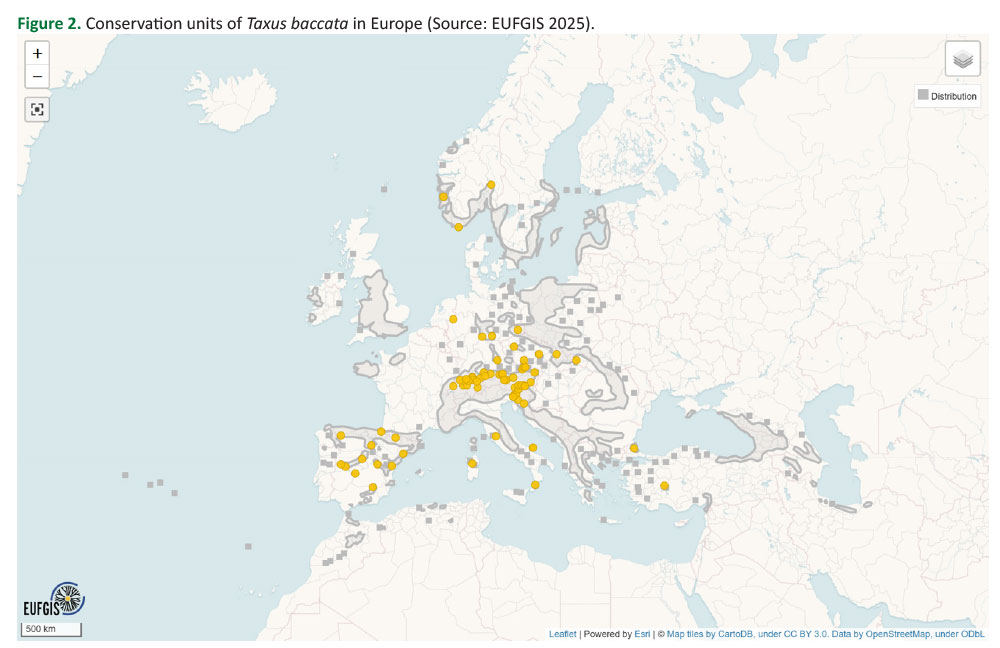 Figure 2. Conservation units of Taxus baccata in Europe (Source: EUFGIS 2025).
One of the primary aims of in situ conservation for T. baccata is the preservation of extant genetic diversity, which is considered relatively high in many populations despite demographic decline. However, genetic structure varies considerably across Europe due to historical fragmentation, limited seed dispersal, and differential management pressures (Myking et al. 2009, Linares 2013). Genome-wide analyses reveal significant genotype–environment associations, with climate variables explaining a substantial proportion of genetic variance, indicating widespread but spatially heterogeneous local adaptation (Francisco et al. 2025). Three genetic priorities should characterize current conservation strategies:
Maintaining within-population diversity. Given the species’ long generation time and often fragmented distribution, both demographic and genetic factors must be considered. In this context, it is important to distinguish between census population size (Nc; number of mature individuals) and effective population size (Ne), which more directly determines the rate of genetic drift and loss of allelic variation. Small populations are particularly vulnerable to genetic erosion, reduced reproductive success, and increased extinction risk. While thresholds on the order of tens of individuals (e.g., <50 mature individuals) are sometimes cited in relation to short-term inbreeding risk, such values are not sufficient to ensure the long-term maintenance of adaptive potential. Long-term evolutionary processes—including the retention of adaptive variation and the capacity to respond to environmental change—require substantially larger effective population sizes. For a long-lived and frequently isolated species such as T. baccata, reduced connectivity among populations can further decrease Ne relative to Nc, exacerbating the effects of genetic drift and limiting gene flow. These processes may lead to deviations from historical gene–climate relationships, increasing genomic offset and vulnerability under future climate scenarios (Francisco et al. 2025). Consequently, conservation strategies should prioritise not only the maintenance of adequate population sizes, but also the preservation or restoration of connectivity to sustain effective population size and evolutionary resilience.
Preventing inbreeding and genetic erosion. Empirical studies report high levels of inbreeding in some fragmented stands (e.g., Myking et al. 2009, Chybicki et al. 2011), prompting the need for active monitoring of mating systems, seed viability, and pollen flow. In small stands, the skewed sex ratio—frequent in dioecious species (Liu et al. 2021)—can exacerbate inbreeding risk. Genomic data further suggest that reduced effective migration rates among fragmented populations may limit the natural spread of potentially adaptive alleles (Francisco et al. 2025).
Conserving locally adapted genotypes. Given the species’ broad ecological amplitude—from Mediterranean to boreal climates—local provenance conservation is vital. GCUs play a pivotal role in capturing adaptive diversity shaped by site-specific selection regimes (climate, soil, browsing pressure).
Mediterranean and high-elevation populations, in particular, exhibit signatures of strong local adaptation but are simultaneously identified as among the most climate-vulnerable, requiring targeted conservation attention (Francisco et al. 2025). There are several ecological constraints affecting in situ conservation. Primarily T. baccata faces limited regeneration despite high seed production. Although seed set in T. baccata is abundant, recruitment remains persistently low due to seed predation, browsing pressure, shade intolerance during early establishment, and competition with ground flora (Thomas and Polwart 2003, Piovesan et al. 2009). Historical evidence suggests that regeneration success was formerly enhanced under more heterogeneous forest structures, potentially maintained by large herbivores and natural disturbance regimes (Saulnier et al. 2026). Considerable herbivory and ungulate pressure by expanding populations of deer and other ungulates across Europe, exerts intense browsing pressure on seedlings and saplings. Selective feeding on yew shoot tips, despite its toxicity, results in truncated growth forms, demographic stagnation, and failure to transition to reproductive maturity. This chronic browsing pressure is increasingly recognised as one of the principal bottlenecks preventing population recovery across much of the species’ range (Saulnier et al. 2026). To the above, there is an added burden of habitat fragmentation and microclimatic stress. Forest fragmentation reduces stand connectivity and dispersal opportunities for frugivorous birds responsible for seed dispersal. Furthermore, climate change—especially increased drought intensity in southern Europe—poses a growing threat to refugial populations. Genomic offset projections show that southern and montane populations are likely to experience the greatest mismatch between current genetic composition and future climatic conditions (Francisco et al. 2025).
- The aims and priorities of in situ conservation should focus on:
- Preserving demographic stability through protection of existing mature individuals.
- Increasing population size where possible to strengthen resilience against stochastic events.
- Maintaining genetic integrity by preventing inbreeding and conserving local adaptive potential, including the avoidance of maladaptive translocations that could disrupt established gene-environment relationships.
- Securing material for future restoration, including seeds and vegetative propagules from genetically representative stands.
- Long-term genetic monitoring of evolutionary processes (e.g., shifts in genetic diversity, regeneration dynamics) to assess conservation effectiveness over time, which is essential to detect delayed responses in such a slow-growing species and to align management with evolutionary timescales.
Taken together, these measures form an integrated conservation model that aligns genetic, ecological, and environmental dimensions.
Ex situ Conservation
Application of in vitro Culture to Taxus baccata Conservation
In vitro culture includes a wide range of techniques that can assist plant conservation. Germplasm conservation (by in vitro maintenance in an active or slow growth state, or cryopreservation), embryo rescue, and plant production for habitat restoration can play a key role in plant conservation programmes.
Different cell and tissue culture procedures have been applied to T. baccata, and intensive investigation has been conducted to optimise in vitro production of paclitaxel (Malik et al. 2011). However, in vitro techniques commonly used for high production of secondary metabolites such as paclitaxel do not always allow the regeneration of whole plants and, consequently, they do not directly constitute a useful option for plant conservation. Nevertheless, diverse in vitro culture techniques with possible application in conservation programmes have been used in Taxus species, such as stem cutting (Chee 1995a), embryo culture (Flores and Sgrignoli 1991, Chee 1994, Zhiri et al. 1994, Chang and Yang 1996, Liao et al. 2006, Zarek 2007), propagation of plants via shoot organogenesis (Chee 1995b, Datta et al. 2006), and somatic embryogenesis (Datta and Jha 2008).
Under natural conditions, germination of T. baccata seeds is problematic due to several factors, including deep dormancy (Davarpanah et al. 2014). Different causes imposing dormancy have been reported in T. baccata, such as immaturity of embryos at the time of seed dispersal and the presence of endogenous inhibitors, including abscisic acid (Le Page-Degivry and Garello 1973, Thomas and Polwart 2003). However, an operational solution to overcome this dormancy has long been established through multi-phase warm–cold stratification protocols (Suszka 1985), which can result in high germination percentages after approximately 10–11 months of pretreatment. This approach has been widely applied in nursery practice supporting restoration efforts, although germination success may vary considerably among seed lots and individual trees (Lewandowski 1999, Peragón et al. 2015). In addition, environmental factors such as low temperature and limited light can influence seedling survival and growth, further contributing to variability in establishment success (Iszkuło 2010). In vitro culture techniques can help to overcome dormancy in T. baccata, particularly through embryo culture approaches in which excised embryos are grown under controlled conditions. These methods bypass seed-level dormancy mechanisms and enable the successful development of embryos that might otherwise fail to germinate under natural or nursery conditions. It is important to distinguish between high rates of embryo germination (i.e., initial emergence) and successful conversion into normal seedlings, as the latter often represents a critical bottleneck, with abnormalities such as weak growth or impaired shoot and root development frequently observed. Different in vitro culture strategies have been used to improve embryo conversion into plants. In most cases, the development of in vitro rescue protocols has been focused on the optimisation of the germination process, but in vitro culture techniques can also be applied to recover immature embryos (Sánchez-Romero et al. 2007, Márquez-Martín et al. 2009, 2017). Incubation of isolated immature embryos under culture conditions promoting embryo maturation may avoid low germination rates and the production of small, weak, and hyperhydric plantlets, observed when germinating immature embryos (Márquez-Martín et al. 2017).
In T. baccata, isolated embryos, after separating the aril and removing the external coat and the endosperm, have been cultured under different in vitro conditions. Various approaches have been applied to break seed dormancy imposed by inhibitors. Thus, Le Page-Degivry and Garello (1973) used a leaching medium containing sucrose or ions such as Ca2+ or K+ to remove inhibitors and enhance germination. Zhiri et al. (1994) leached seeds in running water for 7 days prior to culturing embryos on a modified Murashige and Skoog (MS) medium (Murashige and Skoog 1962) supplemented with casein hydrolysate, yeast extract, ascorbic acid, and activated charcoal. Tafreshi et al. (2011) found slightly higher germination percentages (100%) in embryos leached in running water for 7 days compared to those not leached (85%). However, leaching had a positive impact on late germination stages. While leached embryos germinated with extended roots, non-leached embryos were less than 5 mm and exhibited abnormal shapes. Absorbent substances have also been used to remove inhibitors. Zarek (2007) overcame dormancy by culturing isolated embryos for 28 days on basal MS medium with 5 g·l−1 activated charcoal. Tafreshi et al. (2011) supplemented MS medium with 0.8 g·l−1 polyvinylpyrrolidone (PVP) or 5 g·l−1 activated charcoal. Activated charcoal gave rise to better results than PVP. In addition, the application of a substance to absorb phenolic compounds yielded plants with larger shoots and roots and without any browning. Davarpanah et al. (2014) investigated the effect of activated charcoal concentration on embryo development into a seedling. The best results were obtained in MS medium with macronutrients at half strength (MS/2) supplemented with 2 g·l-1 activated charcoal, with seedlings more developed and showing fewer abnormalities, such as lack of shoot or root and twisting or thickening of the roots. Nevertheless, activated charcoal at high concentrations (6 g·l-1) caused abnormality of embryos.
Concerning the culture medium, investigations in several Taxus species, such as T. mairei, T. baccata, T. canadensis, and T. cuspidata, demonstrated that the composition of the culture medium is a critical factor in embryo culture (Davarpanah et al. 2014). In T. baccata, different mineral formulations have been tested. Chee (1994) cultured zygotic embryos excised from mature seeds on B5 medium (Gamborg et al. 1968), which had given rise to optimal results in previous experiments in T. brevifolia. Plants obtained were vigorous and suitable for acclimatization to ex vitro conditions. Tafreshi et al. (2011) investigated the effect of different strengths of MS macronutrients on embryo germination and seedling development, not observing significant differences in embryo germination. Later, Davarpanah et al. (2014) examined the influence of MS macronutrients at half and full strength, activated charcoal concentration (0, 2, 4, and 6 g·l−1), and gibberellic acid (GA3) (1 mg·l−1) on embryo conversion into plants. In general, better embryo growth was obtained in culture media with MS macronutrients at half strength, with fewer abnormalities such as seedling twisting or browning.
In relation to plant growth regulators, Davarpanah et al. (2014) evaluated the effect of GA3 on embryo culture. Despite the use of gibberellins to release different types of dormancy, including non-deep and intermediate physiological dormancy, photodormancy, and thermodormancy, T. baccata embryos cultured on MS/2 medium, supplemented with 1 mg·l−1 GA3 did not show any considerable growth (Hartmann et al. 2014). All embryos remained white and showed no change after being transferred to light.
Environmental conditions during in vitro culture also had a considerable influence on seedlings production. Zarek (2007) found higher germination rates in darkness, but to obtain good quality seedlings, it was necessary to transfer cultures to light conditions (16-h photoperiod) after two weeks. Tafreshi et al. (2011) also reported that although to obtain seedlings with longer roots, embryos had to be incubated in MS/2 in darkness; for further development of the shoots, it was necessary to subculture seedlings in MS medium under light conditions.
Rooting of the obtained plantlets is also a crucial step when producing plants in vitro. Tafreshi et al. (2011) stated that to develop longer roots, embryo germination should be carried out in culture media supplemented with activated charcoal (5 g·l−1), and seedlings had to be maintained in MS/2 in darkness. However, Davarpanah et al. (2014) proposed that two different media should be used for precocious growth and rooting. According to these authors, the rooting medium can contain root formation stimulating compounds such as low concentrations of auxins (0.1 mg·l−1), L-tyrosine (up to 100 mg·l−1), and activated charcoal (1-4 g·l−1) to darken the medium and absorb the growth inhibitor exudates.
Micropropagation has also been applied to T. baccata. Majada et al. (2000) optimised a protocol for in vitro propagation of juvenile material combining seed handling and culture on the mineral formulation of Woody Plant Medium (WPM) (Lloyd and McCown 1980) and B5 vitamins supplemented with 5 g·l-1 activated charcoal and 22.19 mM 6-benzylaminopurine (BAP) for 30 days followed by 40 days on hormone-free medium. Decapitation of shoot apical ends significantly increased the propagation rates. Ewald (2007) micropropagated T. baccata using closed buds and shoot tips as explants. In this in vitro culture protocol, shoot multiplication was conducted by following a two-step procedure consisting of a first bud induction and propagation stage, followed by a bud elongation step to get rootable shoots. The first step was conducted in Wz medium, consisting of WPM medium supplemented with 1.5 mg·l-1 zeatin. Adding 200 mg·l–1 spermidine improved the results obtained. A callus phase, comparable to adventitious bud propagation in other conifers, was not observed. Elongation of shoot tips was achieved in Wdouble medium (consisting of double concentrated WPM macro and micronutrients) supplemented with 0.66 mg·l-1 zeatin, 0.64 mg·l-1 kinetin, 100 mg·l-1 PVP, and 100 mg·l-1 arginine. For stimulating elongation of lateral buds, a subculture in culture medium free of phytohormones was included, followed by a subculture with a low concentration of thidiazuron (TDZ) (0.01 mg·l-1). In general, the best shoot elongation was attained in Wdouble medium supplemented with 0.01 mg·l-1 TDZ and 200 mg·l-1 spermidine. Rooting was executed on L9 medium, consisting of a modified LS medium (Linsmaier and Skoog 1965) with 2 mg·l-1 indole-3-butyric acid (IBA) under a 16-h light-period. Abbasin et al. (2010) cultured bud explants of T. baccata on several culture media supplemented with different combinations of cytokinins and auxins. MS medium supplemented with 2 mg·l-1 BAP gave rise to the highest number of shoots per explant and growth of shoot tips. Under these conditions, bud sprouting and shoot development were normal and stable within 3-4 weeks of culture, thus indicating a good hormonal balance (Abbasin et al. 2010).
In relation to organogenesis, Abbasin et al. (2010) reported shoot regeneration from calli developed at the base of T. baccata embryos. Half-strength MS and WPM culture media produced better quality calli than full strength media, reducing callus necrosis and increasing survival of explants. The combination of 2 mg·l-1 BAP and 0.3 mg·l-1 1-naphthaleneacetic acid (NAA) resulted in an increase in callus development and shoot bud initiation, with up to 8 shoots per embryo cultured on half-strength MS medium. Good formation of roots was subsequently observed in MS/2 salts combined with forest soluble soil composition and 8 mg·l-1 IBA. The results obtained showed an important genotype effect.
Although somatic embryogenesis has been reported in other Taxus species, this in vitro culture technique has not been successfully applied to T. baccata (Ewald 2007).
Ex situ Plantations
For T. baccata, ex situ plantations—ranging from botanical garden collections to historically planted village trees and institutional arboreta—represent an important reservoir of genetic resources. Although traditionally viewed as static conservation repositories, these plantings have the potential to contribute significantly to restoration and species recovery, provided their genetic origins and conservation value are rigorously assessed. Botanical gardens, landscape parks, and ornamental plantings across Europe host a large number of T. baccata specimens, many dating back decades or even centuries. Such trees represent elementary static ex situ conservation, providing long-term living archives of the species but offering minimal direct conservation impact in their current form. Their main limitations are: (a) unknown or unverified provenance, as in much of Europe, the origin of planted yews is undocumented (Thomas and Polwart 2003, Hilfiker et al. 2004), (b) restricted evolutionary potential, as ex situ plantations typically lack the capacity for natural regeneration and, therefore, trigger evolutionary processes, and (c) limited applicability to large-scale restoration, as without clear genetic characteriszation, ex situ plantings cannot currently be incorporated into large-scale restoration programmes (Frankham et al. 2010, Weeks et al. 2011).
Despite these constraints, ex situ collections provide valuable opportunities when appropriately evaluated and integrated into broader conservation strategies, including the reconstruction of provenance and their potential use as already established assisted migration or conservation experiments (Oggioni et al. 2024). A notable example of the conservation relevance of ex situ populations comes from Bosnia and Herzegovina, where numerous old common yews planted in rural villages are preserved. Unlike many European plantings, the origin of some of these individuals is known through oral tradition, enhancing their value as potential genetic reservoirs for conservation and reintroduction programmes. This is significant for two reasons: (a) the preservation of historically important provenances, as local planting traditions in rural areas may have preserved unique genetic variants that have disappeared from surrounding natural populations due to logging, habitat conversion, or overgrazing, and (b) the potential for targeted conservation use, provided a molecular genetic characterisation is carried out before these individuals can be meaningfully incorporated into conservation or breeding programmes (Ballian and Memišević Hodžić 2024).
Overall, ex situ plantations can have a strategic role within an integrated conservation framework.
Conservation Interventions for Taxus baccata: Strategies for Long-Term Population Persistence in a Changing Climate
Conservation Challenges under Climate Change
Climate projections suggest that T. baccata may experience both northward expansion and southern range contraction, driven by temperature increases and altered precipitation patterns (Ahmadi et al. 2020, Sánchez-Martínez et al. 2021, Cruz Román et al. 2025). Northern populations may benefit from warmer winters and increased summer rainfall (Thomas and Garcia-Martí 2015), whereas southern populations, particularly in Mediterranean and sub-Mediterranean mountains, are already showing signs of decline due to recurrent drought, heat stress, and fire disturbance (Mendoza et al. 2009, Sanz et al. 2009, Camarero et al. 2015). Climate change is occurring at a pace that may exceed the ability of many species to track shifting suitable conditions, often described by climate velocity (Loarie et al. 2009). Correspondingly, species-specific models indicate that T. baccata may experience substantial changes in the distribution of suitable habitat under future climate scenarios (Zhang et al. 2026). Given the long lifespan of T. baccata, climate warming may pose particular challenges for maintaining populations at the southern edge of its range. However, dispersal and establishment constraints, particularly slow early growth and high juvenile mortality, limit the species’ ability to track shifting climatic conditions, making effective range adjustments difficult for natural populations.
Southern and marginal populations frequently consist of only a few ageing individuals, with extremely limited potential for natural regeneration due to: (a) dioecy and skewed sex ratios, especially the disproportionate mortality of females under drought stress (Obeso 2002, Iszkuło et al. 2009), (b) reduced pollen production under warming climates, which may shorten the pollination window (Mercuri et al. 2013), and (c) genetic effects of fragmentation, including increased inbreeding and reduced mating distances (Lewandowski et al. 1995, Ballian 2005). Recent genomic and population genetic studies provide further insight into these vulnerabilities: high genetic differentiation in southern and fragmented populations (Chybicki et al. 2024, Tonelli et al. 2025, Dalmaris et al. 2026) and reduced adaptive genomic variation (Mayol et al. 2020, Francisco et al. 2025) suggest limited evolutionary potential to respond to rapid climate change. Small populations may maintain moderate heterozygosity due to outcrossing during historical periods (Ledig 1986, Tröber and Ballian 2011), but ongoing fragmentation continues to lower effective population size and fertilization success (Allison 1990, Fahrig 2003).
The competitive balance between yew and co-occurring species is shifting as climate change favours fast-growing competitors, including beech (Fagus sylvatica), Acer spp., and chestnut (Castanea sativa) in parts of Europe (Packham et al. 2012, Ozolinčius et al. 2014). Herbivory by deer and domestic livestock remains a major limiting factor for seedling establishment (Svenning and Magård 1999, García et al. 2000), while reduced abundance of frugivorous birds undermines long-distance dispersal and gene flow (Jordano et al. 2007, Galetti et al. 2013). The development of genomic tools, such as the SPET array (>50k SNPs; Pinosio et al. 2026), provides opportunities to identify populations with higher adaptive potential, guide assisted gene flow, and design targeted conservation interventions under future climate scenarios.
Combined, these ecological, demographic, and genomic factors highlight that southern and marginal yew populations are particularly vulnerable, and their management requires integrating genomic knowledge with habitat protection, assisted regeneration, and adaptive conservation strategies to maintain population viability under climate change.
Principles and Aims of Conservation and Rescue Plans
Effective conservation of common yew must be multidimensional, aligning demographic stability with genetic integrity and climate resilience considering the disadvantage of the presence of small, highly threatened populations under strong anthropogenic influence.
The T. baccata conservation framework should emphasize: (a) stabilizing existing populations through habitat protection, herbivory control, and regeneration management, (b) safeguarding genetic diversity, particularly in marginal or relict populations vulnerable to demographic decline (Lewandowski et al. 1995, Hampe and Petit 2005, Myking et al. 2009, Sanz et al. 2009, Tonelli et al. 2025, Dalmaris et al. 2026), (c) enhancing adaptive capacity by supporting populations in climatically stable microrefugia (Dobrowski 2011), (d) facilitating climate-informed restoration, including assisted colonisation where appropriate (Aitken and Whitlock 2013). These aims are consistent with global principles of forest genetic resource management (Aravanopoulos et al. 2015, de Vries et al. 2015).
Conservation Interventions for Taxus baccata
Building on the conservation challenges outlined above, the following interventions are proposed to maintain and enhance T. baccata populations across its range. These actions are guided by ecological and genetic evidence, addressing limitations in natural regeneration, population fragmentation, and climate-driven pressures. By integrating habitat management, genetic conservation, and climate adaptation strategies, the measures aim to stabilise existing populations, facilitate recruitment, and preserve adaptive potential, particularly in marginal and relict populations vulnerable to ongoing decline.
Facilitation of natural regeneration and habitat management. Ungulate browsing is among the strongest determinants of yew regeneration failure across Europe. Fencing and controlled grazing have repeatedly demonstrated measurable improvements in seedling survival, height growth, and stand structural complexity (Svenning and Magård 1999, Mysterud and Østbye 2004). Adaptive management, such as rotational herbivory exclusion, may prevent excessive shading by co-dominant species.
Canopy and competition management. Yew seedlings require intermediate-light environments, while excessive shade inhibits growth and survival and high irradiance increases drought sensitivity and photodamage (Thomas and Polwart 2003). Selective thinning, gap creation, or maintenance of multilayered forest structure can improve microclimatic conditions. Competition control must be site-specific given regional variation in understory dynamics (Dhar et al. 2006, Ruprecht et al. 2010).
Assisted migration and gene flow. Given the documented northward niche shift, carefully piloted assisted migration can be considered for regions projected to become suitable under future climate scenarios (Aitken and Whitlock 2013). Closely related, small-scale genetic rescue (assisted gene flow) interventions can be integrated here, ameliorating inbreeding depression in small populations while maintaining genomic compatibility to avoid outbreeding depression (Aitken and Whitlock 2013).
Population reinforcement and assisted regeneration. For reinforcement or reintroduction, typical genetic standards for forest reproductive material must be considered. Local or ecologically matched provenances should be used to minimise the risk of maladaptation (Frankham et al. 2010, Weeks et al. 2011). Seed collection should be spatially and temporally representative to avoid genetic bottlenecks (Müller-Starck 1991, Konnert 1996). A minimum of approximately 40 genetically distinct seed donor trees is recommended for seed sourcing to capture local genetic variation; however, this does not represent the number of founders required for population establishment. For reinforcement or reintroduction, larger founder populations should be preferred, with balanced sex ratios in this dioecious species, and/or repeated introductions across cohorts to achieve a higher effective population size. This approach is consistent with conservation genetic recommendations that aim to reduce short-term inbreeding risk (Ne ~50–100) while maintaining long-term adaptive potential (Ne ≥500–1000).
Drought and forest fire mitigation. In drought- and fire-prone regions, priority actions should include creation of firebreaks and fuel management around vulnerable stands, removal of lower branches to reduce vertical fire spread, and monitoring of drought stress indicators (Ballian and Kraigher 2021). Such measures have been shown to slow the decline of relict populations in Mediterranean ecosystems (Pausas 2004).
Landscape-scale connectivity and habitat networks. Enhancing structural and functional connectivity is essential to sustain pollination, gene flow, and seed dispersal. Effective measures include conservation of bird communities that disperse yew seeds (García et al. 2000), restoring hedgerows and riparian strips as dispersal corridors (Tewksbury et al. 2002, Krosby et al. 2010), maintaining stepping-stone populations to facilitate metapopulation stability (Saura et al. 2014). Recent results by Chybicki et al. (2024) highlight the spatial dynamics of pollen and seed dispersal in fragmented T. baccata populations, emphasizing the importance of connecting distant stands and designing corridors that support both effective gene flow and long-term population persistence.
Ex situ support for in situ restoration. Ex situ germplasm (see also the Ex situ Conservation section above), such as seed orchards, clonal archives, and living collections, provides insurance against loss of unique genotypes. Yew seeds exhibit deep morphophysiological dormancy requiring extended stratification (Suszka 1985). Clonal propagation is useful for preserving elite phenotypes but must be balanced with the need to maintain population-level genetic diversity.
Genetic and ecological monitoring. Successful interventions depend on continuous ecological and genetic monitoring, including: genomic markers to track hybridization, inbreeding, and gene flow (Dubreuil et al. 2008, Myking et al. 2009, Aravanopoulos 2011, 2016, Pearman et al. 2024, Shaw et al. 2025), population viability analyses to forecast extinction risk, dendroecological assessments to quantify climate sensitivity (Cedro and Iszkuło 2011, Camarero et al. 2015), permanent genetic monitoring within core GCUs and restored stands, and adaptive management allows practices to be refined as new data emerge.
The conservation of T. baccata requires an integrative, climate-informed approach that prioritises genetic diversity, population reinforcement, habitat management, and connectivity. Maintaining adaptive resilience in southern and marginal populations is particularly critical under accelerating anthropogenic and climatic pressures.
CONCLUSIONS
T.baccata is a relict, long-lived conifer whose present-day distribution, population structure, and conservation status reflect the combined effects of deep evolutionary history, postglacial dynamics, and sustained human pressure. This review synthesises evidence showing that, despite one of the most pronounced declines among European tree species, common yew has retained comparatively high levels of genetic diversity, largely due to its extreme longevity, predominantly outcrossing mating system, wind pollination, and effective seed dispersal by birds. However, this apparent genetic resilience conceals strong spatial heterogeneity, with southern, peripheral, and highly fragmented populations exhibiting reduced diversity, pronounced genetic structuring, and elevated vulnerability.
Across its range, limited regeneration emerges as the principal constraint on long-term population viability. Interacting factors including low light availability, intense browsing pressure, competition within closed forest stands, and episodic climatic stress frequently prevent successful recruitment, even where adult individuals persist for centuries. Climate change is expected to intensify these pressures, particularly in southern and montane regions, through increasing drought frequency, rising temperatures, and altered disturbance regimes. At the same time, potential northward or upslope range shifts are likely to be slow and incomplete, constrained by narrow ecological requirements, low juvenile survival, and limited dispersal capacity.
Effective conservation of T. baccata therefore requires an integrated, long-term strategy that explicitly incorporates genetic considerations. Priority actions include the protection of existing populations and their habitats, reduction of browsing pressure, promotion of forest structural heterogeneity to facilitate regeneration, and maintenance or restoration of landscape connectivity. From a genetics perspective, conserving large effective population sizes and regionally distinct genetic lineages is essential to preserve adaptive potential. Where natural processes are insufficient, carefully designed management interventions, including population reinforcement or assisted gene flow, may be warranted, provided they are guided by phylogeographic and ecological knowledge. Aligning conservation practice with the biological constraints and evolutionary legacy of common yew will be critical to ensuring its persistence as a functional and genetically viable component of European forest ecosystems under ongoing environmental change.
Author Contributions
FAA and MK conceived the research. DB, MMH and FAA designed the research. DB, MMH, CSR, FL, ED, ADFB, ZM, MK and FAA conducted the literature review. DB, MMH, ZM, MK and FAA supervised the preparation of the guidelines. DB, MMH and FAA drafted the manuscript. All authors reviewed the manuscript.
Funding
This research was supported by the COST Action "An integrated approach to conservation of threatened plants for the 21st Century" (ConservePlants); CA18201; (https://www.conserveplants.eu/en/). FAA and FL were also supported by project Utilization and dissemination of research results in the domain of genetic monitoring and conservation of forest genetic resources GENETIC MONCON (Project No. 71167), funded by the General Secretariat for Research and Innovation, Greece, and the Aristotle University of Thessaloniki.
Acknowledgments
The authors would like to thank the participants of COST Action ConservePlants (CA18201) for helpful comments and suggestions in earlier presentations of this work.
Conflicts of Interest
The authors declare no conflict of interest.
REFERENCES
Ahmadi K, Alavi SJ, Amiri GZ, Hosseini SM, Serra-Diaz JM, Svenning JC, 2020. The potential impact of future climate on the distribution of European yew (Taxus baccata L.) in the Hyrcanian Forest region (Iran). Int J Biometeorol 64: 1451–1462. https://doi.org/10.1007/s00484-020-01922-z.
Aitken SN, Whitlock MC, 2013. Assisted Gene Flow to Facilitate Local Adaptation to Climate Change. Annu Rev Ecol Evol Syst 44: 367–388. https://doi.org/10.1146/annurev-ecolsys-110512-135747.
Allen SE (ed), 1989. Chemical Analysis of Ecological Materials. 2nd edn. Blackwell Scientific Publications, Oxford, UK, 368 p.
Allison TD, 1990. Pollen production and plant density affect pollination and seed production in Taxus canadensis. Ecology 71(2): 516–522. https://doi.org/10.2307/1940305.
Aravanopoulos FA, 2011. Genetic monitoring in natural perennial plant populations. Botany 89: 75–81. https://doi.org/10.1139/b10-087.
Aravanopoulos FA, Tollefsrud MM, Graudal L, Koskela J, Kätzel R, Soto A, Nagy L, Pilipović A, Zhelev P, Božič G, Bozzano M, 2015. Development of genetic monitoring methods for genetic conservation units of forest trees in Europe. European Forest Genetic Resources Programme (EUFORGEN), Bioversity International, Rome, Italy, xvi + 46 p.
Aravanopoulos FA, 2016. Conservation and monitoring of tree genetic resources in temperate forests. Curr For Rep 2: 119–129. https://doi.org/10.1007/s40725-016-0038-8.
Aravanopoulos FA, Avramidou EV, Xanthopoulou A, Dalmaris E, 2019. Metabolomics, genetics and epigenetics analysis of European yew for the selection of antineoplastic taxol/taxane producing plant material in Greece. Planta Med 85(18): 1465. https://doi.org/10.1055/s-0039-3399838.
Ballian D, 2005. Novi prilog poznavanju obične jele (Abies alba Mill.) s Biokova. Šumar list 129(1–2): 63–70.
Ballian D, 2014a. Die Eibe im Gebirge Prenj, der älteste Baum Bosnien-Herzegowinas. Der Eibenfreund 20: 99–101.
Ballian D, 2014b. Die Eiben im Gebiet des Berges Čvrsnica. Der Eibenfreund 20: 101–103.
Ballian D, 2015. Über die Verbreitung der Eibe (Taxus baccata L.) in Westbosnien. Der Eibenfreund 21: 101–103.
Ballian D, 2016. New finds of English yew in the canyon of river Drina. Der Eibenfreund 22: 50–51.
Ballian D, Kraigher H, 2021. Tisa (Taxus baccata L.) u Bosni i Hercegovini. Udruženje inženjera i tehničara šumarstva Federacije Bosne i Hercegovine, Sarajevo, Bosnia and Herzegovina; Silva Slovenica, Ljubljana, Slovenia, 438 p.
Ballian D, Memišević Hodžić M, 2024. The importance of preserving old common yew trees planted in villages as a potential ex situ collection in Bosnia and Herzegovina. In: Book of Abstracts, Final Conference of COST Action CA18201 – An Integrated Approach to Conservation of Threatened Plants for the 21st Century (ConservePlants), Izola, Slovenia, 12–13 February 2024, p 45.
Bebchuk T, Krusic PJ, Pike JH, Piermattei A, Friedrich R, Wacker L, Crivellaro A, Arosio T, Kirdyanov AV, Gibbard P, Brown D, Esper J, Reinig F, Büntgen U, 2024. Sudden disappearance of yew (Taxus baccata) woodlands from eastern England coincides with a possible climate event around 4.2 ka ago. Quat Sci Rev 323: 108414. https://doi.org/10.1016/j.quascirev.2023.108414.
Benham SE, Houston Durrant T, Caudullo G, de Rigo D, 2016. Taxus baccata in Europe: distribution, habitat, usage and threats. In: San-Miguel-Ayanz J, de Rigo D, Caudullo G, Houston Durrant T, Mauri A (eds) European Atlas of Forest Tree Species. Publications Office of the European Union, Luxembourg, p e015921+.
Bertrums EJ, 1998. Population decline of root lesion nematode (Pratylenchus penetrans Cobb) after a Taxus baccata crop. Meded Fac Landbouwkd Toegep Biol Wet Univ Gent 63: 649–653.
Białobok S, 1978. Possibilities of yew cultivation in an environment modified by man. In: Bartkowiak S, Bugala W, Czartoryski A, Hejnowicz A, Król S, Środoń A, Szaniawski RK (eds) The Yew – Taxus baccata L. Foreign Scientific Publications, Warsaw, Poland, pp 147–149.
Björkman L, 1958. Idegranen (Taxus baccata L.) på Åland. Acta Soc Fauna Flora Fenn 74: 1–18.
Bross D, Mittelbach J, Pippel M, Mader M, Lazic D, Uelze L, Schröder H, Pers-Kamczyc E, Kurtz S, Winkler S, Müller NA, Kersten B, 2026. Genomic analyses demonstrate the absence of genetic sex determination in the dioecious conifer Taxus baccata. bioRxiv [preprint]. https://doi.org/10.64898/2026.02.27.708407.
Brus R, 2004. Drevesne vrste na Slovenskem. Mladinska knjiga, Ljubljana, Slovenia, 399 p.
Brzeziecki B, Kienast F, 1994. Classifying the life-history strategies of trees on the basis of the Grimian model. For Ecol Manag 69: 167–187. https://doi.org/10.1016/0378-1127(94)90227-5.
Bugala W, 1978. Systematics and variability. In: Bartkowiak S, Bugala W, Czartoryski A, Hejnowicz A, Król S, Środoń A, Szaniawski RK (eds) The Yew – Taxus baccata L. Foreign Scientific Publications, Warsaw, Poland, pp 15–32.
Calvia G, Casula P, Farris E, Fenu G, Fantini S, Bacchetta G, 2023. Shrub cover and soil moisture affect Taxus baccata L. regeneration at its southern range. Plants 12(9): 1819. https://doi.org/10.3390/plants12091819.
Camarero JJ, Gazol A, Sangüesa-Barreda G, Oliva J, Vicente-Serrano SM, 2015. To die or not to die: early warnings of tree dieback in response to a severe drought. J Ecol 103: 44–57. https://doi.org/10.1111/1365-2745.12295.
Cao CP, Leinemann L, Ziehe M, Finkeldey R, 2004. Study of genetic variation and differentiation of yew (Taxus baccata L.) stands using isoenzyme and DNA marker. Allg Forst Jagdztg 175(1): 21–28.
Caruso M, Colombo AL, Fedeli L, Pavesi A, Quaroni S, Saracchi M, Ventrella G, 2000. Isolation of endophytic fungi and actinomycetes taxane producers. Ann Microbiol 50: 3–13.
Carvalho A, Rebelo A, Dias J, 1999. Distribution and natural regeneration of yew trees in the National Parks of Peneda-Geres (Portugal) and Baixa Limia Serra-Xures (Spain). Rev Biol 17: 43–49.
Casals P, Camprodon J, Caritat A, Ríos AI, Guixé D, Garcia-Martí X, Martín-Alcón S, Coll L, 2015. Forest structure of Mediterranean yew (Taxus baccata L.) populations and neighbor effects on juvenile yew performance in the NE Iberian Peninsula. For Syst 24(3): e042. https://doi.org/10.5424/fs/2015243-07469.
Caudullo G, Welk E, San-Miguel-Ayanz J, 2017. Chorological maps for the main European woody species. Data Brief 12: 662–666. https://doi.org/10.1016/j.dib.2017.05.007.
Cedro A, Iszkuło G, 2011. Do females differ from males of European yew (Taxus baccata L.) in dendrochronological analysis? Tree-Ring Res 67: 3–11. https://doi.org/10.3959/2009-9.1.
Cedro A, Cedro B, 2015. Growth-climate relationships at yew and wild service trees on the eastern edge of their range in Europe. For Syst 24(3): e044. https://doi.org/10.5424/fs/2015243-07480.
Chang S, Yang J, 1996. Enhancement of plant formation from embryo cultures of Taxus mairei using suitable culture medium and PVP. Bot Bull Acad Sin 37: 35–40.
Chee PP, 1994. In vitro culture of zygotic embryos of Taxus species. HortScience 29: 695–697. https://doi.org/10.21273/HORTSCI.29.6.695.
Chee PP, 1995a. Organogenesis in Taxus brevifolia tissue cultures. Plant Cell Rep 14: 560–565. https://doi.org/10.1007/BF00231938.
Chee PP, 1995b. Stimulation of adventitious rooting of Taxus species by thiamine. Plant Cell Rep 14: 753–757. https://doi.org/10.1007/BF00232916.
Chybicki IJ, Oleksa A, Burczyk J, 2011. Increased inbreeding and strong kinship structure in Taxus baccata estimated from both AFLP and SSR data. Heredity 107(6): 589–600. https://doi.org/10.1038/hdy.2011.51.
Chybicki IJ, Oleksa A, Kowalkowska K, 2012. Variable rates of random drift in protected populations of English yew: implications for gene pool conservation. Conserv Genet 13: 889–911. https://doi.org/10.1007/s10592-012-0339-9.
Chybicki IJ, Oleksa A, 2018. Seed and pollen gene dispersal in Taxus baccata, a dioecious conifer in the face of strong population fragmentation. Ann Bot 122(3): 409–421. https://doi.org/10.1093/aob/mcy081.
Chybicki IJ, Robledo-Arnuncio JJ, Bodziarczyk J, Widlak M, Meyza K, Oleksa A, Ulaszewski B, 2024. Disrupted connectivity within a metapopulation of a wind-pollinated declining conifer, Taxus baccata L. For Ecosyst 11: 100240. https://doi.org/10.1016/j.fecs.2024.100240.
Clarke ML, Harvey DG, Humphreys DJ, 1981. Veterinary Toxicology. 2nd edn. Tindall, London, UK, 328 p.
Cortés S, Vasco F, Blanco E, 2000. El libro del tejo. ARBA, Madrid, Spain, 336 p.
Cruz Román JF, Hernández-Lambraño RE, Rodríguez-de la Cruz D, Sánchez-Agudo JÁ, 2025. Climate vulnerability analysis of marginal populations of yew (Taxus baccata L.): The case of the Iberian Peninsula. Forests 16(6): 931. https://doi.org/10.3390/f16060931.
Dalmaris E, Sarrou E, Multari S, Xanthopoulou A, Avramidou EV, Mansuero D, Martens S, Aravanopoulos FA, 2019. Targeted LC-MS/MS metabolomic analysis for the assessment of the chemodiversity of European yew (Taxus baccata) from Greece. Planta Med 85(18): 1467–1468. https://doi.org/10.1055/s-0039-3399845.
Dalmaris E, Avramidou EV, Xanthopoulou A, Aravanopoulos FA, 2020. Dataset of targeted LC-MS/MS metabolite analysis for five taxanes of Hellenic Taxus baccata L. populations. Data 5: 22. https://doi.org/10.3390/data5010022.
Dalmaris E, Avramidou E, Sarrou E, Xanthopoulou A, Multari S, Martens S, Aravanopoulos FA, 2026. Genetic, epigenetic and metabolite variation in peripheral European yew (Taxus baccata L.) populations at an unexplored part of the species natural distribution. PLoS One 21(3): e0324582. https://doi.org/10.1371/journal.pone.0324582.
Daniewski WM, Gumulka M, Anczewski W, Masnyk M, Bloszyk E, Gupta KK, 1998. Why the yew tree (Taxus baccata) is not attacked by insects. Phytochemistry 49: 1279–1282. https://doi.org/10.1016/S0031-9422(98)00102-2.
Datta MM, Jha S, 2008. Plant regeneration through somatic embryogenesis in Taxus wallichiana. J Plant Biochem Biotechnol 17: 37–44. https://doi.org/10.1007/BF03263257.
Datta MM, Majumder A, Jha S, 2006. Organogenesis and plant regeneration in Taxus wallichiana (Zucc.). Plant Cell Rep 25: 11–18. https://doi.org/10.1007/s00299-005-0027-z.
Davarpanah SJ, Lahouti M, Karimian R, 2014. Micropropagation of common yew using embryo culture. J Appl Biotechnol Rep 1(2): 77–80.
de Vries SMG, Alan M, Bozzano M, Buriánek V, Collin E, Cottrell J, Ivanković M, Kelleher CT, Koskela J, Rotach P, Vietto L, Yrjänä L, 2015. Pan-European strategy for genetic conservation of forest trees and establishment of a core network of dynamic conservation units. European Forest Genetic Resources Programme (EUFORGEN), Bioversity International, Rome, Italy, xii + 40 p.
Dennis EB, 1964. Control of yew scale. Plant Pathol 13(2): 85–86. https://doi.org/10.1111/j.1365-3059.1964.tb00270.x.
Devaney JL, Jansen MAK, Whelan PM, 2014. Spatial patterns of natural regeneration in stands of English yew (Taxus baccata L.). Negative neighbourhood effects. For Ecol Manag 321: 52–60. https://doi.org/10.1016/j.foreco.2013.06.060.
Devaney JL, Whelan PM, Jansen MAK, 2018. Conspecific negative density dependence in a long-lived conifer, yew Taxus baccata L. Eur J For Res 137: 69–78. https://doi.org/10.1007/s10342-017-1091-y.
Dhar A, Ruprecht H, Klumpp R, Vacik H, 2006. Stand structure and natural regeneration of English yew (Taxus baccata L.) at Stiwollgraben in Austria. Dendrobiology 56: 19–26.
Dhar A, Ruprecht H, Klumpp R, Vacik H, 2007. Comparison of ecological condition and conservation status of English yew population in two Austrian gene conservation forests. J For Res 18: 181–186. https://doi.org/10.1007/s11676-007-0037-5.
Dobrowski SZ, 2011. A climatic basis for microrefugia: the influence of terrain on climate. Glob Change Biol 17: 1022–1035. https://doi.org/10.1111/j.1365-2486.2010.02263.x.
Dubreuil M, Sebastiani F, Mayol M, González-Martínez SC, Riba M, Vendramin GG, 2008. Isolation and characterization of polymorphic nuclear microsatellite loci in Taxus baccata L. Conserv Genet 9: 1665–1668. https://doi.org/10.1007/s10592-008-9515-3.
Dubreuil M, Riba M, González-Martínez SC, Vendramin GG, Sebastiani F, Mayol M, 2010. Genetic effects of chronic habitat fragmentation revisited: strong genetic structure in a temperate tree, Taxus baccata (Taxaceae), with great dispersal capability. Am J Bot 97: 303–310. https://doi.org/10.3732/ajb.0900148.
El-Kassaby YA, Yanchuk AD, 1994. Genetic diversity, differentiation, and inbreeding in Pacific yew from British Columbia. J Hered 85: 112–117. https://doi.org/10.1093/oxfordjournals.jhered.a111407.
Ellenberg HH, 1988. Vegetation Ecology of Central Europe. Cambridge University Press, Cambridge, UK, 731 p.
Elwes HJ, Henry A, 1906. The Trees of Great Britain and Ireland. Privately printed, Edinburgh, UK, 2022 p.
EUFGIS, 2025. Taxus baccata – Gene Conservation Units. Available online: https://eufgis.org/data/gcu/species/Taxus%20baccata (14 November 2025).
EUFORGEN, 2016. Distribution map of common yew (Taxus baccata). Available online: https://www.euforgen.org/species/taxus-baccata/ (14 November 2025).
European Commission, 2007. Interpretation Manual of European Union Habitats – EUR27. DG Environment, European Commission, Brussels, Belgium.
Ewald D, 2007. Micropropagation of yew (Taxus baccata L.). In: Jain SM, Häggman H (eds) Protocols for Micropropagation of Woody Trees and Fruits. Springer, Dordrecht, Netherlands, pp 117–123. https://doi.org/10.1007/978-1-4020-6352-7_11.
Faegri K, 1960. Maps of the Distribution of Norwegian Plants. I. The Coast Plants. Oslo University Press, Oslo, Norway, 134 p. + 54 plates.
Fahrig L, 2003. Effects of habitat fragmentation on biodiversity. Annu Rev Ecol Evol Syst 34: 487–515. https://doi.org/10.1146/annurev.ecolsys.34.011802.132419.
Farjon A, 2010. A Handbook of the World's Conifers. Brill, Leiden, Netherlands, 1111 p. https://doi.org/10.1163/9789047430629.
Farjon A, 2013. Taxus baccata. The IUCN Red List of Threatened Species 2013: e.T42546A2986660. https://doi.org/10.2305/IUCN.UK.2013-1.RLTS.T42546A2986660.en (19 July 2016).
Farris E, Filigheddu R, 2008. Effects of browsing in relation to vegetation cover on common yew (Taxus baccata L.) recruitment in Mediterranean environments. Plant Ecol 199: 309–318. https://doi.org/10.1007/s11258-008-9434-x.
Farris E, Fenu G, Bacchetta G, 2012. Mediterranean Taxus baccata woodlands in Sardinia: A characterization of the EU priority habitat 9580. Phytocoenologia 41: 231–246. https://doi.org/10.1127/0340-269X/2011/0041-0501.
Ferguson I, 1995. A unusual foodplant for Hedya pruniana Hb. (Lep.: Tortricidae). Entomol Rec J Var 107: 131.
Fernández-Manso O, Fernández-Manso A, Santamaría E, Quintano C, 2011. Análisis territorial de las tejedas de Castilla y León (España). Span J Rural Dev 2: 69–80. https://doi.org/10.5261/2011.ESP2.08.
Fiedler HJ, Höhne H, Haupt R, 1986. The influence of biological and ecological factors on the nutrient status of yew Taxus baccata. Flora 178: 141–155. https://doi.org/10.1016/S0367-2530(17)31486-X.
Fischer H, 2016. Kommt die Ortsbezeichnung Eyb von der Eibe oder von Owe=Aue? Der Eibenfreund 22: 102–103.
Flores HE, Sgrignoli PJ, 1991. In vitro culture and precocious germination of Taxus embryos. In Vitro Cell Dev Biol Plant 27: 139–142. https://doi.org/10.1007/BF02632197.
Francisco T, Mayol M, Vajana E, Riba M, Westergren M, Cavers S, Pinosio S, Bagnoli F, Marchi M, Aravanopoulos FA, Farsakoglou AM, Scotti I, Fady B, Vendramin GG, Archambeau J, Piotti A, González-Martínez SC, 2025. Genomic signatures of climate-driven (mal)adaptation in an iconic conifer, the English yew (Taxus baccata L.). Evol Appl 18(10): e70160. https://doi.org/10.1111/eva.70160.
Frankham R, Ballou JD, Briscoe DA, 2010. Introduction to Conservation Genetics. 2nd edn. Cambridge University Press, Cambridge, UK, 618 p. https://doi.org/10.1017/CBO9780511809002.
Frankham R, Ballou JD, Eldridge MDB, Lacy RC, Ralls K, Dudash MR, Fenster CB, 2011. Predicting the Probability of Outbreeding Depression. Conserv Biol 25(3): 465–475. https://doi.org/10.1111/j.1523-1739.2011.01662.x.
Galetti M, Guevara R, Côrtes MC, Fadini R, Von Matter S, Leite AB, Labecca F, Ribeiro T, Carvalho CS, Collevatti RG, Pires M, Guimarães PR Jr, Brancolini PH, Ribeiro MC, Jordano P, 2013. Functional extinction of birds drives rapid evolutionary changes in seed size. Science 340: 1086–1090. https://doi.org/10.1126/science.1233774.
Galvin S, Potito A, Hickey K, 2014. Evaluating the dendroclimatological potential of Taxus baccata (yew) in southwest Ireland. Dendrochronologia 32(2): 144–152. https://doi.org/10.1016/j.dendro.2014.03.004.
Gamborg OL, Miller RA, Ojima K, 1968. Nutrient requirements of suspension cultures of soybean root cells. Exp Cell Res 50: 151–158. https://doi.org/10.1016/0014-4827(68)90403-5.
Garbarino M, Weisberg PJ, Bagnara L, Urbinati C, 2015. Sex-related spatial segregation along environmental gradients in the dioecious conifer, Taxus baccata. For Ecol Manag 358: 122–129. https://doi.org/10.1016/j.foreco.2015.09.009.
García D, Zamora R, Hódar JA, Gómez JM, Castro J, 2000. Yew (Taxus baccata L.) regeneration is facilitated by fleshy-fruited shrubs in Mediterranean environments. Biol Conserv 95: 31–38. https://doi.org/10.1016/S0006-3207(00)00016-1.
García D, Obeso JR, 2003. Facilitation by herbivore-mediated nurse plants in a threatened tree, Taxus baccata: local effects and landscape-level consistency. Ecography 26: 739–750. https://doi.org/10.1111/j.0906-7590.2003.03601.x.
Gargiulo R, Saubin M, Rizzuto G, West B, Fay MF, Kallow S, Trivedi C, 2019. Genetic diversity in British populations of Taxus baccata L.: Is the seedbank collection representative of the genetic variation in the wild? Biol Conserv 233: 289–297. https://doi.org/10.1016/j.biocon.2019.01.014.
González-Martínez SC, Dubreuil M, Riba M, Vendramin GG, Sebastiani F, Mayol M, 2010. Spatial genetic structure of Taxus baccata L. in the western Mediterranean Basin: past and present limits to gene movement over a broad geographic scale. Mol Phylogenet Evol 55: 805–815. https://doi.org/10.1016/j.ympev.2010.03.001.
Groff J, 2013. Jahrring- und Wachstumsanalyse von Taxus baccata L. im Generhaltungswald Stilwollgraben, Steiermark. Diploma Thesis, Universität für Bodenkultur, Vienna, Austria, 109 p.
Hampe A, Petit RJ, 2005. Conserving biodiversity under climate change: the rear edge matters. Ecol Lett 8: 461–467. https://doi.org/10.1111/j.1461-0248.2005.00739.x.
Hanewinkel M, Cullmann DA, Schelhaas MJ, Nabuurs GJ, Zimmermann KE, 2013. Climate change may cause severe loss in the economic value of European forest land. Nat Clim Change 3: 203–207. https://doi.org/10.1038/nclimate1687.
Hartmann HT, Kester DE, Davies FT, Geneve RL, 2014. Hartmann & Kester’s Plant Propagation: Principles and Practices. 8th edn. Pearson Education Limited, Harlow, UK, 922 p.
Hättenschwiler S, Körner C, 2000. Tree seedling responses to in situ CO2-enrichment differ among species and depend on understorey light availability. Glob Change Biol 6: 213–226. https://doi.org/10.1046/j.1365-2486.2000.00301.x.
Hättenschwiler S, 2001. Tree seedling growth in natural deep shade: functional traits related to interspecific variation in response to elevated CO2. Oecologia 129: 31–42. https://doi.org/10.1007/s004420100699.
Hayne K, Günter B, Pietzarka U, 2016. Dendroklimatologische und dendroökologische Untersuchungen an Gemeiner Eibe (Taxus baccata L.) am Kätherstobel, Kanton St. Gallen, Schweiz. Der Eibenfreund 22: 59–93.
Hensen I, Cierjacks A, Hirsch H, Kessler M, Romoleroux K, Renison D, Wesche K, 2012. Historic and recent fragmentation coupled with altitude affect the genetic population structure of one of the world’s highest tropical tree line species. Glob Ecol Biogeogr 21: 455–464. https://doi.org/10.1111/j.1466-8238.2011.00691.x.
Hepting GH, 1971. Diseases of Forest and Shade Trees of the United States. Agriculture Handbook No. 386. USDA Forest Service, Washington, DC, USA, 658 p.
Hilfiker K, Holderegger R, Rotach P, Gugerli F, 2004. Dynamics of genetic variation in Taxus baccata: local versus regional perspectives. Can J Bot 82: 219–227. https://doi.org/10.1139/b03-136.
Hindson TR, Moir AK, 2026. Refined minimum ages for hollow yew-trees based on dendrochronological analysis. Dendrochronologia 95: 126465. https://doi.org/10.1016/j.dendro.2025.126465.
Hoffmann G, 1958. Die eibereichen waldgesellschaften Mitteldeutschlands. Archiv für Forstwesen 7: 6–7.
Hulme PE, 1996. Natural regeneration of yew (Taxus baccata L.): microsite, seed or herbivore limitation. J Ecol 84: 853–861. https://doi.org/10.2307/2960557.
Hulme PE, 1997. Post-dispersal seed predation and the establishment of vertebrate dispersed plants in Mediterranean scrublands. Oecologia 111: 91–98. https://doi.org/10.1007/s004420050212.
Hulme PE, Borelli T, 1999. Variability in post-dispersal seed predation in deciduous woodland: relative importance of location, seed species, burial and density. Plant Ecol 145: 149–156. https://doi.org/10.1023/A:1009821919855.
Iszkuło G, Jasińska AK, 2004. Variation in sex expression in Polish and Ukrainian populations of Taxus baccata L. Dendrobiology 52: 29–32.
Iszkuło G, Boratyński A, 2006. Analysis of the relationship between photosynthetic photon flux density and natural Taxus baccata seedlings occurrence. Acta Oecol 29: 78–84. https://doi.org/10.1016/J.ACTAO.2005.08.001.
Iszkuło G, Jasińska AK, Giertych MJ, Boratyński A, 2009. Do secondary sexual dimorphism and female intolerance to drought influence the sex ratio and extinction risk of Taxus baccata? Plant Ecol 200: 229–240. https://doi.org/10.1007/s11258-008-9447-5.
Iszkuło G, 2010. Success and failure of endangered tree species: low temperatures and low light availability affect survival and growth of European yew (Taxus baccata L.) seedlings. Pol J Ecol 58: 259–271.
Iszkuło G, Jasińska AK, Sobierajska K, 2011. Dendroecological differences between Taxus baccata males and females in comparison with monoecious Abies alba. Dendrobiology 65: 55–61.
Jordano P, García C, Godoy JA, García-Castaño JL, 2007. Differential contribution of frugivores to complex seed dispersal patterns. Proc Natl Acad Sci USA 104(9): 3278–3282. https://doi.org/10.1073/pnas.0606793104.
Jovanović B, 1956. Dendrologija sa osnovama fitocenologije. Skripta, Beograd, Serbia, 495 p.
Jovanović B, 1971. Dendrologija sa osnovama fitocenologije. Beograd, Serbia, 579 p.
Jovanović B, 2000. Dendrologija. Univerzitetska štampa, Beograd, Serbia, 536 p.
Kaiser K, Theuerkauf M, van der Maaten E, van der Maaten-Theunissen M, Beil A, 2024. Forest history from a single tree species perspective: natural occurrence, near extinction and reintroduction of European yew (Taxus baccata L.) on the Darss-Zingst peninsula, southern Baltic Sea coast. Eur J For Res 143: 917–942. https://doi.org/10.1007/s10342-024-01665-1.
Kamppa G, 1926. Dendrologinche Erfahrungen in Finnland. Mitteilungen der Deutsche Dendrologischen Gesellschaft 26: 192–194.
Kapuściński S, 1947. Cis jako roślina żywicielska. Wszechświat 9: 267–272.
Kassioumis K, Papageorgiou K, Glezakos T, Vogiatzakis IN, 2004. Distribution and stand structure of Taxus baccata populations in Greece: Results of the first national inventory. Ecol Mediterr 30(2): 159–170. https://doi.org/10.3406/ecmed.2004.1456.
Katsavou I, Ganatsas P, 2012. Ecology and conservation status of Taxus baccata population in NE Chalkidiki, northern Greece. Dendrobiology 68: 55–62.
Kelly DL, 1981. The native forest vegetation of Killarney, south-west Ireland – an ecological account. J Ecol 69(2): 437–472. https://doi.org/10.2307/2259678.
Klumpp R, Dhar A, 2011. Genetic variation of Taxus baccata L. populations in the Eastern Alps and its implications for conservation management. Scand J For Res 26(4): 294–304. https://doi.org/10.1080/02827581.2011.566888.
Koç DE, Svenning JC, Avcı M, 2018. Climate change impacts on the potential distribution of Taxus baccata L. in the Eastern Mediterranean and the Bolkar Mountains (Turkey) from last glacial maximum to the future. Euras J For Sci 6: 69–82. https://doi.org/10.31195/ejejfs.435962.
Komárková M, Novotný P, Cvrčková H, Máchová P, 2022. The genetic differences and structure of selected important populations of the endangered Taxus baccata in the Czech Republic. Forests 13: 137. https://doi.org/10.3390/f13020137.
Konnert M, 1996. Beeinflussen Nutzungen einzelner Bäume die genetische Struktur von Beständen? Die Wald 23: 1284–1291.
Krenzelok EP, Jacobsen TD, Aronis J, 1998. Is the yew really poisonous to you? J Toxicol Clin Toxicol 36(3): 219–223. https://doi.org/10.3109/15563659809028942.
Król S, 1978. An outline of ecology. In: Bartkowiak S, Bugala W, Czartoryski A, Hejnowicz A, Król S, Środoń A, Szaniawski RK (eds) The Yew – Taxus baccata L. Foreign Scientific Publications, Warsaw, Poland, pp 65–86.
Krosby M, Tewksbury J, Haddad NM, Hoekstra J, 2010. Ecological connectivity for a changing climate. Conserv Biol 24(6): 1686–1689. https://doi.org/10.1111/j.1523-1739.2010.01585.x.
Lange OL, 1961. Die Hitzeresistenz einheimischer immer- und wintergrüner Pflanzen im Jahreslauf. Planta 56(6): 666–683. https://doi.org/10.1007/BF01928210.
Le Page-Degivry MTH, Garello G, 1973. La dormance embryonnaire chez Taxus baccata: Influence de la composition du milieu liquide sur l’induction de la germination. Physiol Plant 29: 204–207. https://doi.org/10.1111/j.1399-3054.1973.tb03093.x.
Ledig FT, 1986. Heterozygosity, heterosis, and fitness in outbreeding plants. In: Soulé ME (ed) Conservation Biology: The Science of Scarcity and Diversity. Sinauer Associates, Sunderland, MA, USA, pp 77–104.
Lewandowski A, Burczyk J, Mejnartowicz L, 1995. Genetic structure of English yew (Taxus baccata L.) in the Wierzchlas Reserve: implications for genetic conservation. For Ecol Manag 73: 221–227. https://doi.org/10.1016/0378-1127(94)03477-E.
Lewandowski A, 1999. Significant differences in seed germination among seed lots from individual trees of Taxus baccata L. after ten months of stratification. Arboretum Kórnickie 44: 131–136.
Liao Z, Yifu G, Yan P, Pi Y, Chen M, Tan Q, Tan F, Sun X, Tang K, 2006. Rapid and efficient in vitro germination of embryos from Taxus media Rehder. Asian J Plant Sci 5: 139–141. https://doi.org/10.3923/ajps.2006.139.141.
Linares JC, 2013. Shifting limiting factors for population dynamics and conservation status of the endangered English yew (Taxus baccata L., Taxaceae). For Ecol Manag 291: 119–127. https://doi.org/10.1016/j.foreco.2012.11.009.
Linsmaier EM, Skoog F, 1965. Organic growth factor requirements of tobacco tissue cultures. Physiol Plant 18: 100–127. https://doi.org/10.1111/j.1399-3054.1965.tb06874.x.
Litkowiec M, Lewandowski A, Wachowiak W, 2018. Genetic variation in Taxus baccata L.: A case study supporting Poland’s protection and restoration program. For Ecol Manag 409: 148–160. https://doi.org/10.1016/j.foreco.2017.11.026.
Liu M, Korpelainen H, Li C, 2021. Sexual differences and sex ratios of dioecious plants under stressful environments. J Plant Ecol 14(5): 920–933. https://doi.org/10.1093/jpe/rtab038.
Lloyd G, McCown B, 1980. Commercially feasible micropropagation of mountain laurel, Kalmia latifolia, by use of shoot-tip culture. Comb Proc Int Plant Propag Soc 30: 421–427.
Loarie SR, Duffy PB, Hamilton H, Asner GP, Field CB, Ackerly DD, 2009. The velocity of climate change. Nature 462: 1052–1055. https://doi.org/10.1038/nature08649.
Lyubenova M, Mirchev S, Nedelchev R, 2001. Dendrochronological investigation of Taxus baccata L. from the common yew-beech forests in Central Balkan National Park. In: Proceedings of the Third Balkan Scientific Conference, Part 1. Academic Publishers, Sofia, Bulgaria, pp 108–115.
Majada JP, Sierra MI, Sánchez-Tamés R, 2000. One step more towards taxane production through enhanced Taxus propagation. Plant Cell Rep 19: 825–830. https://doi.org/10.1007/s002990000196.
Malik S, Cusidó RM, Mirjalili MH, Moyano E, Palazón J, Bonfill M, 2011. Production of the anticancer drug taxol in Taxus baccata suspension cultures: A review. Process Biochem 46: 23–34. https://doi.org/10.1016/j.procbio.2010.09.004.
Maroso F, Vera M, Ferreiro J, Mayol M, Riba M, Ramil-Rego P, Martínez P, Bouza C, 2021. Genetic diversity and structure of Taxus baccata from the Cantabrian-Atlantic area in northern Spain: a guide for conservation and management actions. For Ecol Manag 482: 118844. https://doi.org/10.1016/J.FORECO.2020.118844.
Márquez-Martín B, Guzmán-García E, Barceló-Muñoz A, Pliego-Alfaro F, Sánchez-Romero C, 2009. Effects of an in vitro maturation treatment on plant recovery from avocado zygotic embryos. Sci Hortic (Amsterdam) 122: 532–539. https://doi.org/10.1016/j.scienta.2009.06.018.
Márquez-Martín B, Pliego-Alfaro F, Sánchez-Romero C, 2017. Improvement of plant recovery from avocado zygotic embryos by desiccation under high relative humidity conditions. Sci Hortic (Amsterdam) 222: 169–174. https://doi.org/10.1016/j.scienta.2017.05.018.
Mayol M, Riba M, González-Martínez SC, Bagnoli F, de Beaulieu JL, Berganzo E, Burgarella C, Dubreuil M, Krajmerová D, Paule L, Romšáková I, Vettori C, Vincenot L, Vendramin GG, 2015. Adapting through glacial cycles: insights from a long-lived tree (Taxus baccata). New Phytol 208(3): 973–986. https://doi.org/10.1111/nph.13496.
Mayol M, Riba M, Cavers S, Grivet D, Vincenot L, Cattonaro F, Vendramin GG, González-Martínez SC, 2020. A multiscale approach to detect selection in nonmodel tree species: Widespread adaptation despite population decline in Taxus baccata L. Evol Appl 13(1): 143–160. https://doi.org/10.1111/eva.12838.
Melzack RN, Watts D, 1982. Variations in seed weight, germination, and seedling vigour in the yew (Taxus baccata L.) in England. J Biogeogr 9(1): 55–63. https://doi.org/10.2307/2844730.
Mendoza I, Gómez-Aparicio L, Zamora R, Matías L, 2009. Recruitment limitation of forest communities in a degraded Mediterranean landscape. J Veg Sci 20: 367–376. https://doi.org/10.1111/j.1654-1103.2009.05705.x.
Mercuri AM, Torri P, Casini E, Olmi L, 2013. Climate warming and the decline of Taxus airborne pollen in urban pollen rain (Emilia Romagna, northern Italy). Plant Biol 15(Suppl. 1): 70–82. https://doi.org/10.1111/j.1438-8677.2012.00624.x.
Meusel H, 1943. Vergleichende Arealkunde: Einführung in die Lehre von der Verbreitung der Gewächse mit besonderer Berücksichtigung der mitteleuropäischen Flora. 2 vols. Gebrüder Borntraeger, Berlin-Zehlendorf, Germany, xii + 466 p.; xii + 92 p. + 90 folded maps.
Mez E, 1963. Gli effecti fitotossiti degli inquinamenti atmosferici. Italia Agricola 100: 4–7.
Miao YC, Lang XD, Zhang ZZ, Su JR, 2014. Phylogeography and genetic effects of habitat fragmentation on endangered Taxus yunnanensis in southwest China as revealed by microsatellite data. Plant Biol 16: 365–374. https://doi.org/10.1111/plb.12059.
Miao YC, Su JR, Zhang ZJ, Lang XD, Liu WD, Li S, 2015. Microsatellite markers indicate genetic differences between cultivated and natural populations of endangered Taxus yunnanensis. Bot J Linn Soc 177(3): 450–461. https://doi.org/10.1111/boj.12249.
Mitchell FJG, 1988. The vegetational history of the Killarney oakwoods, SW Ireland: evidence from fine spatial resolution pollen analysis. J Ecol 76(2): 415–436. https://doi.org/10.2307/2260603.
Moir AK, 1999. The dendrochronological potential of modern yew (Taxus baccata) with special reference to yew from Hampton Court Palace, UK. New Phytol 144(3): 479–488. https://doi.org/10.1046/j.1469-8137.1999.00545.x.
Müller-Starck G, 1991. Genetic processes in seed orchards. In: Giertych M, Mátyás C (eds) Genetics of Scots Pine. Elsevier, Amsterdam, Netherlands, pp 147–162.
Mundry IB, Mundry M, 2001. Male cones in Taxaceae s.l.—An example of Wettstein’s pseudanthium concept. Plant Biol 3: 405–416. https://doi.org/10.1055/s-2001-16466.
Murashige T, Skoog F, 1962. A revised medium for rapid growth and bio assays with tobacco tissue cultures. Physiol Plant 15(3): 473–497. https://doi.org/10.1111/j.1399-3054.1962.tb08052.x.
Myking T, Vakkari P, Skrøppa T, 2009. Genetic variation in northern marginal Taxus baccata L. populations. Implications for conservation. Forestry 82: 529–539. https://doi.org/10.1093/forestry/cpp022.
Mysterud A, Østbye E, 1995. Roe deer Capreolus capreolus feeding on yew Taxus baccata in relation to bilberry Vaccinium myrtillus density and snow depth. Wildl Biol 1(4): 249–253. https://doi.org/10.2981/wlb.1995.0024.
Mysterud A, Østbye E, 2004. Roe deer (Capreolus capreolus) browsing pressure affects yew (Taxus baccata) recruitment within nature reserves in Norway. Biol Conserv 120(4): 545–548. https://doi.org/10.1016/j.biocon.2004.03.027.
Navarro-Cerrillo RM, Pulido-Pastor A, 2003. Regeneración natural del tejo (Taxus baccata L.) en el parque natural de las sierras de Tejeda, Almijara y Alhama (Málaga-Granada). Aplicación a la restauración. Cuad Soc Esp Cienc For 15: 159–164.
Navys E, 2000. English yew (Taxus baccata L.) in forests of Baltic States and the main reasons for its extinction from Lithuania. Balt For 6: 41–46.
Negulescu E, Săvulescu A, 1957. Dendrologie. Editura Agro-Silvică de Stat, București, Romania, 457 p.
Nemec A, 1951. Obsahy oleje a mineralnich latek v semenach tisu a jedie. Sbornik Československé Akademie Zeḿdíské, 24: 414–421.
Nowak-Dyjeta K, Giertych MJ, Thomas P, Iszkuło G, 2017. Males and females of Juniperus communis L. and Taxus baccata L. show different seasonal patterns of nitrogen and carbon content in needles. Acta Physiol Plant 39: 191. https://doi.org/10.1007/s11738-017-2489-3.
Obeso JR, 2002. The costs of reproduction in plants. New Phytol 155: 321–348. https://doi.org/10.1046/j.1469-8137.2002.00477.x.
Oggioni SD, Rossi LMW, Avanzi C, Marchetti M, Piotti A, Vacchiano G, 2024. Drought responses of Italian silver fir provenances in a climate change perspective. Dendrochronologia 85: 126184. https://doi.org/10.1016/j.dendro.2024.126184.
Ohsawa T, Tsuda Y, Saito Y, Sawada H, Ide Y, 2007. Altitudinal genetic diversity and differentiation of Quercus crispula in the Chichibu Mountains, central Japan. Int J Plant Sci 168: 333–340. https://doi.org/10.1086/510413.
Ohsawa T, Ide Y, 2008. Global patterns of genetic variation in plant species along vertical and horizontal gradients on mountains. Glob Ecol Biogeogr 17: 152–163. https://doi.org/10.1111/j.1466-8238.2007.00357.x.
Ozolinčius R, Lekevičius E, Stakėnas V, Galvonaitė A, Samas A, Valiukas D, 2014. Lithuanian forests and climate change: possible effects on tree species composition. Eur J For Res 133: 51–60. https://doi.org/10.1007/s10342-013-0735-9.
Packham JR, Thomas PA, Atkinson MD, Degen T, 2012. Biological flora of the British Isles. Fagus sylvatica L. J Ecol 100: 1557–1608. https://doi.org/10.1111/j.1365-2745.2012.02017.x.
Panter KE, Molyneux RJ, Smart RA, Mitchell L, Hansen S, 1993. English yew poisoning in 43 cattle. J Am Vet Med Assoc 202(9): 1476–1477. https://doi.org/10.2460/javma.1993.202.09.1476.
Pausas JG, 2004. Changes in fire and climate in the eastern Iberian Peninsula. Clim Change 63: 337–350. https://doi.org/10.1023/B:CLIM.0000018508.94901.9c.
Pautasso M, 2009. Geographical genetics and the conservation of forest trees. Perspect Plant Ecol Evol Syst 11: 157–189. https://doi.org/10.1016/j.ppees.2009.01.003.
Pavletić Z, Lieth H, 1958. Der Lichtkompensationspunkt einiger immergrüner Pflanzen im Winter und im Frühjahr. Ber Dtsch Bot Ges 71: 309–314. https://doi.org/10.1111/j.1438-8677.1958.tb01397.x.
Peace TR, 1962. Pathology of Trees and Shrubs. Clarendon Press, Oxford, UK, 723 p.
Pearman PB, Broennimann O, Aavik T, Albayrak T, Alves PC, Aravanopoulos FA, Bertola LD, Biedrzycka A, Buzan E, Cubric-Curik V, Djan M, Fedorca A, Fuentes-Pardo AP, Fussi B, Godoy JA, Gugerli F, Hoban S, Holderegger R, Hvilsom C, Iacolina L, Kalamujic-Stroil B, Klinga P, Konopiński MK, Kopatz A, Laikre L, Lopes-Fernandes M, McMahon BJ, Mergeay J, Neophytou C, Palsson S, Paz-Vinas I, Posledovich D, Primmer CR, Raeymaekers JAM, Rinkevich B, Rolečková B, Ruņģis D, Schuerz L, Segelbacher G, Kavčič-Sonnenschein K, Stefanovic M, Thurfjell H, Trager S, Tsvetkov IN, Velickovic N, Vergeer P, Vernesi C, Vila C, Westergren M, Zachos FE, Guisan A, Bruford M, 2024. Monitoring of species’ genetic diversity in Europe varies greatly and overlooks potential climate change impacts. Nat Ecol Evol 8: 267–281. https://doi.org/10.1038/s41559-023-02260-0.
Pehl L, Wulf A, 2002. Nadelschäden an Taxus baccata L. durch Cryptocline taxicola (All.) Petr. Nachrichtenbl Dtsch Pflanzenschutzd 54: 266–268.
Peñalba MC, 1994. The history of the Holocene vegetation in northern Spain from pollen analysis. J Ecol 82(4): 815–832. https://doi.org/10.2307/2261446.
Peñuelas J, Ogaya R, Boada M, Jump AS, 2007. Migration, invasion and decline: changes in recruitment and forest structure in a warming-linked shift of European beech forest in Catalonia (NE Spain). Ecography 30(6): 829–837. https://doi.org/10.1111/j.2007.0906-7590.05247.x.
Peragón JLN, Matías LFB, Puértolas Simón J, 2015. Restoration of European yew (Taxus baccata L.) in Mediterranean mountains: importance of seedling nursery fertilization and post-planting light levels. For Syst 24(3): e041. https://doi.org/10.5424/fs/2015243-07464.
Perrin PM, Kelly DL, Mitchell FJG, 2006. Long-term deer exclusion in yew wood and oakwood habitats in southwest Ireland: natural regeneration and stand dynamics. For Ecol Manag 236(2–3): 356–367. https://doi.org/10.1016/j.foreco.2006.09.025.
Perrin PM, Mitchell FJG, 2013. Effects of shade on growth, biomass allocation and leaf morphology in European yew (Taxus baccata L.). Eur J For Res 132(2): 211–218. https://doi.org/10.1007/s10342-012-0668-8.
Pigott CD, 1969. The status of Tilia cordata and T. platyphyllos on the Derbyshire limestone. J Ecol 57(2): 491–504. https://doi.org/10.2307/2258394.
Pinosio S, Bagnoli F, Avanzi C, Castellani MB, Frascella A, McEvoy SL, Olsson S, Spanu I, Vajana E, Busuldu M, Garcia‐Segura V, Hernández‐Serrano A, Hernando S, Mencuccini M, Prunera‐Olivé J, Rodrigo‐González C, Sanmartín‐Arévalo A, Solé‐Xanxo M, Wynne Stewart L, Cabanillas A, Feichter J, Heinze B, Semerci A, Heer K, Sekely J, A’Hara S, Cottrell J, Notivol E, Gauvrit C, Harribey M-G, Hochet J, Laffitte B, Nasuti M, Raffin A, Francisco T, Theraroz A, Dumas P-J, Jean F, Mariotte N, Marchi M, Alía R, Auñón FJ, Barba D, Chambel MR, del Caño F, García Barriga MC, del Barrio JMG, Grivet D, Sanz RP, Iordan A, Popescu F, Postolache D, Suciu D, Yrjänä L, Beuker E, Hämäläinen H, Haurinen H-R, Mestre‐Runge C, Opgenoorth L, Reudenbach C, Bajc M, Božič G, Damjanić R, Dovč N, Krajnc L, Kravanja M, Oblišar G, Balian D, Skoberne G, Memišević Hodžić M, Westergren M, Cavers S, Perry A, González‐Martínez SC, Pyhäjärvi T, Scotti I, Vendramin GG, Piotti A, 2026. The FORGENIUS Genomic Resources: New Genotyping Tools and Genomic Data for 23 Forest Tree Species and Their Genetic Conservation Units. Mol Ecol Resour 26(3): e70115. https://doi.org/10.1111/1755-0998.70115.
Pintarić K, 2002. Šumsko-uzgojna svojstva i život važnijih vrsta šumskog drveća. UŠIT, Sarajevo, Bosnia and Herzegovina, 221 p.
Piovesan G, Presutti Saba E, Biondi F, Alessandrini A, Di Filippo A, Schirone B, 2009. Population ecology of yew (Taxus baccata L.) in the Central Apennines: spatial patterns and their relevance for conservation strategies. Plant Ecol 205(1): 23–46. https://doi.org/10.1007/s11258-009-9596-1.
Pišek A, Larcher W, Moser W, Pack I, 1969. Kardinale Temperaturbereiche der Photosynthese und Grenztemperaturen des Lebens der Blätter verschiedener Spermatophyten. III. Temperaturabhängigkeit und optimaler Temperaturbereich der Netto-Photosynthese. Flora 158: 608–630. https://doi.org/10.1016/S0367-1801(17)30246-6.
Preston CD, Hill MO, 1997. The geographical relationships of British and Irish vascular plants. Bot J Linn Soc 124: 1–120. https://doi.org/10.1111/j.1095-8339.1997.tb01785.x.
Preston CD, Pearman DA, Dines TD, 2002. New Atlas of the British and Irish Flora. Oxford University Press, Oxford, UK, 912 p.
Pritchard AE, Baker EW, 1951. The false spider mites of California (Acarina: Phytoptipalpidae). Publications in Entomology, University of California, Berkeley 9: 1–93.
Redfern M, 1975. The life history and morphology of the early stages of the yew gall midge, Taxomyia taxi (Inchbald) (Diptera: Cecidomyiidae). J Nat Hist 9(5): 513–533. https://doi.org/10.1080/00222937500770401.
Richter C, 2015. Wood Characteristics: Description, Causes, Prevention, Impact on Use and Technological Adaptation. Springer, Cham, Switzerland, 222 p. https://doi.org/10.1007/978-3-319-07422-1.
Rodwell JS, 1991. British Plant Communities. Vol. 1: Woodlands and Scrub. Cambridge University Press, Cambridge, UK, 408 p. https://doi.org/10.1017/9780521235587.
Ruprecht H, Dhar A, Aigner B, Oitzinger G, Klumpp R, Vacik H, 2010. Structural diversity of English yew (Taxus baccata L.) populations. Eur J For Res 129: 189–198. https://doi.org/10.1007/s10342-009-0312-4.
Rushforth KD, 1987. Conifers. Facts on File, New York, USA, 232 p.
Sánchez-Martínez P, Marcer A, Mayol M, Riba M, 2021. Shaping the niche of Taxus baccata L., a modelling exercise using biologically meaningful information. For Ecol Manag 501: 119688. https://doi.org/10.1016/j.foreco.2021.119688.
Sánchez-Romero C, Perán-Quesada R, Márquez-Martín B, Barceló-Muñoz A, Pliego-Alfaro F, 2007. In vitro rescue of immature avocado (Persea americana Mill.) embryos. Sci Hortic (Amsterdam) 111: 365–370. https://doi.org/10.1016/j.scienta.2006.11.009.
Saniga M, 2000. Struktúra, produkčné a regeneračné procesy tisa obyčajného v štátnej prírodnej rezervácii Plavno. J For Sci 46: 76–90.
Sanz R, Pulido F, Nogués-Bravo D, 2009. Predicting mechanisms across scales: amplified effects of abiotic constraints on the recruitment of yew Taxus baccata. Ecography 32: 993–1000. https://doi.org/10.1111/j.1600-0587.2009.05627.x.
Saulnier M, Aksoy N, Arnold C, Ballian D, Bebchuk T, Burri S, Calvia G, Camagny T, Caraglio Y, Cedro A, de Beaulieu JL, Deforce K, Esmailzadeh O, Ganatsas P, Gholizadeh H, Govedar Z, Kaiser K, Lathuilli L, Metreveli V, Morel L, Naqinezhad A, Py-Saragaglia V, Scheeder T, Schnitzler A, Svenning JC, 2026. Seeing yew for the forest: a call to action for improving conservation and restoration of the European yew (Taxus baccata L.). Trees For People 23: 101093. https://doi.org/10.1016/j.tfp.2025.101093.
Saura S, Martín-Queller E, Hunter ML Jr, 2014. Forest landscape change and biodiversity conservation. In: Azevedo JC, Perera AH, Pinto MA (eds) Forest Landscapes and Global Change: Challenges for Research and Management. Springer, New York, USA, pp 167–198. https://doi.org/10.1007/978-1-4939-0953-7_7.
Schirone B, Bellarosa R, Piovesan G, 2003. Il tasso. Un albero da conoscere e conservare. Cogecstre Edizioni, Penne, Italy, 144 p.
Schirone B, Ferreira R, Vessella F, Schirone A, Piredda R, Simeone MC, 2010a. Taxus baccata in the Azores: relict form at risk of imminent extinction. Biodivers Conserv 19(6): 1547–1565. https://doi.org/10.1007/s10531-010-9786-0.
Schirone B, Vessella F, Presutti Saba E, Piovesan G, 2010b. Population ecology of yew in peninsular Italy. In: III International Workshop of Yew (Taxus baccata L.): Yew, Culture and Biodiversity, Ponferrada, Spain, 25–26 March 2010, p 45.
Schirone B, Vessella F, Salis A, Schirone A, Parlante A, Piovesan G, 2010c. Reproductive features in Italian yew populations. In: III International Workshop of Yew (Taxus baccata L.): Yew, Culture and Biodiversity, Ponferrada, Spain, 25–26 March 2010, p 35.
Schlegel J, Heinze B, 2015. Exkursion der Eibenfreunde nach Sardinien. Der Eibenfreund 21: 59–76.
Schweingruber FH, 1978. Microscopic Wood Anatomy: Structural Variability of Stems and Twigs in Recent and Subfossil Woods from Central Europe. Swiss Federal Institute of Forestry Research, Birmensdorf, Switzerland, 226 p.
Schweingruber FH, 1993. Trees and Wood in Dendrochronology: Morphological, Anatomical, and Tree-Ring Analytical Characteristics of Trees Frequently Used in Dendrochronology. Springer, Berlin, Germany, 402 p. https://doi.org/10.1007/978-3-642-77157-6.
Seidling W, 1999. Spatial structures of a subspontaneous population of Taxus baccata saplings. Flora 194: 439–451. https://doi.org/10.1016/S0367-2530(17)30934-9.
Senneville S, Beaulieu J, Daoust G, Deslauriers M, Bousquet J, 2001. Evidence for low genetic diversity and metapopulation structure in Canada yew (Taxus canadensis): considerations for conservation. Can J For Res 31: 110–116. https://doi.org/10.1139/x00-152.
Serra L, Garcia-Martí X, 2011. Distribución del tejo en España. In: Caritat A (ed) II Jornadas del Tejo en el Mediterráneo Occidental. Delegació en la Garrotxa de la Institució Catalana d’Història Natural and Fundació Estudis Superiors d’Olot, Girona, Spain, pp 17–43.
Shaw RE, Farquharson KA, Bruford MW, Coates DJ, Elliott CP, Mergeay J, Ottewell KM, Segelbacher G, Hoban S, Hvilsom C, Pérez-Espona S, Ruņģis D, Aravanopoulos FA, Bertola L, Cotrim H, Cox K, Cubric-Curik V, Ekblom R, Godoy JA, Konopiński MK, Laikre L, Russo IRM, Veličković N, Vergeer P, Vilà C, Brajkovic V, Field DL, Goodall-Copestake WP, Hailer F, Hopley T, Zachos FE, Alves PC, Biedrzycka A, Binks RM, Buiteveld J, Buzan E, Byrne M, Huntley B, Iacolina L, Keehnen NLP, Klinga P, Kopatz A, Kurland S, Leonard JA, Manfrin C, Marchesini A, Millar MA, Orozco ter Wengel P, Ottenburghs J, Posledovich D, Spencer PB, Tourvas N, Nahberger TU, van Hooft P, Verbylaite R, Vernesi V, Grueber CE, 2025. Conservation action is needed to halt global genetic diversity loss. Nature 638: 704–710. https://doi.org/10.1038/s41586-024-08458-x.
Siwecki R, 1978. Diseases and parasitic insects of the yew. In: Bartkowiak S, Bugala W, Czartoryski A, Hejnowicz A, Król S, Środoń A, Szaniawski RK (eds) The Yew – Taxus baccata L. Foreign Scientific Publications, Warsaw, Poland, pp 103–109.
Skorupski M, Luxton M, 1998. Mesostigmatid mites (Acari: Parasitiformes) associated with yew (Taxus baccata) in England and Wales. J Nat Hist 32: 419–439. https://doi.org/10.1080/00222939800770221.
Smal CM, Fairley JS, 1980a. Food of wood mice (Apodemus sylvaticus) and bank voles (Clethrionomys glareolus) in oak and yew woods in Killarney, Ireland. J Zool 191(3): 413–418. https://doi.org/10.1111/j.1469-7998.1980.tb01469.x.
Smal CM, Fairley JS, 1980b. The fruits available as food to small rodents in two woodland ecosystems. Holarct Ecol 3(1): 10–18. https://doi.org/10.1111/j.1600-0587.1980.tb00703.x.
Smith CO, 1942. Crown galls on species of Taxaceae, Taxodiaceae and Pinaceae as determined by artificial inoculations. Phytopathology 32: 1005–1009.
Smith WP, Zollner PA, 2005. Sustainable management of wildlife habitat and risk of extinction. Biol Conserv 125(3): 287–295. https://doi.org/10.1016/j.biocon.2005.03.021.
Snow B, Snow D, 1988. Birds and Berries. T. & A.D. Poyser, Calton, Staffordshire, UK, 268 p.
Sokolowski S, 1921. Cisy na ziemiach Polskich i w krazach przyleglych. Ochrona Przyrody 2: 4–22.
Środoń A, 1978. History of the yew in Poland. In: Bartkowiak S, Bugala W, Czartoryski A, Hejnowicz A, Król S, Środoń A, Szaniawski RK (eds) The Yew – Taxus baccata L. Foreign Scientific Publications, Warsaw, Poland, pp 139–146.
Stefanowska S, Meyza K, Iszkuło G, Chybicki IJ, 2021. Trunk perimeter correlates with genetic bottleneck intensity and the level of genetic diversity in populations of Taxus baccata L. Ann For Sci 78: 63. https://doi.org/10.1007/s13595-021-01080-1.
Strobel GA, Hess WM, 1997. Glucosylation of the peptide leucinostatin A, produced by an endophytic fungus of European yew, may protect the host from leucinostatin toxicity. Chem Biol 4(7): 529–536. https://doi.org/10.1016/S1074-5521(97)90325-2.
Strouts RG, 1993. Phytophthora Root Disease. Arboriculture Note 58/93/PATH. Arboricultural Advisory and Information Service, Farnham, UK.
Strouts RG, Winter TG, 1994. Diagnosis of Ill-Health in Trees. Research for Amenity Trees No. 2. HMSO/Forestry Commission, London, UK, 307 p.
Suszka B, 1985. Conditions for after-ripening and germination of seeds and for seedling emergence of English yew (Taxus baccata L.). Arboretum Kórnickie 30: 285–338.
Svenning JC, Magård E, 1999. Population ecology and conservation status of the last natural population of English yew Taxus baccata in Denmark. Biol Conserv 88(2): 173–182. https://doi.org/10.1016/S0006-3207(98)00106-2.
Svenning JC, Skov F, 2004. Limited filling of the potential range in European tree species. Ecol Lett 7(7): 565–573. https://doi.org/10.1111/j.1461-0248.2004.00614.x.
Tafreshi SAH, Shariati M, Mofid MR, Nekui MK, 2011. Rapid germination and development of Taxus baccata L. by in vitro embryo culture and hydroponic growth of seedlings. In Vitro Cell Dev Biol Plant 47: 561–568. https://doi.org/10.1007/s11627-011-9369-0.
Tewksbury JJ, Levey DJ, Haddad NM, Sargent S, Orrock JL, Weldon A, Brent JD, Brinkerhoff J, Damschen EI, Townsend P, 2002. Corridors affect plants, animals, and their interactions in fragmented landscapes. Proc Natl Acad Sci USA 99(20): 12923–12926. https://doi.org/10.1073/pnas.202242699.
Thomas PA, Polwart A, 2003. Taxus baccata L. J Ecol 91: 489–524. https://doi.org/10.1046/j.1365-2745.2003.00783.x.
Thomas PA, Garcia-Marti X, 2015. Response of European yew to climate change: a review. For Syst 24(3): eR01. https://doi.org/10.5424/fs/2015243-07465.
Tittensor RM, 1980. Ecological history of yew Taxus baccata L. in southern England. Biol Conserv 17(4): 243–265. https://doi.org/10.1016/0006-3207(80)90026-9.
Tonelli E, Avanzi C, Bitocchi E, Vitali A, Piotti A, Spanu I, Barocci E, Urbinati C, 2025. Variation in radial growth sensitivity to drought among genetic groups of common yew (Taxus baccata L.) in central Italy. Dendrochronologia 92: 126360. https://doi.org/10.1016/j.dendro.2025.126360.
Tröber U, Ballian D, 2011. Genetic characterization of English yew (Taxus baccata L.) populations in Bosnia and Herzegovina. Eur J For Res 130(4): 479–489. https://doi.org/10.1007/s10342-010-0436-6.
Van Tol RWHM, Visser JH, Sabelis MW, 2000. Responses of the black vine weevil (Otiorhynchus sulcatus) to weevil and host-plant odours. Proc Sect Exp Appl Entomol Neth Entomol Soc 11: 109–114.
Vidaković M, 1982. Četinjače – morfologija i varijabilnost. JAZU and Sveučilišna naklada Liber, Zagreb, Croatia, 710 p.
Vidaković M, 1991. Conifers: Morphology and Variation. Grafički zavod Hrvatske, Zagreb, Croatia, 754 p.
Vidaković M, 1993. Četinjače – morfologija i varijabilnost. Grafički zavod Hrvatske and Hrvatske šume, Zagreb, Croatia, 741 p.
Vidaković M, Franjić J, 2004. Golosjemenjače. Šumarski fakultet Sveučilišta u Zagrebu, Zagreb, Croatia, 823 p.
Voliotis D, 1986. Historical and environmental significance of the yew (Taxus baccata L.). Isr J Bot 35: 47–52. https://doi.org/10.1080/0021213X.1986.10677038.
Vranckx G, Jacquemyn H, Mergeay J, Cox K, Kint V, Muys B, Honnay O, 2014. Transmission of genetic variation from the adult generation to naturally established seedling cohorts in small forest stands of pedunculate oak (Quercus robur L.). For Ecol Manag 312: 19–27. https://doi.org/10.1016/j.foreco.2013.10.027.
Vu DD, Bui TTX, Nguyen MT, Vu DG, Nguyen MD, Bui VT, Huang X, Zhang Y, 2017. Genetic diversity in two threatened species in Vietnam: Taxus chinensis and Taxus wallichiana. J For Res 28: 265–272. https://doi.org/10.1007/s11676-016-0323-1.
Watt AS, 1926. Yew communities of the South Downs. J Ecol 14: 282–316. https://doi.org/10.2307/2256022.
Webb D, 1977. An Irish Flora. 6th edn. Dundalgan Press, Dundalk, Ireland, 277 p.
Weeks AR, Sgro CM, Young AG, Frankham R, Mitchell NJ, Miller KA, Byrne M, Coates DJ, Eldridge MD, Sunnucks P, Breed MF, James EA, Hoffmann AA, 2011. Assessing the benefits and risks of translocations in changing environments: a genetic perspective. Evol Appl 4(6): 709–725. https://doi.org/10.1111/j.1752-4571.2011.00192.x.
Williamson R, 1978. The Great Yew Forest: The Natural History of Kingley Vale. Macmillan, London, UK, 208 p.
Zarek M, 2007. A practical method for overcoming the dormancy of Taxus baccata isolated embryos under in vitro conditions. In Vitro Cell Dev Biol Plant 43: 623–630. https://doi.org/10.1007/s11627-007-9064-3.
Zhang S, Zhou YJ, Lin JN, Qin W, Zhou T, Peng SL, 2026. Potential effects of future climate change on global Taxus distributions and diversity. J Plant Ecol 19(1): rtaf154. https://doi.org/10.1093/jpe/rtaf154.
Zhiri A, Jaziri M, Homès J, Vanhaelen M, Shimomura K, 1994. Factors affecting the in vitro rapid germination of Taxus embryos and the evaluation of taxol content in the plantlets. Plant Cell Tissue Organ Cult 39: 261–263. https://doi.org/10.1007/BF00035979.
© 2026 by the author(s). License: Croatian Forest Research Institute. This article is an open access article distributed under the terms and conditions of the Creative Commons Attribution 4.0 International License (CC BY 4.0).