


SEEFOR 17(1): 26013
Article ID: 26013
DOI: https://doi.org/10.15177/seefor.26-013
ORIGINAL SCIENTIFIC PAPER
The Roe Deer (Capreolus capreolus) as the Bio-indicator of the Presence of Heavy Metals (Cd and Pb) in Three Hunting Grounds of Central Serbia
Dejan Beuković1, Miroslava Polovinski-Horvatović1, Kristijan Cokoski2,*, Marko Vukadinović1, Zoran Popović3, Nikola Mihajlović3
Addresses:
(1) University of Novi Sad, Faculty of Agriculture, Trg Dositeja Obradovića 8, RS-21000 Novi Sad, Serbia;
(2) Ss. Cyril and Methodius University in Skopje, Hans Em Faculty of Forest Sciences, Landscape Architecture and Environmental Engineering, 16 Makedonska brigade St. No. 1, Skopje, MK-1000, Republic of North Macedonia;
(3) University of Belgrade, Faculty of Agriculture, 6 Nemanjina street, RS-11080 Belgrade, Serbia
Citation: Beuković D, Polovinski-Horvatović M, Cokoski K, Vukadinović M, Popović Z, Mihajlović N, 2026. The Roe Deer (Capreolus capreolus) as the Bioindicator of the Presence of Heavy Metals (Cd and Pb) in Three Hunting Grounds of Central Serbia.South-east Eur for 17(1): 26013. https://doi.org/10.15177/seefor.26-013 .
Received: 10 Feb 2026; Revised: 7 Apr 2026; Accepted: 30 Apr 2026; Published online: 11 Jun 2026
Cited by: Google Scholar
Abstract
The increasing human impact on the environment, which contributes to its contamination, has imposed the need for active monitoring of such elements through certain bioindicators. The roe deer, as the most numerous species of game among the autochthonous wild ungulates, which is widespread throughout the territory of the Republic of Serbia, was used as a bioindicator. The concentrations of cadmium and lead (Cd and Pb) were measured using atomic absorption spectrophotometry in the liver (59) and kidney (68) of roe deer harvested during the regular hunting season in three hunting grounds in Central Serbia. The mean value of Cd in liver samples from all hunting grounds was 0.223 mg·kg-1wet weight with a range of 0.046-0.247 mg·kg-1, while in kidney was 0.474 mg·kg-1 and ranged from 0.356-0.541 mg·kg-1. However, the mean value of Pb in the liver was 0.551 mg/kg-1 with a range of 0.470-0.686 mg·kg-1, while in the kidney it was 0.395 mg·kg-1 with a range of 0.292-0.640 mg·kg-1. With respect to mean Cd concentrations in the liver and kidneys, statistically significant differences were observed for both the locality and tissue factors, whereas for Pb, significant differences were detected only in relation to the locality factor. Cadmium (Cd) concentrations were within permissible limits in both liver and kidney tissues (0.5 and 1.0 mg·kg-1). In contrast, the mean lead (Pb) concentration in the liver exceeded the allowed limit (0.5 mg·kg-1), while kidney Pb concentrations showed occasional exceedances but remained within permissible limits on average (0.5 mg·kg-1).
Keywords: game species; liver; kidney; cadmium; lead; biomonitoring
INTRODUCTION
Over the last two decades, one of the main focuses of researchers has been serious environmental threats, particularly the presence of heavy metals. Regardless of their origin, which can be from natural sources, it is most often the result of human activities (agriculture, industry), and they can cause environmental contamination with consequences for the entire biodiversity, including humans (Okorondu et al. 2022). Some heavy metals such as cadmium (Cd) and lead (Pb) are bioaccumulative and do not break down easily in the environment, which is the main reason for their accumulation in water, soil, plants and transmission to herbivorous wild mammals, game, livestock and ultimately humans (Bilandžić et al. 2010, Ackova 2018). Acute or chronic exposure to Pb and Cd may have serious consequences for the mentioned living organisms because these heavy metals accumulate in almost all tissues, but mostly in targeted tissues such as the liver and kidney (Wieczorek-Dąbrowska et al. 2013, Cokoski et al. 2023). The deposition of heavy metals and their movement through the environment depend on many physical and biological processes and factors (Briffa et al. 2020). Therefore, it is necessary to monitor their environmental levels and changes in ecosystems through appropriate biomonitors. Biomonitoring can be defined as a process in which plant and animal organisms or their fragments provide continuous analytical information that can be used to determine the degree of environmental contamination (Gadzała-Kopciuch et al. 2004).
Something that was not the case in the past, and has changed in the last twenty years, is the increasing number of studies where different species of game are used as bioindicators for environmental pollution (Bilandzić et al. 2010, Srebočan et al. 2012, Cokoski et al. 2023, Lénárt et al. 2023). The roe deer (Capreolus capreolus L.), along with the wild boar (Sus scrofa L.), the red deer (Cervus elaphus L.), the fallow deer (Dama dama L.), the chamois (Rupicapra rupicapra L.) and the hare (Lepus europaeus Pallas), are often used species of game in such biomonitoring studies, as a result of their bioecological characteristics and the relatively simple sampling procedure during the regular hunting season (Wieczorek-Dąbrowska et al. 2013, Durkalec et al. 2015, Maľová et al. 2019, Beuković et al. 2022, Cokoski et al. 2024а, Cokoski et al. 2024b). The identification of heavy metal concentrations in the organs of free-living animals can provide a clear picture of the presence and distribution of heavy metals in the environment, whether at a local level or across a wider area. Such data make it possible to detect potential sources of pollution, assess the degree of exposure of animals to these elements in a given region, and offer an early warning of possible adverse environmental consequences.
In the Republic of Serbia, the number of studies where game has been used as a bioindicator has been limited so far, and the most common species of game used has been the hare (Petrović et al. 2013, Beuković et al. 2022). On the other hand, the roe deer is the most numerous autochthonous species of wild ungulates and is distributed almost throughout the entire territory of the country, including forest and agricultural areas (more than 90% of the total hunting area of Serbia) (Popović et al. 2007, Popović et al. 2023). Also, hunting this type of game is quite attractive and popular in this country, which is confirmed by the number of harvested individuals (around 10,671 in 2023) (Statistical Office of the Republic of Serbia, 2023a). Аs an herbivorous game species with distinctly territorial characteristics and a relatively long lifespan (8-10 years in the wild) (Maletić 2024), it will be the subject of research in a biomonitoring study conducted in a specific region of the Republic of Serbia.
MATERIALS AND METHODS
Study Area
The collection of roe deer samples was carried out in three hunting grounds in central Serbia.
Hunting ground "Barajevska reka" (44°29′56″–44°38′57″N; 20°16′20″–20°30′02″E) with a total area of 21,312 ha, is characterised by the dominance of agricultural land, primarily arable fields, while forest ecosystems are less represented and mostly degraded. Within the forest communities, species such as oak, beech, acacia, poplar, maple, and willow are present. The floristic composition of meadows is favourable, with grass-legume communities where species such as Kentucky bluegrass (Poa pratensis L.), meadow foxtail (Alopecurus pratensis L.), and white clover (Trifolium repens L.) dominate. Pastures are characterised by a higher presence of poor and lower-quality grasses, low legume content, and a higher presence of herbaceous plants. The elevation of the hunting ground ranges from 100 m to 408 m, and the terrain is moderately rugged, classifying this area as hilly. The area is marked by a well-developed hydrographic network with permanent and intermittent watercourses, including the Barajevska River and its tributaries. The climate of this area is moderately continental, with pronounced seasonal variations in temperature and precipitation.
Hunting ground "Takovo" (43°52′48″–44°10′48″N; 20°12′00″–20°39′00″E), with a total area of 74,292 ha, is characterised by the dominance of meadows and pastures, while forest ecosystems and arable land are also significantly represented. Forest communities include species such as beech, oak, hornbeam, ash, linden, and elm, along with conifers like pine, spruce, and fir. Meadows are composed of grass-legume communities dominated by species such as Kentucky bluegrass (Poa pratensis), fescue (Festuca spp.), and white clover (Trifolium repens). Pastures are characterised by a higher presence of medium-quality grasses, lower legume content, and increased occurrence of herbaceous plants. Among arable crops, wheat, oats, maize, and barley are the most common. Based on terrain configuration and elevation, the hunting ground Takovo is classified as hilly. The area has a well-developed hydrographic network with numerous watercourses belonging to the basins of the West Morava and Sava rivers. The climate of this area is moderately continental.
Hunting ground "Resava" (44°03′18″–44°19′12″N; 21°03′00″–21°19′12″E), with a total area of 22,471 ha, is characterized by a dominance of arable land, primarily fields, which are intensively used and covered with various agricultural crops (wheat, maize, oats, barley, sunflower, soybean, etc.), while forest ecosystems, meadows, and pastures are less represented. In the riparian parts of watercourses, hydrophytic communities are present, dominated by species such as willow, poplar, and ash, while in hillier parts, smaller forest complexes occur with species such as oak, hornbeam, and ash, as well as shrub species like hawthorn, hazel, and cornelian cherry. Based on altitude and terrain configuration, this hunting ground is classified as a lowland type. The area features a developed hydrographic network, with the Velika Morava River flowing along the western boundary, while the Resava River and its tributaries extend through the centre of the hunting ground. The climate of this area is temperate-continental, with pronounced seasonal variations.
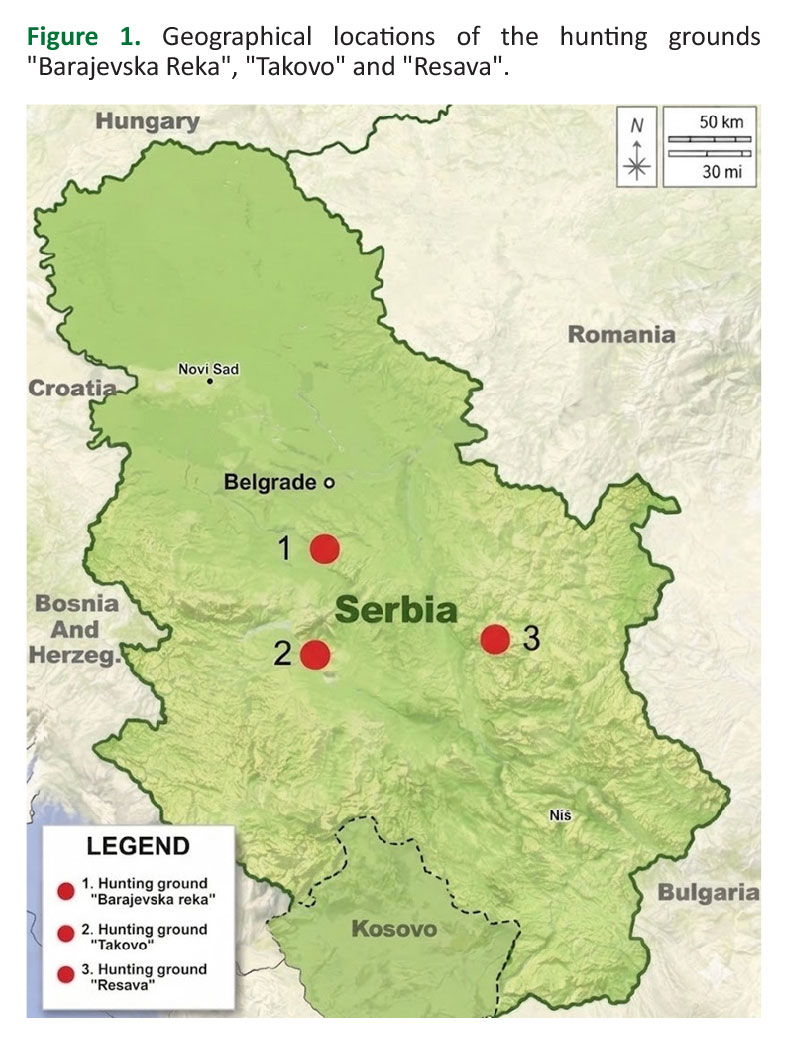 Figure 1. Geographical locations of the hunting grounds "Barajevska Reka", "Takovo" and "Resava".
Sampling
A total of 59 liver and 68 kidney samples were obtained from roe deer harvested at three hunting grounds in the Republic of Serbia. Sampling was conducted during the regular hunting seasons (2022). The sample distribution across the study sites was not uniform. A total of 15 liver and 24 kidney samples were collected from locality 1 (Hunting ground Barajevska reka), 40 liver and 40 kidney samples from locality 2 (Hunting ground Takovo), and 4 kidney and 4 liver samples from locality 3 (Hunting ground Resava). The samples were collected from adult roe deer. During sampling, special care was taken to avoid damaged parts of the bullet path. Tissues damaged by the bullet pathway were not included in the analysis (Danieli et al. 2012). The samples were individually packed in polyester bags, appropriately labelled, and transported in small refrigerators to the laboratory where they were kept at -20°C until analysis.
Laboratory Analysis
Our previously optimised method was used for the quantification of cadmium and lead in roe deer liver and kidney samples (Beuković et al. 2015). About 1 g of sample was weighed on an analytical balance EL 204 – IC (Mettler Toledo, Switzerland) and placed in a tube where it was digested by the wet ashing technique, by adding 4 ml of the concentrated nitric and hydrochloric acid mixture (3:1, v/v). The mixture was prepared with trace analysis-grade nitric acid (Fisher Scientific, USA) and hydrochloric acid (Carl Roth, Germany). The tube was then heated in the thermal block ReactiThermTM TS-18820 (Fisher Scientific, USA) at 120°C for 2 hours. The content of lead was determined by the electrothermal atomic absorption spectrometer, model PinAAcle 900T (Perkin Elmer, Waltham, MA, USA). The instrument was calibrated using analytical standards for lead and cadmium (Fluka Analytical, USA), both 1000 mg·l -1 in 2% nitric acid. Cadmium working solutions ranged from 0.2 to 2.0 µg·ml -1, while lead calibration points were from 2.0 to 20.0 µg·ml -1. For cadmium, the limit of detection (LOD) was 2.32 µg·kg -1, while the limit of quantification (LOQ) was 7.04 µg·kg -1. For lead, LOD was 4.26 µg·kg -1 and LOQ was 12.9 µg·kg -1. All results are expressed on the fresh weight (fw) basis.
Statistical Analysis
Statistical analysis was performed using the TIBCO Statistica software version 14 (StatSoFT STATISTICA Software) for descriptive analysis and for analysis of variance. Data were grouped according to element, tissue and sampling localities. Concentrations were expressed as mean ± standard error, median, minimum and maximum values. To examine differences between sampling localities, we used the two-way analysis of variance (ANOVA) test. All statements of significance were based on the 0.05 level of probability (p ≤ 0.05).
RESULTS
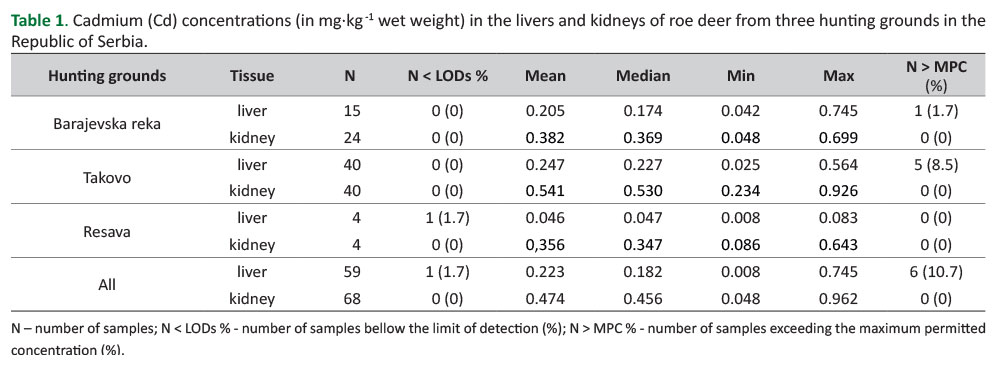
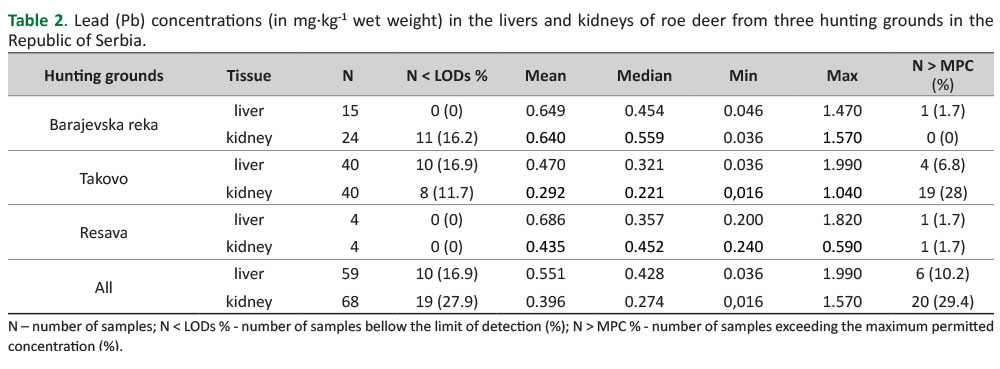
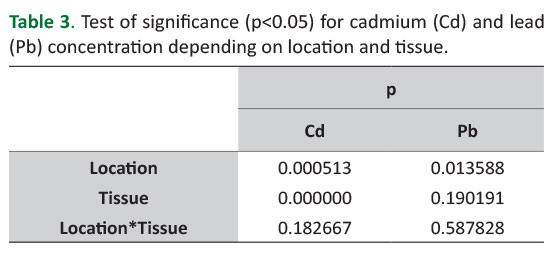
The results of Cd and Pb concentrations in the liver and kidney of roe deer are presented in Table 1, Table 2 and Table 3.
Cadmium (Cd)
The analysis confirmed the presence of cadmium in 98.3% of liver samples and in 100% of the kidney samples, in other words, only a single liver sample fell below the detection limit for this heavy metal. The mean Cd concentrations in liver samples from the hunting grounds investigated in this study were observed in the following order: the lowest concentration of 0.046 mg·kg -1 was recorded in the Resava hunting ground, followed by 0.-205 mg·kg -1 in the Barajevska Reka hunting ground, and the highest concentration of 0.247 mg·kg -1 was observed in the Takovo hunting ground, with an overall mean of 0.223 mg·kg -1. The mean cadmium concentrations in the kidney followed the same order as the concentrations in the liver, with the lowest value recorded in Resava (0.356 mg·kg -1), followed by Barajevska Reka (0.382 mg·kg -1), and the highest in Takovo (0.541 mg·kg -1), resulting in an overall mean of 0.474 mg·kg -1.
Lead (Pb)
Out of the total number of samples collected from the three hunting grounds, lead was not detected in 16.9% of the liver samples and in 29.7% of the kidney samples (Table 2). In contrast to the cadmium results, the lowest mean Pb concentrations in the liver, 0.47 mg·kg -1, were recorded in the Takovo hunting ground, followed by 0.649 mg·kg -1 in Barajevska Reka, and the highest, 0.686 mg·kg-1, in the Resava hunting ground (Table 2). The mean Pb concentrations in the kidney did not follow the same distribution across hunting grounds. The lowest mean Pb concentration in the kidney was recorded in the Takovo hunting ground (0.292 mg·kg-1), followed by Resava (0.435 mg·kg-1), and the highest in Barajevska reka hunting ground (0.649 mg·kg-1). In this case, clear differences were observed with higher Pb concentrations in the liver of roe deer compared to the concentrations in the kidneys in the Takovo and Resava hunting grounds, which is different from the findings for the presence of Cd in the same examined tissues. However, similar concentrations of this heavy metal were observed in the kidney and liver in the Barajevska Reka hunting ground.
DISCUSSION
The mean concentrations of Cd in the liver and kidney showed statistically significant differences between localities and among tissue types, indicating that both factors influence Cd accumulation (Table 3). In the Takovo hunting ground, the average values of Cd in the liver and kidney are markedly higher compared to the other two localities. However, the Cd concentration in the liver at this hunting ground was higher than in the Barajevska Reka hunting ground, the difference was not statistically significant. The lowest mean concentration of cadmium in the liver was determined in the Resava hunting ground, which is significantly lower than the other two localities, but this concentration may be the result of the small number of samples at this locality compared to the others. Also, regarding the tissue factor, statistically significantly higher concentrations of Cd in the kidney were determined in all three examined localities compared to concentrations in the liver. This confirms the well-known finding of the high affinity of Cd for the kidneys, where it is deposited directly from the bloodstream and indirectly from the liver, followed by a low excretion rate, which has been confirmed in several studies where different species of game (omnivores and herbivores) were the subject of biomonitoring (Bilandzić et al. 2009, Srebočan et al. 2012, Durkalec et al. 2015).
We compared our results with several studies from other European countries in which roe deer were used as bioindicators of environmental pollution. Therefore, in a study conducted in northwestern Poland, Wieczorek-Dąbrowska et al. (2013) determined higher Cd concentrations in both tissues (0.887 and 0.245 mg·kg-1 i n liver) (9.117 and 2.054 mg·kg-1 in kidney). Additionally, in Poland, a study was conducted where wild boar and roe deer were used as biomonitors of heavy metal contamination at two industrial sites and one control site. The results obtained confirm higher concentrations of Cd in roe deer liver (6.435 and 0.492 mg·kg-1) at both industrial sites compared to the results of our study, and drastically higher concentrations in kidney at the same sites (39.6 and 4.653 mg·kg-1), including the control site (1.582 mg·kg-1) where it was stated that there was no potential pollutant present (Durkalec et al. 2015). Also, significantly higher cadmium concentrations compared to our results were observed in neighbouring Bulgaria, where mean concentrations in the liver were 3.15 mg·kg-1 and in the kidney 20.4 mg·kg-1 (Markov and Ahmed 2019). In their study in Croatia, Srebočan et al. (2011) observed Cd concentrations of 0.293 mg·kg-1 in the liver and 3.331 mg·kg-1 in the kidneys of middle-aged roe deer, indicating slightly higher accumulation in the liver and much higher in the kidneys compared with our results. In the same context as the previous study, similar or lower values for Cd concentrations in roe deer liver and higher concentrations in kidney were also observed in a study conducted in Poland, covering the period from 1987 to 1991 (Falandysz 1994). Overall, it can be emphasised that the lower and in only a few cases similar results to those shown by research in various European countries indicate a lower level of contamination in the examined hunting grounds with Cd in the Republic of Serbia. This is most likely a result of differences in the choice of locality for such research and the presence or proximity of some anthropogenic contaminant, as is the case with the research conducted in Poland by Durkalec et al. (2015). The investigated hunting areas are situated at a considerable distance from major pollution sources and, although agricultural activities are present, they are of low intensity.
Regulations establishing maximum levels of contaminants in foodstuffs do not cover game animals; the maximum levels of toxic metals are specified only for slaughtered livestock. In the Republic of Serbia, according to the regulations on the permissible levels of pesticides, metals and metalloids, and other toxic substances, as well as chemotherapeutics, anabolic agents, and other substances that may be present in food, the maximum allowed concentrations of cadmium are 0.5 mg·kg-1 in liver and 1.0 mg·kg-1 in kidney (Official Gazette of the Republic of Serbia 2011). The regulations and standards for maximum permitted concentrations of specific contaminants are fully aligned with European legislation (European Commission 2006). Accordingly, the laboratory analyses confirmed that Cd concentrations in liver exceeded the maximum allowed limits in 6 samples or 10.7% of the samples, while for Cd concentrations in the kidney, those values were undetectable, and it was confirmed that even the maximum individual values for the concentrations of this contaminant in a given tissue did not exceed the legally permitted concentration. Regardless of the fact that individual liver samples were detected with cadmium concentrations higher than the permissible limit at each locality in the study area, it is important to note that the average concentrations are far below the permissible limit. These findings indicate that cadmium is present in these hunting grounds, but the situation is far from concerning.
The observed differences in Pb concentrations among the examined tissues of roe deer across locations suggest that local environmental factors may influence lead accumulation. Namely, the mean values for Pb concentrations in both tissues were statistically significantly higher in the Barajevska Reka hunting ground compared to the Takovo hunting ground. The results confirm that the presence of Pb dominates in the first hunting ground, and the presence of the contaminant Cd in the second. The most acceptable explanation for the observed locational differences in heavy metal concentrations is the presence of potential pollution sources (such as landfills, industrial facilities, or chemicals used in agriculture) near these hunting grounds. Therefore, further research is needed to confirm the presence of these sources and to determine their relationship with the bioindicators used in such studies. The results showed that there were no statistically significant differences in Pb concentrations among the examined tissues of roe deer (Table 3), although in two hunting grounds (Takovo and Resava), slightly higher Pb concentrations were observed in the liver than in the kidney. Similar findings were found in studies conducted by Srebočan et al. (2011) and Wieczorek-Dąbrowska et al. (2013), where slightly higher Pb concentrations were recorded in the liver than in the kidney of roe deer.
Despite the limited number of studies where roe deer have been used as a bioindicator for determining the presence of heavy metals, we have compared our results on Pb concentrations with the small number of similar studies conducted in some European countries. In a study conducted in Poland at two industrial sites and one control site, Durkalec et al. (2015) reported lower or similar Pb concentration in the liver (0.303; 0.559; 0.058 mg·kg-1). Kidney Pb levels were also lower at two sites (0.099; 0.102 mg·kg-1), except at the industrial site (Upper Silesia), where concentrations (0.906 mg·kg-1) were higher than those observed in our study. In the northwestern part of the same country, which is known for the presence of anthropogenic pollutants, the results show mixed findings: both higher and lower lead concentrations in the liver (0.946 and 0.271 mg·kg-1) and in the kidneys (0.610 and 0.134 mg·kg-1) were reported compared with the results of our study (Wieczorek-Dąbrowska et al. 2013). In Bulgaria, similarly to the findings for Cd, significantly higher Pb concentrations were reported in roe deer tissues. Pb concentrations reached 3.5 mg·kg-1 in the liver and 3.3 mg·kg-1 in the kidneys, values that were more than five times higher than those observed at the three hunting grounds in our study (Markov and Ahmed 2019). Only in Croatia, in the study conducted by Srebočan et al. (2011), lower lead concentrations were observed in both the liver and kidneys of roe deer across three age categories. Liver concentrations were 0.049, 0.055, and 0.018 mg·kg-1 in young, middle-aged, and old individuals, respectively, while kidney concentrations were 0.058, 0.033, and 0.024 mg·kg-1. In general, comparison of our findings with those reported in the literature indicates mixed opinions, with a somewhat higher presence of Pb in our study areas (hunting grounds) than in several other European countries. Of course, there were exceptions, such as the study conducted in Bulgaria and certain localities in Poland, where higher lead concentrations were reported than those observed in the present study.
According to the previously mentioned regulation on the maximum permitted concentrations of certain contaminants in foodstuffs, which is also used and accepted for game species, the maximum permitted concentration of Pb is 0.5 mg·kg-1 in both tissue (liver and kidney) (Official Gazette of the Republic of Serbia 2011). Therefore, the results obtained indicate that in the Barajеvska reka hunting ground, slightly higher Pb concentrations than the maximum permitted were noted in both examined tissues, namely the mean concentrations in the liver were 0.649 mg·kg-1, and in the kidney 0.64 mg·kg-1. Also, in the Rasava hunting ground, but only in liver tissue, slightly higher mean Pb concentrations were determined than the maximum permitted values (0.686 mg·kg-1). Particular attention should be given to hunting grounds where mean values exceed the legally permitted concentrations of this heavy metal, and the possibility of investigating potential exposure pathways and sources of lead contamination. The results also show individual samples exceeding the maximum permitted concentrations for this contaminant in all three hunting grounds, with 29.4% of the kidney samples and 10.2% of the liver samples (Table 2). Furthermore, it should be emphasised that 95% of the kidney samples and 67% of the liver samples with Pb concentrations above the permitted limits were collected from the Takovо hunting ground. In this case, where the average values for lead are below the maximum permitted concentrations, and a high percentage of individual samples (especially in the kidney) exceed the legally prescribed limits, it leads to the conclusion that the presence of lead is still more noticeable than the presence of cadmium in the Takovo hunting ground. The high percentage of individual samples indicates that the game still comes into frequent contact with this contaminant, for which the potential source, which is most likely of an anthropogenic nature, needs to be determined.
CONCLUSIONS
The presence of the investigated heavy metals was confirmed in the territory of Central Serbia. Roe deer, as a representative game species, showed variable exposure to these contaminants, reflecting the overall state of the environment. At each locality, the results for Cd based on both mean and maximum values confirmed a low level of contamination, with concentrations generally lower and only in a few cases equal to the results of most studies from countries in Europe. The levels of Pb were confirmed with higher concentrations than the previous contaminant. This is confirmed by the average values in some of the hunting grounds where the concentrations were slightly above the legally permitted maximum concentrations for this heavy metal, followed by a somewhat higher presence of Pb than in several other European countries. Although the results are generally positive, with only minor exceptions at certain localities, further research is needed to identify potential sources of pollution.
Author Contributions
All authors listed under the title made substantial contributions to the conception, design, execution, and interpretation of the study. DB, ZP, KC, and MPH conceived and designed the research. DB, ZP, KC and NM conducted the fieldwork and were responsible for the collection of roe deer samples. MPH, NM and MV carried out the laboratory procedures and performed the statistical analyses. DB, KC, and MPH wrote the manuscript, except the part of method of laboratory analysing which was written by MPH and NM.
Funding
This research received no external funding.
Conflicts of Interest
The authors declare no conflict of interest.
REFERENCES
Ackova DG, 2018. Heavy metals and their general toxicity on plants. Plant Sci Today 5(1): 14-18. https://doi.org/10.14719/pst.2018.5.1.355.
Beuković D, Jajić I, Krstović S, Beuković M, Lavadinović V, Đan M, Veličković N, 2015. Validation of an Electrothermal Atomic Absorption Spectrometry (ET-AAS) method for determining Pb and Cd in brown hare (Lepus europaeus P.) tissue samples. Wildl Biol Pract 11(2): 63-69.
Beuković D, Vukadinović M, Krstović S, Polovinski-Horvatović M, Jajić I, Popović Z, Lavadinović V, Beuković M, 2022. The European Hare (Lepus europaeus) as a Biomonitor of Lead (Pb) and Cadmium (Cd) Occurrence in the Agro Biotope of Vojvodina, Serbia. Animals 12(10): 1249. https://doi.org/10.3390/ani12101249.
Bilandžić N, Sedak M, Đokić M, Šimić B, 2010. Wild Boar Tissue Levels of Cadmium, Lead and Mercury in Seven Regions of Continental Croatia. Bulletin of environmental contamination and toxicology 84(6): 738-743. https://doi.org/10.1007/s00128-010-9999-7.
Bilandzić N, Sedak M, Vratarić D, Perić T, Simić B, 2009. Lead and cadmium in red deer and wild boar from different hunting grounds in Croatia. Sci Total Environ 407(14): 4243-4247. https://doi.org/10.1016/j.scitotenv.2009.04.009.
Briffa J, Sinagra E, Blundell R, 2020. Heavy metal pollution in the environment and their toxicological effects on humans. Heliyon 6(9): e04691. https://doi.org/10.1016/j.heliyon.2020.e04691.
Cokoski K, Beuković D, Horvatović MP, Maletić V, Vukadinović M, Stojković ED, Enimiteva V, 2024a. The levels of mercury (Hg) and arsenic (As) in wild boar’s liver (Sus scrofa) in eleven hunting areas from the Republic of North Macedonia. Sumar list 148(3-4): 121-129. https://doi.org/10.31298/sl.148.3-4.1.
Cokoski K, Beuković D, Maletić V, Horvatović MP, Tanovski V, Vukadinović M, Dimitrieska-Stojković E, Enimiteva V, 2024b. Occurrence of Heavy Metals (Cd, Pb, As, Hg) in the Liver of Wild Boars in the Republic of North Macedonia. Contemporary Agriculture 73(1-2): 28-33. https://doi.org/10.2478/contagri-2024-0004.
Cokoski K, Beuković D, Maletić V, Polovinski Horvatović M, Vukadinović M, Dimitrieska Stojković E, Enimiteva V, 2023. Wild Boar (Sus scrofa L.) as the Biomonitor of Cadmium and Lead Pollution in the Republic of North Macedonia. South-east Eur for 14(2): 235-243. https://doi.org/10.15177/seefor.23-20.
Danieli P, Serrani F, Primi R, Ponzetta M, Ronchi B, Amici A, 2012. Cadmium, lead, and chromium in large game: a local-scale exposure assessment for hunters consuming meat and liver of wild boar. Arch Environ Con Tox 63: 612-627. https://doi.org/10.1007/s00244-012-9791-2.
Durkalec M, Szkoda J, Kolacz R, Opalinski S, Nawrocka A, Zmudzki J, 2015. Bioaccumulation of Lead, Cadmium and Mercury in Roe Deer and Wild Boars from Areas with Different Levels of Toxic Metal Pollution. Int J Environ Res 9(1): 205-212.
European Commission E, 2006. Commission Regulation (EC) No 1881/2006 of 19 December 2006 setting maximum levels for certain contaminants in foodstuffs. Off J Eur Union 364: 5-24.
Falandysz J, 1994. Some toxic and trace metals in big game hunted in the northern part of Poland in 1987–1991. Sci Total Environ 141(1-3): 59-73. https://doi.org/10.1016/0048-9697(94)90018-3.
Gadzała-Kopciuch R, Berecka B, Bartoszewicz J, Buszewski B, 2004. Some considerations about bioindicators in environmental monitoring. Pol J Environ Stud 13(5): 453-462.
Lénárt Z, Bartha A, Abonyi-Tóth Z, Lehel J, 2023. Monitoring of metal content in the tissues of wild boar (Sus scrofa) and its food safety aspect. Environ Sci Pollut R 30(6): 15899-15910. https://doi.org/10.1007/s11356-022-23329-6.
Maletić V, 2024. Hunting (book one), Zooecology, Bionomy and Ethology of Game. Vladimir Maletić, Skopje, Republic of North Macedonia, pp 97-107.
Maľová J, Ciberej J, Maľa P, Zigo F, Semjon B, 2019. Heavy metal levels in the tissues of wild living animals from two distinct industrially exploited areas in Slovakia. Slovak Journal of Animal Science 52(03): 100-110.
Markov G, Ahmed A, 2019. Heavy metal residues in internal organs of roe deer (Capreolus capreolus) as a bioindicator of forest environmental contamination in West Stara Planina (West Bulgaria). Annual of Sofia University “St. Kliment Ohridski” Faculty of Biology Book 4(104): 308-314.
Okorondu J, Umar NA, Ulor CO, Onwuagba CG, Diagi BE, Ajiere SI, Nwaogu C, 2022. Anthropogenic Activities as Primary Drivers of Environmental Pollution and Loss of Biodiversity A Review. International Journal of Trend in Scientific Research and Development 6(4): 621-643.
Official Gazette of the Republic of Serbia, 2011. Rules on the quantities of pesticides, metals and metalloids and other toxic substances, chemotherapeutics, anabolic and other substances that can be found in food. Official Gazette of the Republic of Serbia SRJ 5/1992-67, 11/1992-151, 32/2002-2, RS 25/2010-16, RS 28/2011-9.
Petrović Z, Teodorović V, Dimitrijević M, Borozan S, Beuković M, Milićević D, 2013. Environmental Cd and Zn concentrations in liver and kidney of European hare from different Serbian regions: age and tissue differences. B Environ Contam Tox 90: 203-207. https://doi.org/10.1007/s00128-012-0901-7.
Popović Z, Djordjević N, Perišić P, Beuković M, 2007. Fecundity, losses and real gain in roe deer population. Savremena poljoprivreda 56(1-2): 218-223.
Popović Z, Lavadinović V, Stepić S, Beuković D, Beuković M, Vukadinović M, Polovinski-Horvatović M, 2023. Management of roe deer population (Capreolus capreolus L.) in Serbia. Arquivo Brasileiro de Medicina Veterinária e Zootecnia 75: 347-354.
Srebočan E, Crnić AP, Kabalin AE, Lazarus M, Tomljanović K, Perović S, Čož-Rakovac R, 2011. Cadmium, lead, and mercury concentrations in tissues of roe deer (Capreolus capreolus L.) and wild boar (Sus scrofa L.) from lowland Croatia. Czech J Food Sci 29(6): 624-633. https://doi.org/10.17221/249/2010-CJFS.
Srebočan E, Janicki Z, Crnić AP, Tomljanović K, Sebečić M, Konjević D, 2012. Cadmium, lead and mercury concentrations in selected red deer (Cervus elaphus L.) tissues from north-eastern Croatia. J Environ Sci Heal 47(13): 2101-2108. https://doi.org/10.1080/10934529.2012.695994.
Statistical Office of the Republic of Serbia, 2023a. Game shot carried out. Available online: https://data.stat.gov.rs/Home/Result/13040601 (25 October 2025).
Wieczorek-Dąbrowska M, Tomza-Marciniak A, Pilarczyk B, Balicka-Ramisz A, 2013. Roe and red deer as bioindicators of heavy metals contamination in north-western Poland. Chem Ecol 29(2): 100-110. https://doi.org/10.1080/02757540.2012.711322
© 2026 by the author(s). License: Croatian Forest Research Institute. This article is an open access article distributed under the terms and conditions of the Creative Commons Attribution 4.0 International License (CC BY 4.0).