


SEEFOR 17(1): 26011
Article ID: 26011
DOI: https://doi.org/10.15177/seefor.26-011
ORIGINAL SCIENTIFIC PAPER
Comparative Effects of NAA and IBA on the Rooting Success of Apical and Lateral Stem Cuttings of Kerria japonica (L.) DC
Lazar Pavlović1, Vanja Vuksanović1,*, Branislav Kovačević2, Olivera Kalozi1, Marina Ogrizović1, Saša Orlović1,2
Addresses:
(1) University of Novi Sad, Faculty of Agriculture, Faculty of Forestry, Department of Fruit growing, Viticulture, Horticulture and Landscape architecture, Trg Dositeja Obradovića 8, RS-21000 Novi Sad, Serbia;
(2) University of Novi Sad, Institute of Lowland Forestry and Environment, Antona Čehova 13d, RS-21000 Novi Sad, Serbia
Citation: Pavlović L, Vuksanović V, Kovačević B, Kalozi O, Ogrizović M, Orlović S, 2026. Comparative Effects of NAA and IBA on the Rooting Success of Apical and Lateral Stem Cuttings of Kerria japonica (L.) DC. South-east Eur for 17(1): 26011. https://doi.org/10.15177/seefor.26-011 .
Received: 12 Jan 2026; Revised: 3 Mar 2026; Accepted: 30 Mar 2026; Published: 29 June 2026
Cited by: Google Scholar
Abstract
Kerria japonica (L.) DC is a deciduous shrub that is often used in green areas in horticulture and landscape architecture due to its decorative, yellow-colored, multilayered flowers, as well as its high tolerance to drought, low temperatures, and the dust-holding capacity of its leaves. Given the growing demand for this species and the difficulty of generative propagation by seeds, it is necessary to optimise vegetative propagation protocols. This research aimed to examine the influence of phytohormones on the rooting of two types of softwood cuttings (apical and lateral stem cuttings) of Kerria japonica in a greenhouse with a misting system. Cuttings were rooted in 3 treatments: INCIT 8 (commercial phytohormone based on α-Naphthalene Acetic Acid (NAA) in the concentration of 0.8%) and IBA (Indole-3-Butyric Acid in the concentration of 0.6%), as well as a control treatment without hormones. After 30 days of the experiment, the height of the plant, the number of newly formed leaves, the length and the number of roots, the percentage of survival, and rooting were analysed. Apical cuttings consistently exhibited greater plant height, longer roots, and a higher number of roots compared to lateral cuttings, highlighting the importance of cutting position in vegetative propagation. Both auxin treatments (NAA and IBA) resulted in 100% rooting, whereas the control treatment achieved 80%. The results demonstrate that auxin application significantly enhances the rooting quality and growth of Kerria japonica softwood cuttings. These results demonstrate that phytohormone application significantly enhances the rooting and growth of Kerria japonica softwood cuttings. Apical cuttings are preferable for efficient vegetative propagation, but lateral cuttings could be used if needed, providing a basis for the establishment of routine propagation protocols for this species.
Keywords: auxins; adventitious roots; cutting position; propagation techniques; vegetative multiplication; ornamental shrubs
INTRODUCTION
The successful propagation of plant species through vegetative propagation using softwood cuttings is crucial for horticultural practices, nursery production, and plant breeding programs, ensuring genetic uniformity, rapid multiplication, and preservation of desirable traits. Kerria japonica (L.) DC, commonly known as Japanese kerria, is a deciduous Rosaceae shrub valued for its vibrant yellow flowers, ornamental foliage, frost resistance, and high dust-holding capacity that suits urban green spaces (Sabina and Cornelia 2011, Huo et al. 2019, Zhang et al. 2023). Widely used in landscape architecture for shrub borders, erosion control, and biodiversity enhancement, its generative propagation is challenging due to seed dormancy and low germination rates, making softwood cuttings the preferred method for commercial production (Gümüş and Solmaz 2022).
Its generative propagation through seeds is challenging due to seed dormancy and low germination rates, making vegetative propagation the preferred method for large-scale production while maintaining the desirable traits of parent plants. The success of propagation via stem cuttings is influenced by multiple factors, including genetic predisposition for root development, physiological status of the donor plant, position of the cutting at the plant (topophysis), juvenility, hormone balance, environmental conditions, moisture levels, and temperature. Additionally, optimising propagation techniques, such as the application of rooting hormones, can significantly enhance the success rate of cutting establishment and improve overall plant quality. Improving propagation efficiency directly supports sustainable planting design by enabling the production of robust, uniform, and stress-tolerant shrubs capable of withstanding urban environmental pressures, including soil compaction, pollution, and fluctuating moisture regimes.
Among these techniques, the application of exogenous plant growth regulators, particularly auxins, has been widely recognised for enhancing rooting efficiency (Pacholczak and Nowakowska 2020). Auxins such as Indole-3-Butyric Acid (IBA) and Indole-3-Acetic Acid (IAA) play a pivotal role in stimulating root initiation and improving overall rooting success (Nasri et al. 2015). Numerous studies have demonstrated the positive effects of IBA on root formation across different species. For example, in Punica granatum L. ‘Ganesh,’ IBA application at 100 ppm (slow dip) and 2000 ppm (quick dip) significantly enhanced rooting percentage, root number, and shoot growth (Singh et al. 2011). Similarly, Pruski et al. (2005) observed improved root induction in Prunus species treated with 2 mg·L-1 IBA in vivo. Furthermore, IBA at concentrations of 4.92 and 7.38 μM resulted in 100% rooting in Prunus persica × P. davidiana (Zhou et al. 2010), while in olive (Olea europaea L.), Kurd et al. (2010) reported the highest rooting percentage (60%) at 3000 ppm IBA, with the maximum root number and root length at 4000 ppm. Comparable findings were recorded in Rosa sp., where IBA at 500 ppm yielded the highest survival rate (91%), and 1000 ppm IBA induced the greatest number and length of roots (Susaj et al. 2012). Additionally, Gad et al. (2018) demonstrated that Olea europaea ‘Picual’ cuttings treated with 4000 ppm IBA exhibited superior root development compared to natural auxin alternatives.
Similarly, the influence of α-Naphthalene Acetic Acid (NAA) on root formation has been documented in various species. In Rosa spp., Susaj et al. (2012) demonstrated that NAA significantly enhanced rooting percentage and root development in stem cuttings, supporting its efficacy in Rosaceae species. In Bougainvillea sp., Hajano et al. (2015) observed that stem cuttings treated with 4000 mg·L-1 NAA exhibited the highest rooting percentage, root number, and fresh root weight. The application of NAA significantly improved sprouting and root formation, particularly under covered conditions, resulting in higher leaf numbers and reduced mortality. However, little is known about the comparative effects of both IBA and NAA on the rooting and growth performance of Kerria japonica.
Given the limited research on auxin-mediated propagation of Kerria japonica, this study aims to evaluate the influence of IBA and NAA on the rooting success of its stem cuttings. Specifically, this study assesses their effects on key morphological parameters, including survival rate, rooting percentage, plant height, the number of newly formed leaves, root number, and root length. Additionally, we examine the interaction between hormone treatment and cutting type (apical vs lateral) to determine potential variations in response. This simultaneous evaluation of cutting position and auxin treatment addresses both physiological optimisation and practical nursery challenges. These findings will provide commercial propagators with actionable protocols to maximise rooting efficiency, plant vigour, and production uniformity of Kerria japonica for scalable nursery production and resilient landscape applications. By elucidating the role of auxins in the green cutting rooting dynamics of Kerria japonica, this research seeks to contribute to the development of efficient propagation techniques, supporting sustainable nursery production. The findings of this study are relevant not only for nursery production but also for landscape architectural practice, where high-quality planting material is a prerequisite for resilient, aesthetically consistent, and sustainable shrub-based design solutions.
MATERIALS AND METHODS
Plant Material
This research was conducted in a greenhouse with a misting system at the experimental field of the Faculty of Agriculture, University of Novi Sad in Rimski Šančevi (45.3373°N, 19.8442°E; EPSG: 4326), located in the northern part of Serbia. Kerria japonica softwood cuttings, taken from mother plants from the Botanical Garden collection of the Faculty of Agriculture, University of Novi Sad, were selected for the experiment. The selection of mother plants was based on their general growth, phenology, resistance to diseases and pests, and ornamental value. Two types of softwood cuttings, apical and lateral stem cuttings, were collected in June, following the method of Grbić (2004), and prepared to a uniform length of 6 cm. The cuttings were taken from the ends of axillary shoots and cut at a 45° angle using sterile instruments. To prevent dehydration, the cuttings were immediately placed in a moist environment at 22-24°C and 85-90% relative humidity and kept under these controlled conditions for up to 2 hours before treatment, with periodic misting to maintain turgor. Before treatment, each cutting was prepared by retaining two leaves, while the others were removed to reduce moisture loss.
Phytohormone Treatment
The choice of auxin concentrations was based on literature data, ensuring optimal conditions for rooting. The cuttings were treated with three different treatments: (C) a control group without hormone application, (T1) INCIT 8, a commercial phytohormone containing 0.8% α-Naphthalene Acetic Acid (NAA) with no additional components, and (T2) Indole-3-Butyric Acid (IBA) at a concentration of 0.6% combined with 50 µM Co2+ as a specially formulated powder, to inhibit ethylene biosynthesis via ACC oxidase blockade, thereby enhancing IBA-induced adventitious rooting (Kovačević et al. 2014). The basal 1-2 cm portion of each cutting was dipped into the phytohormone treatment powder (drop treatment), and excess powder was removed by tapping.
Growth Conditions
After auxin application, the cuttings were planted in pots (67 mm diameter × 67 mm height) filled with commercial propagation substrate (Steckmedium), consisting of a fine white sphagnum peat mixture with 25% perlite (1–7.5 mm), enriched with water-soluble fertilizer, microelements, and the wetting agent Hydro S (0.5 g·L⁻¹, pH 6). The experiment utilised 60 softwood cuttings of Kerria japonica in a 2×3 factorial design (2 cutting types × 3 treatments), with 10 replicates per treatment/cutting type combination (total n = 60; each cutting = 1 replicate; see Table 1). This design follows standard horticultural propagation protocols. The greenhouse environment was maintained under an intermittent misting system, ensuring relative humidity between 70–90% and temperatures ranging from 25 to 28°C during daytime and 22–24 °C at night. The rooting experiment lasted for 30 days, during which the cuttings were regularly irrigated by misting. Cuttings were misted for 7 minutes every 2 hours from 9:00 AM to 7:00 PM daily to prevent desiccation without causing waterlogging.
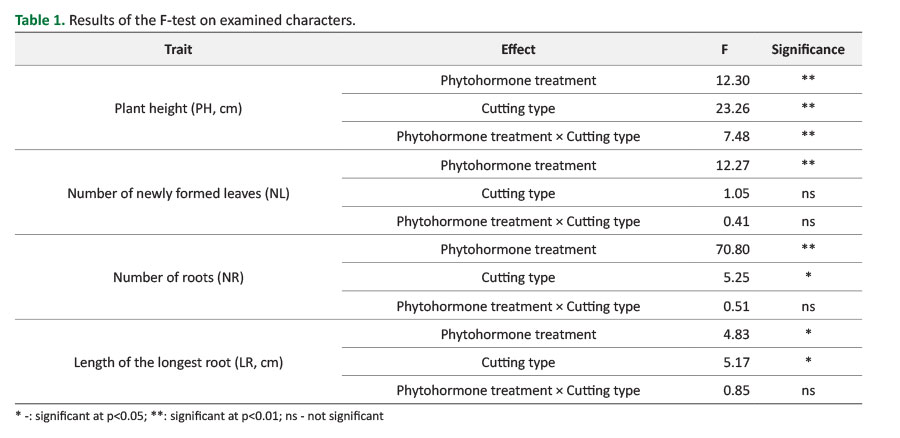 Table 1. Results of the F-test on examined characters.
Measured Parameters and Statistical Analysis
At the end of the experiment, plant height (PH [cm]), the number of newly formed leaves (NL), the number of roots (NR), and the length of the longest root (LR [cm]) were recorded. Survival and rooting percentages (SP and RP) were determined by evaluating all cuttings within each treatment of interaction Phytohormone treatment × Cutting type. Rooting and survival percentages were determined by recording the number of cuttings that developed roots and the number of cuttings that produced both roots and shoots, respectively, relative to the total number of cuttings planted in each treatment combination.
The data were analysed using a two-way factorial analysis of variance (ANOVA), and differences between treatments were assessed using Fisher’s Least Significant Difference (LSD) test at p = 0.05. The relationships among measured parameters were examined using the Pearson correlation coefficient at the level of interaction Phytohormone treatment × Cutting type and principal component analysis (PCA), based on the correlation matrix.
Statistical analysis was performed using STATISTICA 13 software (TIBCO Software Inc. 2020), while data visualisation was conducted using the R packages ggplot2 (Wickham 2016) and corrplot (Wei and Simko, 2021). To meet the normality assumptions required for statistical tests, the number of newly formed leaves and roots was transformed using the square root transformation (√x + 1).
RESULTS
Analysis of variance showed that phytohormone treatment significantly affected plant height, the number of newly formed leaves, the number of roots, and the length of the longest root. Cutting type was significant for plant height and the number of roots and length of the longest root, while the interaction between phytohormone and cutting type was significant only for plant height (Table 1).
Effects of Phyohormone Treatments on Survival and Rooting Percentage
The highest survival and rooting percentage (100%) was achieved in treatments with the use of phytohormones (T1 and T2), whereas the survival and rooting percentage in the control treatment was 80%. Based on the obtained results, it can be observed that the type of cutting had no major influence on rooting, as there was no difference in the rooting percentage between the examined cutting types. There was no difference in either the control or the treatments (Figure 1).
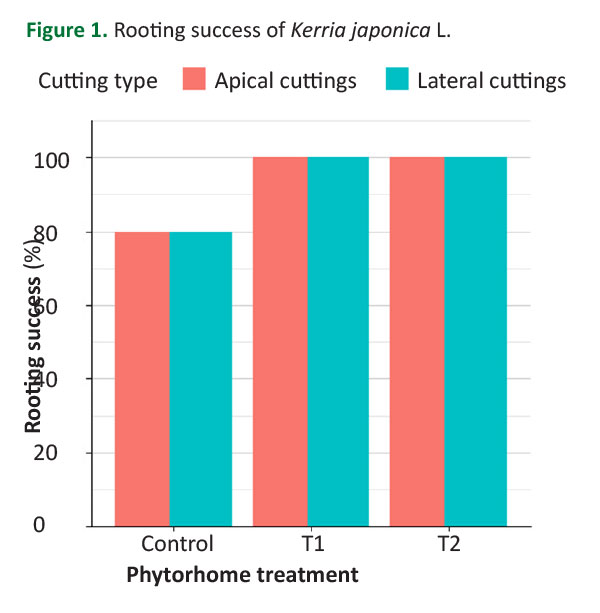 Figure 1. Rooting success of Kerria japonica L.
Effects of Phytohormone Treatments and Cutting Type on Plant Height
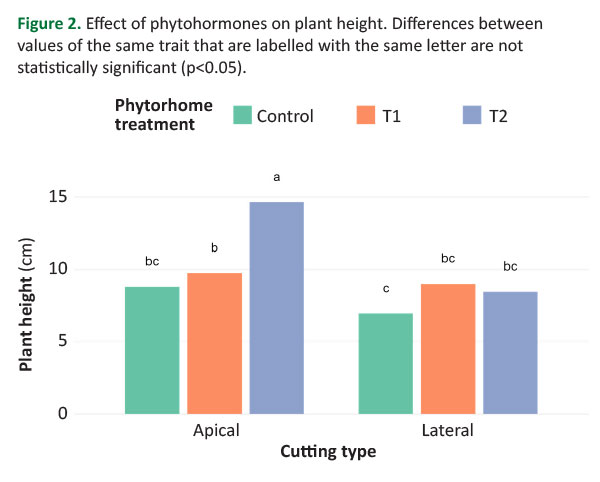
The greatest shoot height was recorded in apical cuttings under T2 treatment (14.65 cm), while the lowest value was observed in the control treatment for lateral cuttings, at 6.95 cm (Figure 2). Overall, rooted apical cuttings exhibited better growth compared to rooted lateral cuttings. Specifically, apical cuttings in the T1 treatment (NAA) achieved an 11% greater height than those in the control, whereas in the T2 treatment (IBA), the same type of cutting reached a 66% greater height compared to the control. Considering the average values of phytohormone treatments, plant height in the T1 (NAA) treatment was 19% higher than in the control, while in the T2 treatment (IBA), it was 47% higher relative to the control. However, this difference was statistically significant only in the T2 treatment. Furthermore, significant superiority over the corresponding control was observed solely in apical cuttings treated with T2.
Effects of Phytohormone Treatments on the Number of Newly Formed Leaves
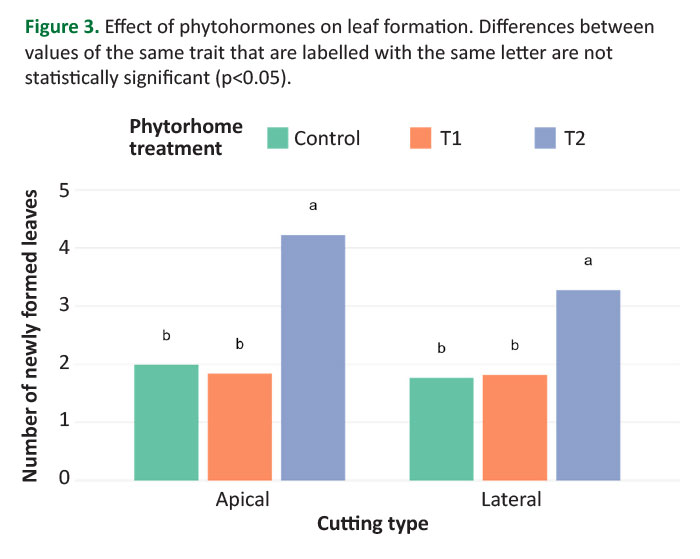
A statistically significant increase in the number of newly formed leaves was observed in the T2 treatment (IBA) compared to both the control and T1 (NAA). Specifically, the number of newly formed leaves in T2 was 99% higher than that in the control and 104% higher than in T1. Overall, the type of cutting did not have a statistically significant effect on the number of newly formed leaves (Figure 3).
Effects of Phytohormone Treatments and Cutting Type on Longest Root Length
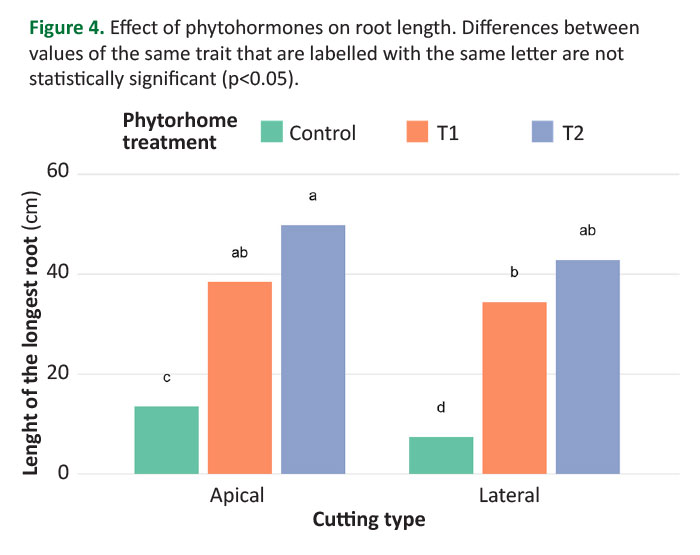
On average, the shortest length of the longest root (LR) was measured in the control treatment (10.19 cm), while the longest LR was observed in the IBA treatment (T2) at 46.26 cm. Both cutting types exhibited significantly greater longest root length (LR) in T2 compared to the control, with apical cuttings showing 4× and lateral cuttings 6× increases over their respective controls (Figure 4). The main effect of phytohormone treatment was significant (Table 1), while no interaction with cutting type was detected. In the NAA treatment (T1), apical cuttings developed the longest roots that were three times longer, while lateral cuttings had LR five times longer than those in the control. Within each treatment, apical cuttings consistently produced longer roots than lateral cuttings. Specifically, in T1, apical cuttings had 10% longer LR compared to lateral cuttings, while in T2, the LR of apical cuttings was 14% greater than that of lateral cuttings.
Effect of Phytohormones and Cutting Type on Root Number
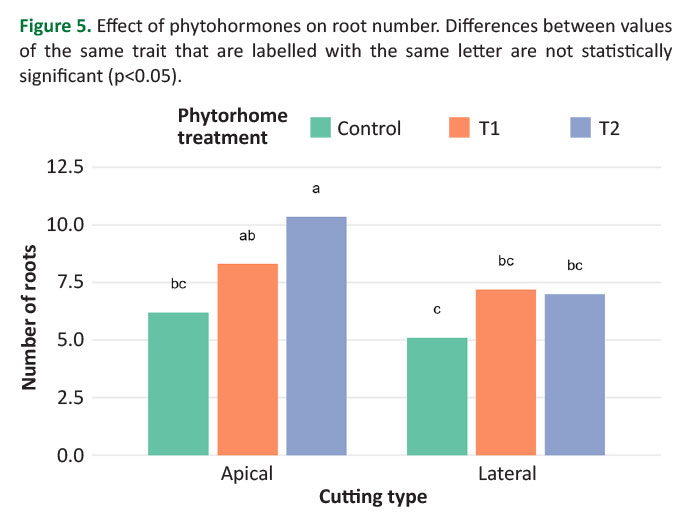
Overall, a significantly higher number of roots were observed in treatments with phytohormones compared to the control treatment without hormones. As shown in Figure 5, the lowest number of roots was recorded in the control treatment (6.65), while the highest number was observed in the IBA treatment (8.68). Interestingly, this was the only parameter for which there was no statistically significant difference between the NAA (T1) and IBA (T2) treatments. Considering average values, apical cuttings developed a significantly higher number of roots (8.28) compared to lateral cuttings (6.43). However, within both the control and the NAA treatment, there was no significant difference between cutting types. In contrast, in the IBA treatment, apical cuttings produced 48% more roots than lateral cuttings. The strong effect of phytohormone application on rooting success is evident in Figure 5, where it can be observed that the number of roots, one of the key indicators of successful rooting, increased by 40% with the application of the NAA (T1) and by 53% with IBA (T2) compared to the control.
Correlation Analysis
Based on the results of the correlation analysis, a strong positive correlation was observed between the length of the longest root and plant height (Figure 6). As expected, the number of roots was positively correlated with both the survival rate and rooting percentage. Additionally, a positive correlation was found between the number of roots and the length of the longest root. A perfect positive correlation (r = 1.000) was observed between the survival rate and rooting percentage. Interestingly, the number of newly formed leaves did not exhibit a statistically significant correlation with any of the examined parameters. Notably, no negative correlations were detected among the investigated parameters.
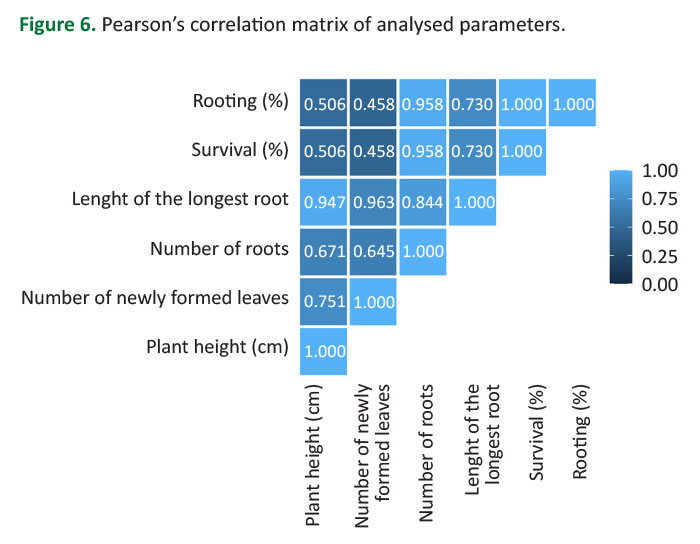 Figure 6. Pearson’s correlation matrix of analysed parameters.
Principal Components
According to the loadings with the first two principal components, which explain 94.5% of the total variance, the analysed parameters were grouped into two groups (Figure 7). The first cluster included the number of roots, survival rate, and rooting percentage, while the second cluster comprised the length of the longest root, the number of newly formed leaves, and plant height. The correlation between parameters of different clusters appeared to be weak, as confirmed by the correlation analysis results.
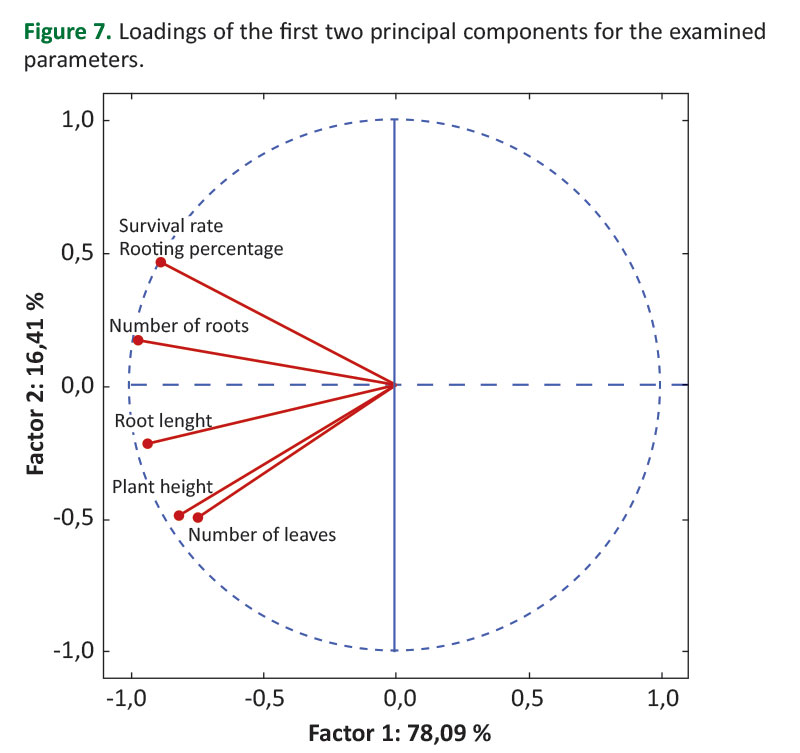 Figure 7. Loadings of the first two principal components for the examined parameters.
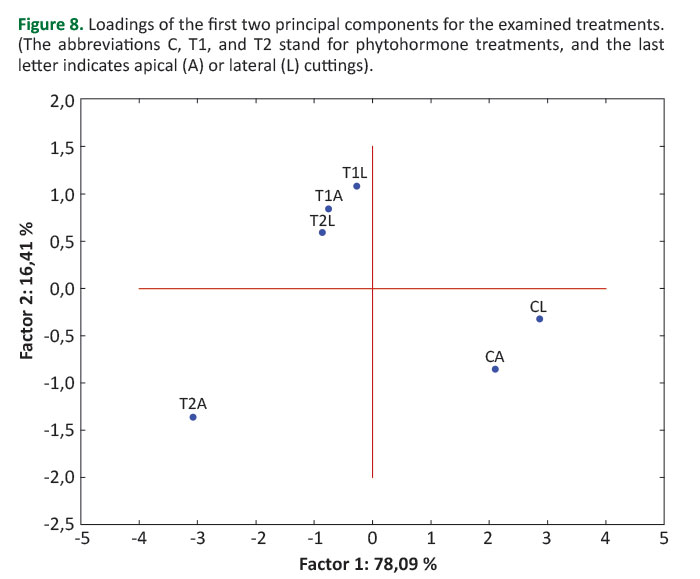
Principal component analysis (PCA) revealed a clear separation of treatments along the first two principal components (Figure 8), with PC1 explaining 78.09% and PC2 accounting for 16.41% of the total variance. Control treatments (KA and KL) were positioned on the positive side of PC1, although separated along the PC2 axis, indicating moderate differences between control variants. In contrast, treatments T1A, T1L, and T2L clustered closely together in the negative region of PC1 and the positive region of PC2, suggesting a similar response pattern with respect to the analysed parameters. The T2A treatment was clearly separated from both the control group and other treatments, being located in the negative region of both PC1 and PC2, which indicates a distinct physiological or biochemical response. Overall, the PCA demonstrates that PC1 was the primary axis discriminating control and treated samples, while PC2 contributed to the differentiation among individual treatments, confirming that the applied treatments substantially influenced the variability of the measured traits.
DISCUSSION
The results of this study provide valuable insights into the rooting and survival of Kerria japonica cuttings, particularly in relation to the application of phytohormones. It was observed that the use of auxin-type plant growth regulators, specifically IBA (Indole-3-Butyric Acid) and NAA (α-Naphthalene Acetic Acid), significantly enhanced the rooting and survival of the softwood cuttings compared to the control group. This finding aligns with previous studies that investigated the effects of various growth regulators, including IBA, NAA, triadimefon (TRF), and paclobutrazol (PBZ), on rooting in Thymus vulgaris L. (Prasad et al. 2000). They found that IBA significantly outperformed other growth regulators in terms of root formation, thus confirming the positive impact of IBA on rooting success. Examining the effect of exogenous application of phytohormones IBA (1000, 2000, 3000, 4000 ppm) and NAA 0.5% on the success of rooting of mature fig cuttings, Popović et al. (2017) concluded that a better effect was achieved with the use of IBA compared to NAA. While the superior rooting performance of T2 was primarily driven by IBA, the inclusion of 50 µM Co²⁺ must be acknowledged as a key synergistic component. Cobalt ions inhibit ethylene biosynthesis by blocking ACC oxidase activity, thereby alleviating ethylene-mediated suppression of auxin-induced adventitious rooting—a formulation established in prior studies on hardwood cutting propagation (Kovačević et al. 2014). This IBA + Co²⁺ combination represents a commonly used preparation for enhancing IBA efficacy in recalcitrant species, allowing direct comparison with the NAA-only commercial product (T1). Jurčević et al. (2018), examining the effect of hormones IAA and NAA on the rooting of Abies alba cuttings, achieved the greatest success with the application of hormone IBA at a concentration of 2500 ppm.
The application of IBA to cuttings increases sprouting by promoting the production of certain materials in the roots responsible for sprouting, as noted by Rehana et al. (2020). Additionally, the better utilisation of stored carbohydrates and other factors with the aid of growth regulators can lead to earlier sprouting and increased sprout length (Chandramouli 2001). The basipetal translocation of auxins from leaves may be reduced, diverting more auxins toward shoot growth, as outlined by Rani et al. (2018) in guava. This enhanced shoot growth is consistent with our findings that IBA promotes superior shoot elongation and leaf production in Kerria japonica.
In this study, the height of the rooted Kerria japonica cuttings was significantly influenced by the application of IBA, with apical cuttings in the T2 treatment (IBA) achieving a remarkable 66% greater height compared to the control group. Kovačević et al. (2014) also got a positive effect on the stem height of white poplar rooted cuttings at the end of the first growing season, after the hardwood stem cuttings were treated with the same formulation as in the T2 treatment.
The results showed that IBA increased both root length and root number, consistent with findings by Gehlot et al. (2014) in Azadirachta indica and Shahab et al. (2013) in Chrysanthemum, who reported improved rooting and enhanced shoot development following IBA application. Enhanced root growth likely improved water and nutrient uptake, contributing to greater leaf formation, as also noted by Shahab et al. (2013). In our study, IBA treatment increased the number of newly formed leaves by 99% compared with the control and 104% compared with NAA, supporting results reported by Jurčević et al. (2018) in Abies alba. Moreover, IBA-treated cuttings developed significantly longer roots than NAA-treated or untreated cuttings, with apical cuttings exhibiting roots approximately twofold longer than the control, in agreement with Frick and Strader (2018), who highlighted the role of IBA in promoting root elongation and cell division. The increased root length observed in IBA-treated cuttings may also enhance the plant's ability to withstand abiotic stress conditions, particularly drought, as root development is directly correlated with water and nutrient uptake in plants. Interestingly, the number of roots was significantly higher in the phytohormone treatments compared to the control, with IBA showing the highest root number, significantly differing from both the NAA treatment and the control. This indicates that while both hormones were effective at promoting root formation, IBA may be more beneficial for improving other growth parameters, such as shoot elongation and leaf development.
The age and type of cutting material, as well as the season, can significantly influence rooting success, a concept supported by Swamy et al. (2002). Their research on Robinia pseudoacacia and Grewia optiva showed that juvenile cuttings generally rooted better than mature hardwood cuttings, and the optimal hormone treatment varied with species and season.
The results of this study indicate that cutting position had a clear influence on the growth and root development of Kerria japonica, even though it did not significantly affect the overall rooting percentage. Apical cuttings consistently showed greater plant height, longer roots, and a higher number of roots compared to lateral cuttings. This trend is in line with the concept of topophysis, where the physiological state and endogenous growth regulators of a cutting vary depending on its original position on the mother plant.
Similar findings have been reported in other species. Aini et al. (2010) observed that top-position cuttings of Gonystylus bancanus exhibited higher survival and rooting percentages, and generally produced a greater number and vigour of roots compared to middle and bottom cuttings. In Stevia rebaudiana, apical cuttings achieved higher rooting percentages, longer roots, and greater root mass than medium and basal cuttings, highlighting the importance of the apical position for vegetative propagation (Bortoloso Pigatto et al. 2018). Furthermore, Otende et al. (2017) demonstrated that apical cuttings of rose rootstocks had higher shoot height, root number, and total root length, correlating with higher endogenous sucrose and mineral nutrient contents, emphasising the physiological advantage of apical tissue for root formation.
In the present study, the superior performance of apical cuttings, particularly under IBA treatment, supports these observations. Apical cuttings developed 10–14% longer roots and a higher number of roots compared to lateral cuttings across treatments. These results suggest that the apical region retains greater meristematic activity and responsiveness to exogenous auxins, which enhances root elongation and overall vegetative growth. Therefore, consideration of cutting position is critical in propagation protocols, as the use of apical cuttings may result in more vigorous and uniform plants, improving both quality and efficiency of commercial production.
In summary, the results of this study highlight the positive influence of IBA and NAA on the rooting and growth of Kerria japonica cuttings. The application of IBA in particular led to superior growth in terms of root length, plant height, and leaf production. Furthermore, apical cuttings consistently outperformed lateral cuttings, exhibiting greater plant height, longer roots, and a higher number of roots, which emphasises the importance of cutting position in vegetative propagation. These findings support the use of IBA and the selection of apical cuttings as an effective means of promoting rooting and enhancing the growth of Kerria japonica in commercial production.
This research investigated the influence of the phytohormones NAA (in the form of the commercial preparation INCIT 8) and IBA on the rooting of Kerria japonica cuttings. The results demonstrated that the application of both NAA and IBA significantly enhances rooting compared to the control group, with both hormone treatments achieving 100% rooting success. While both hormones had a positive effect, IBA proved superior in stimulating the growth of new leaves, root number, and root length. It was also observed that cutting position had a notable influence on growth, with apical cuttings generally exhibiting greater plant height, longer roots, and a higher number of roots compared to lateral cuttings. Specifically, apical cuttings in the IBA treatment (T2) achieved a 66% greater height compared to the control, highlighting the combined efficacy of IBA application and apical cutting selection in promoting robust growth. However, these results also support the use of lateral softwood cuttings in the propagation of Kerria japonica if the supply of apical cuttings is not sufficient, suggesting a positive effect of the use of IBA in this case.
These findings underscore the importance of using phytohormones, particularly IBA, for the successful vegetative propagation of Kerria japonica. The application of IBA, together with the use of apical cuttings, can significantly increase the efficiency and quality of plant production, which is crucial for meeting the growing demand for this ornamental species in horticulture and landscape architecture. Furthermore, these results provide a basis for establishing routine propagation protocols, emphasising the optimisation of hormone concentrations and the selection of appropriate cutting types. Future research could focus on the long-term effects of hormone treatments on plant development and evaluate the influence of environmental factors on rooting success. Given the strong positive correlation observed between root length and plant height, further studies could also explore the potential use of these parameters in selecting drought-tolerant Kerria japonica genotypes, thereby enhancing resilience under abiotic stress conditions.
CONCLUSIONS
This study demonstrates that the application of auxin-based plant growth regulators significantly improves the vegetative propagation efficiency of Kerria japonica. Both IBA and NAA enhanced rooting compared to the untreated control, achieving 100% rooting success; however, IBA exhibited superior performance in promoting root length, root number, shoot elongation, and leaf production. The enhanced effect observed in treatment T2 can be attributed to the synergistic interaction between IBA and Co²⁺, which likely contributed to improved adventitious rooting and overall vegetative growth. Cutting position also played a decisive role in propagation success. Although it did not significantly influence rooting percentage, apical cuttings consistently produced taller plants with longer and more numerous roots compared to lateral cuttings. From a practical perspective, these findings provide a reliable propagation protocol for commercial production of Kerria japonica, recommending the use of IBA-preferably in combination with apical softwood cuttings—to maximise plant quality and production efficiency. Nevertheless, lateral cuttings treated with IBA also represent a viable alternative when apical material is limited. Overall, the results contribute to the optimisation of nursery practices for this increasingly important ornamental species and provide a foundation for further research on long-term performance and stress resilience of propagated plants.
Author Contributions
Conceptualization, L.P., V.V., M.O., and B.K.; methodology, V.V., L.P., and B.K.; software, L.P.; formal analysis, V.V.; data curation, L.P., V.V., and M.O.; writing—original draft preparation, L.P. and V.V.; writing-review and editing, V.V., L.P., B.K., O.K., and S.O.; visualization, L.P.; supervision, S.O.; funding acquisition, S.O. All authors have read and agreed to the published version of the manuscript.
Funding
The authors declare that financial support was received for research, authorship, and/or publication of this article. This research has been supported by the Ministry of Science, Technological Development, and Innovation of the Republic of Serbia, Contract No. 451-03-136/2025-03/ 200117 and 451-03-137/2025-03/ 200117. In addition, this manuscript covered one of the research apicalics conducted by the researchers gathered in the Centre of Excellence Agro-Ur-For at the Faculty of Agriculture in Novi Sad, supported by the Ministry of Science, Technological Development, and Innovation, contract number 451-03-4551/2024-04/17.
Acknowledgments
We acknowledge the Ministry of Science, Technological Development, and Innovation of the Republic of Serbia.
Conflicts of Interest
The authors declare no conflict of interest.
REFERENCES
Aini AN, Guanih VS, Ismail P, 2010. Effect of cutting positions and growth regulators on the rooting ability of Gonystylus bancanus. Afr J Plant Sci 4(8): 290–295.
Bortoloso Pigatto G, Nunes Gomes E, De Cássia Tomasi J, Portes Ferriani A, Deschamps C, 2018. Effects of indolebutyric acid, stem cutting positions, and substrates on the vegetative propagation of Stevia rebaudiana Bertoni. Rev Colomb Ci Hort 12(1): 202–211. https://doi.org/10.17584/rcch.2018v12i1.6631.
Chandramouli H, 2001. Influence of growth regulators on the rooting of different types of cuttings in Bursera penicilliata (DC) Engl. MSc Thesis, University of Agricultural Sciences, Bangalore, India, 73 p.
Frick EM, Strader LC, 2018. Roles for IBA derived auxin in plant development. J Exp Bot 69(2): 169–177. https://doi.org/10.1093/jxb/erx298.
Gad MM, Ibrahim MM, 2018. Effect of IBA and some natural extracts on rooting and vegetative growth of Picual olive sucker and shoot cuttings. Curr Sci Int 7(2): 191–203.
Gehlot A, Gupta RK, Tripathi A, Arya ID, Arya S, 2014. Vegetative propagation of Azadirachta indica: effect of auxin and rooting media on adventitious root induction in mini-cuttings. Adv For Sci 1(1): 1–9.
Grbić M, 2004. Proizvodnja sadnog materijala – Vegetativno razmnožavanje ukrasnog drveća i žbunja. I.K.P. Ne&Bo & I.P. Tragovi, Beograd, Serbia, pp 39-50. [in Serbian].
Kovačević B, Orlović S, Pap P, Katanić M, Dabić S, 2014. The effect of application of cobalt chloride and indolbutiric acid powder formulations on rooting of white poplar hardwood cuttings. Poplar 193-194: 117-127. [In Serbian].
Gümüş C, Solmaz E, 2022. Kerria japonica (L.) DC. (Kanarian Rose) Species Overview. JONAS 5(2): 78–85. https://doi.org/10.55930/jonas.1161316.
Hajano RA, Memon N, Leghari MH, Chachar QI, Sharif N, 2015. Effect of basal applications of Naphthalene Acetic Acid (NAA) on sprouting and rooting potential of stem cuttings of Bougainvillea glabra. Pak J Agric Agric Eng Vet Sci 31(1): 42–53.
Huo Y, Yan M, Zhao X, Zhu Z, Yuan Z, 2019. The complete chloroplast genome sequence of Kerria japonica (L.) DC ‘pleniflora’ (Rosaceae). Mitochondr DNA 4(2): 3723–3724. https://doi.org/10.1080/23802359.2019.1678433.
Jurčević S, Čehulić I, Ivanković M, Bogdan S, 2018. Utjecaj hormonskih tretmana na zakorjenjivanje odrvenjelih reznica obične jele (Abies alba Mill.). Nova mehanizacija šumarstva 39(1): 47–58.
Kurd AA, Khan S, Shah BH, Khetran MA, 2010. Effect of indole butyric acid (IBA) on rooting of olive stem cuttings. Pak J Agric Res 23(3–4): 193-195.
Nasri F, Fadakar A, Saba MK, Yousefi B, 2015. Study of indole butyric acid (IBA) effects on cutting rooting improving some wild genotypes of Rosa damascene Mill. J Agr Sci 60(3): 263–275. https://doi.org/10.2298/JAS1503263N.
Otiende MA, Nyabundi JO, Ngamau K, Opala P, 2017. Effects of cutting position of rose rootstock cultivars on rooting and its relationship with mineral nutrient content and endogenous carbohydrates. Sci Hortic Amsterdam 225: 204-212. https://doi.org/10.1016/j.scienta.2017.07.009.
Pacholczak A, Nowakowska K, 2020. The Effect of Biostimulators and Indole-3-Butyric Acid on Rooting of Stem Cuttings of Two Ground Cover Roses. Acta Agrobot 73(1): 7314. https://doi.org/10.5586/aa.7314.
Popović G, Popović R, Jelić D, 2017. Ožiljavanje zrelih reznica smokve (Ficus carica L.). In: Akšić MF (ed) Zbornik radova VI savetovanja „Inovacije u voćarstvu“. Poljoprivredni fakultet Katedra za voćarstvo, Belgrade, Serbia, 2 February 2017. pp 119–127.
Prasad BLS, Chandregowda M, Vasundhara M, Farooqi AA, Srinivasappa KN, 2000. Influence of growth regulators and methods of application on rooting of thyme (Thymus vulgaris L.) cuttings. In: Spices and aromatic plants: challenges and opportunities in the new century. Centennial Conference on Spices and Aromatic Plants, Calicut, Kerala, India, 20–23 September 2000. Indian Society for Spices, Calicut, India, pp 202–206.
Pruski K, Astatkie T, Nowak J, 2005. Tissue culture propagation of Mongolian cherry (Prunus fruticosa) and Nanking cherry (Prunus tomentosa). Plant Cell Tiss Org 82: 207–211. https://doi.org/10.1007/s11240-004-7836-6.
Rani TD, Srihari D, Dorajeerao AVD, Subbaramamma P, 2018. Effect of rooting media and IBA treatments on shoot production and survival of terminal cuttings in guava (Psidium guajava L.) cv. Taiwan Pink. Int J Curr Microbiol Appl Sci 7(11): 231–242. https://doi.org/10.20546/ijcmas.2018.711.029.
Rehana S, Madhavi M, Rao AD, Subbaramamma P, 2020. Effect of cutting types and IBA treatments on success of vegetative propagation in Crossandra infundibuliformis L. var. Arka Shravya. J Pharmacogn Phytochem 9(2): 1469–1475.
Sabina PD, Cornelia H, 2011. The influence of rooting biostimulators and substrate on biometric characteristics of Kerria japonica (L.) DC seedlings. J Hortic For Biotechnol 15(4): 88–92.
Shahab M, Ayub G, Rahman A, Rashid A, Jamal A, Ali J, 2013. Assessment of IBA (Indole Butyric Acid) levels and planting time for rooting and growth of Alstonia cuttings. J Nat Sci Res 3(14): 59–67.
Singh B, Singh S, Singh G, 2011. Influence of Planting Time and IBA on Rooting and Growth of Pomegranate (Punica Granatum L.) 'Ganesh' Cuttings Acta Hortic 890: 183–188. https://doi.org/10.17660/ActaHortic.2011.890.24.
Susaj E, Susaj L, Kallço I, 2012. Effect of different NAA and IBA concentrations on rooting of vegetative cuttings of two rose cultivars. Res J Agric Sci 44(3): 121-127.
Swamy SL, Puri S, Singh AK, 2002. Effect of auxins (IBA and NAA) and season on rooting of juvenile and mature hardwood cuttings of Robinia pseudoacacia and Grewia optiva. New Forest. 23: 143–157. https://doi.org/10.1023/A:1015653131706.
TIBCO Software Inc., 2020. Data Science Workbench. Available online: https://docs.tibco.com/pub/dsc-operations/1.2.0/html/GUID-6D8541C8-74B4-4DA9-A94C-82372E0BAE9E.html. (20 December 2025).
Ullah Z, Abbas SJ, Naeem N, Lutfullah G, Malik T, Khan MAU, Khan I, 2013. Effect of indole butyric acid (IBA) and naphthalene acetic acid (NAA) plant growth regulators on Tagetes erecta L. Afr J Agr Res 8(29): 4015–4019.
Wei T, Simko V, 2021. R package ‘corrplot’: Visualization of a correlation matrix. Available online: https://github.com/taiyun/corrplot. (20 December 2025).
Wickham H, 2016. ggplot2: Elegant Graphics for Data Analysis. Springer-Verlag, New York, USA.
Zhang H, Wang C, Wang S, Mao S, 2023. Leaf spot of Kerria japonica caused by Diaporthe pescicola in China. Can J Plant Pathol 45(2): 118–127. https://doi.org/10.1080/07060661.2022.2142671.
© 2026 by the author(s). License: Croatian Forest Research Institute. This article is an open access article distributed under the terms and conditions of the Creative Commons Attribution 4.0 International License (CC BY 4.0).